



PCIe 5.0 vs PCIe 4.0 for Video editing in 4k in SA
PCIe 5.0 vs PCIe 4.0 for video editing in 4k is mainly about fit, features, compatibility, cost, and upgrade path, not one automatic winner. SA buyers should match the choice to the setup.
Read moreHall sticks and remappable back buttons are worth extra when magnetic input and reduced thumb movement solve real gaming needs. The R899 G7 HE combines both with magnetic triggers, audio controls and dual rumble for South African Xbox players.
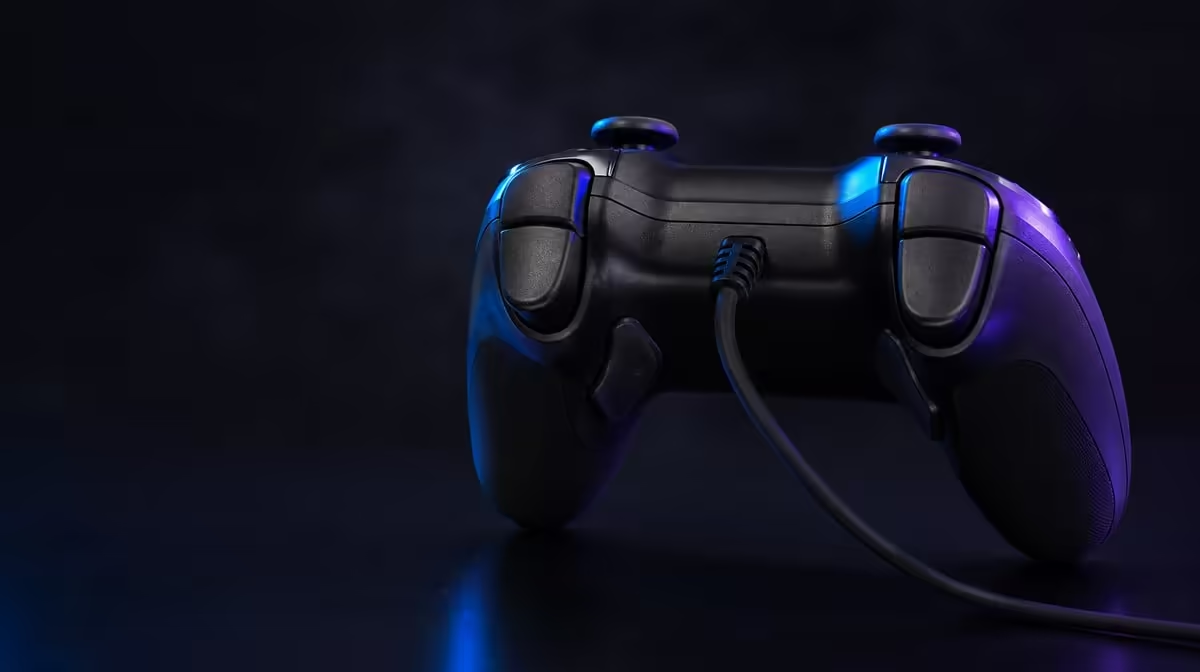
Paying extra for controls only makes sense when they change an action the player repeats. Hall sticks and back buttons can justify a premium through contact-reducing aim input and less thumb travel, but unused technology has no practical value.
Hall sticks and remappable rear buttons are worth extra when drift resistance and stick-preserving actions solve real needs. The R899 GameSir G7 HE combines both with magnetic triggers, dual rumble and controller audio, providing a clear South African value reference.
Magnetic stick sensing avoids the rubbing track used by common potentiometers. That reduces one contact-wear path without guaranteeing immunity from every centre issue.
Record neutral, axes and return before tuning. A healthy baseline makes the sensor benefit easier to preserve.
Test aim through a fixed task across several sessions. Do not judge the technology from one flick or one bad match.
Evetech's gaming controller range allows comparison of complete layouts and prices.
Map an action that usually takes a thumb off a stick. Use one rear input first and compare the same sequence.
Check accidental activation under normal and tense grip. Hand size can turn a useful position into an unwanted press.
Add the second mapping only after the first remains clear. Store each profile by game.
A remappable button does not make every command faster. It offers another route whose value depends on assignment.
The G7 HE costs R899, so any more expensive option should name the platform, fit or feature that earns the gap.
Magnetic triggers and dual rumble add analog sensing and game-driven feedback. Score them separately from stick and rear-button value.
The 3.5mm jack and Mic Mute Button matter to compatible wired-headset users. They carry little weight for someone who never routes chat through the pad.
The swappable magnetic faceplate is visual flexibility, not an input improvement.
Track clean aim, thumb interruptions, accidental rear presses and setup time for a month.
Keep the wired lead and headset cable comfortable. A poor room layout can undermine otherwise valuable controls.
Evetech's accessory catalogue and popular-product view add current setup context to the controller comparison.
If Hall sensing and rear mappings remain active in weekly play, the extra features have earned their place. If not, remove them from the score.
Create two independent before-and-after tests. The Hall test compares aim or movement at stable settings. The rear-button test compares a face action with the remapped route. Keeping them separate shows which feature produces a measurable gain.
Give the Hall result time. Contact-wear resistance is an ownership feature, not a dramatic animation. Preserve centre records over several months rather than expecting a single session to prove longevity.
Give the rear mapping pressure. Test when calm, during a difficult sequence and after hand fatigue. A mapping that saves thumb movement but causes a squeezed input in critical moments may need a lower-risk action.
Score magnetic triggers through the actual library. A racing or gradual-action title can expose travel; a game that treats the control as simple on/off input may not.
Use chat features in one real multiplayer session. A 3.5mm jack and Mic Mute Button gain value when they simplify an established headset path, not merely because they exist.
Compare the R899 package with the price difference to another option. Write the extra feature, confirmed evidence and weekly frequency. A premium that cannot fill all three columns should not receive automatic approval.
Factor room fit into both options. The G7 HE's permanent lead may be effortless at a desk and awkward across a lounge. Wireless movement can be valuable even when magnetic controls are appealing.
Review after a month and remove unused rows. The decision may conclude that Hall sticks are worth extra while a second rear button is not, or the reverse. Features do not have to rise and fall together.
The strongest answer is conditional and specific: the extra is worth it for a player who uses magnetic aim and a thumb-saving map often enough to notice, while another player can reasonably choose a simpler layout.
Add a feature-removal trial. Disable the rear profile for one session while keeping Hall settings identical, then compare thumb interruptions. This isolates mapping value without changing the magnetic baseline.
In another session, use default stick settings and preserve the rear map. Compare centre confidence and fine corrections without introducing a new curve.
Review the two trials together. If only one feature creates a meaningful difference, the buyer can value that feature without pretending the complete package contributes equally.
Keep cable position and headset state stable across both sessions. Ownership variables should not be allowed to decide the hardware comparison accidentally.
Write the final premium threshold before shopping again. Name the additional need and amount the buyer would pay to solve it. This protects the R899 reference from open-ended escalation.
Create a three-month review because Hall wear resistance has more meaning over time than on day one.
Count how often each rear input saved a thumb movement and how often it fired accidentally.
Preserve the same aim task and room route across reviews.
Remove any feature that stopped serving regular games from the premium score.
The extra remains worthwhile when the magnetic baseline and mapped reach both produce repeatable benefits beyond their novelty.
Create a cost-per-use note after the three-month review, using actual sessions rather than projected enthusiasm.
Mark whether Hall sensing, first rear mapping and second rear mapping entered each week.
Test the same game command monthly so progress remains comparable.
Include cable comfort and headset use because they affect complete value.
Keep visual personalisation separate from control improvements.
If only one feature remains useful, compare the R899 package honestly without crediting the rest.
If both Hall aim and rear reach continue to help, the combined premium case is concrete and repeatable.
Set the "worth extra" question against the controller the buyer would otherwise use. Hall sensing has value when avoiding one common rubbing-contact path addresses a real ownership concern; rear inputs have value when a named action regularly interrupts stick control.
Test those needs separately for the first week. Keep the standard face layout while recording stick centre and aim, then introduce only one rear assignment. This makes it possible to tell which change produced a useful result.
During the second week, combine the mapped action with movement, aiming and a magnetic-trigger task. Count accidental grip presses, note hand fatigue and preserve the original face-button route as a fallback.
Add the wired room to the premium decision. The R899 G7 HE brings both features inside a permanent cable setup. A safe desk route can strengthen value, while an unsuitable lounge path can end the comparison before control advantages matter.
Use the 3.5mm jack, Mic Mute Button, dual rumble and faceplate only as supporting rows. They should not inflate the Hall-and-rear verdict unless the buyer actually uses them.
At three months, calculate value from real sessions and retained settings. If the centre checks remained useful and the rear map preserved a thumb action every week, paying for the combined package has a clear basis.
If either feature dropped out, revise the conclusion. An unused back button does not erase the Hall benefit, and strong rear mapping does not prove anything about long-term centre behaviour.
The honest answer is conditional: Hall sticks and back buttons are worth extra for players whose games expose both problems and whose grip can use the rear pair cleanly. The R899 price then describes a tested package rather than a theoretical premium.
They reduce one rubbing-contact wear path in stick-position sensing.
They help when an assignment keeps a thumb on movement or aim without causing grip strain.
Yes. They sense graduated trigger position magnetically.
Yes. The controller has a 3.5mm jack and Mic Mute Button.
No. Count only features used in regular games and the actual room setup.
Ready to make extra controls prove their weekly value? Compare Evetech's controller options, then test Hall aim and one rear assignment against the actions you repeat most.
They reduce one rubbing-contact wear path in stick-position sensing.
They help when an assignment keeps a thumb on movement or aim without causing grip strain.
Yes. They sense graduated trigger position magnetically.
Yes. The controller has a 3.5mm jack and Mic Mute Button.
No. Count only features used in regular games and the actual room setup.
PCIe 5.0 vs PCIe 4.0 for video editing in 4k is mainly about fit, features, compatibility, cost, and upgrade path, not one automatic winner. SA buyers should match the choice to the setup.
Read more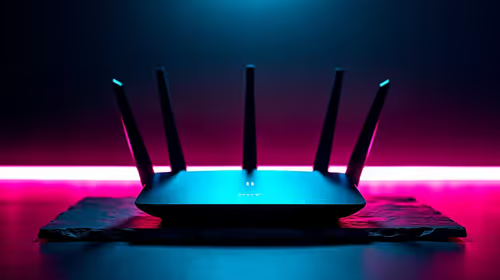
Wi-Fi 7 vs Wi-Fi 6e for competitive esports comes down to router support, latency goals, device compatibility, and coverage. SA buyers should match the choice to the real network setup.
Read more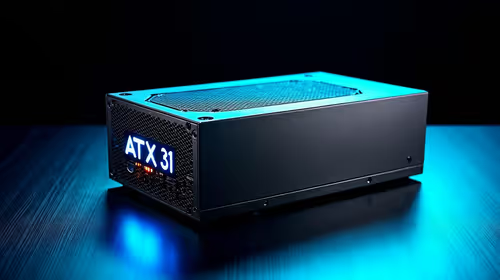
ATX 3.1 vs ATX 3.0 for mMO and live-service games buyers - what changes is mostly about compatibility, budget, upgrade path, and setup fit. SA buyers should check device support and real needs before expecting a clear win from either option.
Read more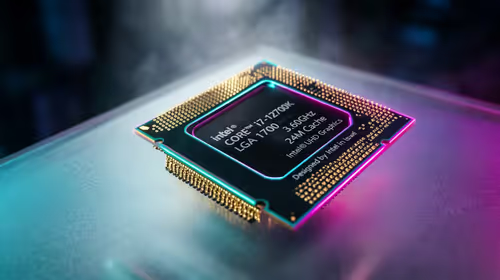
LGA 1851 vs LGA 1700 can affect Twitch and YouTube streaming when gaming and encoding share CPU resources. For SA creators, the real-world difference depends on encoder choice, memory support, motherboard cost, thermals, and upgrade plans.
Read more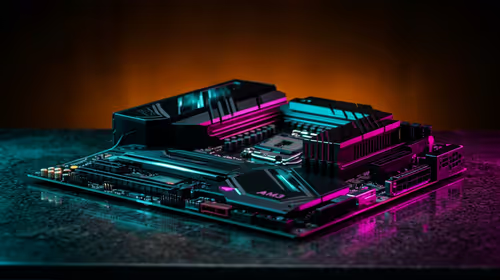
X870E vs X670E for aaa single-player gaming is mainly about fit, features, compatibility, cost, and upgrade path, not one automatic winner. SA buyers should match the choice to the setup.
Read more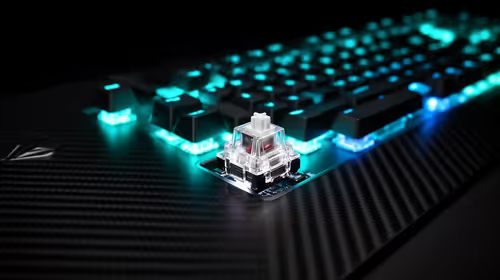
Hall Effect switches vs Mechanical switches for mMO and live-service games is mostly about compatibility, budget, upgrade path, and setup fit. SA buyers should check device support and real needs before expecting a clear win from either option.
Read more
A fake 113GB GTA VI ISO reportedly used empty padding around a small malware payload. SA gamers should delete unofficial builds, keep Windows security active and wait for official channels.

Wi-Fi 6E vs Wi-Fi 6 matters for 4K video editing when files move across a network. The real-world difference between Wi-Fi 6E and Wi-Fi 6 for video editing in 4K depends on NAS access, cloud uploads, router range, and SA creator workflows.

The difference between PCIe 5.0 and PCIe 4.0 for SA gamers is mostly bandwidth headroom. Compare GPU slot needs, NVMe speed, motherboard support, and upgrade timing before paying extra for a newer platform.

Gaming PC stuck pixel checks in South Africa should confirm the monitor fault first. Use colour tests, screenshot comparison, cable swaps, display menu checks, and clear photos before deciding on support.

Shokz OpenFit Air 2 earbuds weigh 7.2g each and use a redesigned dual-driver open-ear layout. SA buyers should choose them for comfort and awareness, not maximum isolation.

AMD's current driver now lists a Radeon RX 9050 4GB, while product coverage details a narrowed memory system. SA buyers should weigh the low VRAM ceiling against current local Radeon options.

Samsung Display has demonstrated a 16-inch 2.5K OLED laptop panel running at 300Hz. SA buyers should wait for a named notebook, full panel specifications and a local price before planning an upgrade.

Microsoft says some Windows 11 game crashes after recent updates are linked to RGB-related drivers. Affected SA gamers should confirm the update and driver before using the published registry workaround.
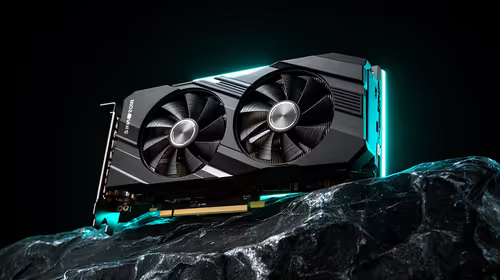
RTX 5090 on a 650W PSU is a tight pairing with very limited headroom. For SA gaming PCs, focus on total system draw, PSU quality, connector support, CPU choice, and avoid OC plans unless the full build is carefully power-limited.
PCIe 5.0 vs PCIe 4.0 for video editing in 4k is mainly about fit, features, compatibility, cost, and upgrade path, not one automatic winner. SA buyers should match the choice to the setup.
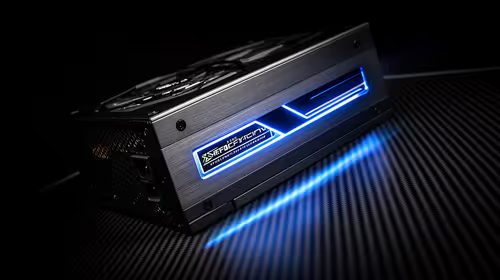
850W PSU safety for RTX 5090 is plausible with a quality unit and balanced parts. In SA, confirm connector support, CPU power draw, case airflow, PSU age, and spare capacity before building around 850W.
Wi-Fi 7 vs Wi-Fi 6e for competitive esports comes down to router support, latency goals, device compatibility, and coverage. SA buyers should match the choice to the real network setup.