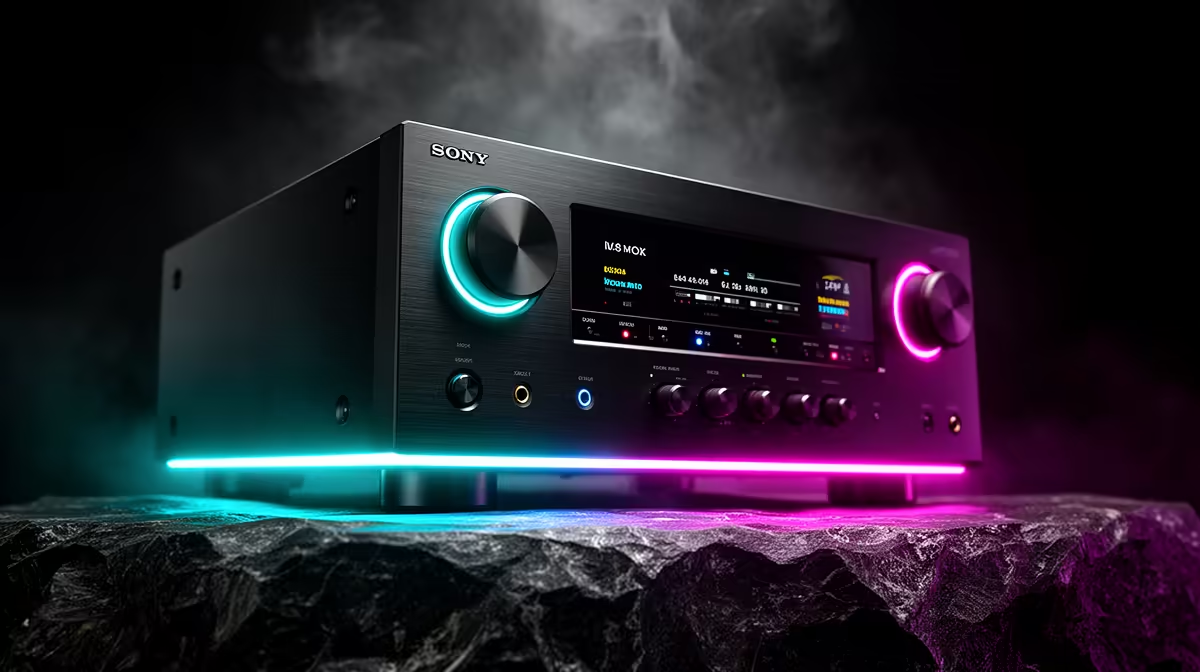
An AVR unit is useful for streaming to a television when several HDMI sources, passive speakers and a room-audio layout genuinely need central switching and amplification. It is unnecessary when the TV already handles the apps and a simple speaker system provides adequate dialogue.
Map every signal and speaker
List the streaming box, console, television inputs, required video modes and speaker type. Draw the path for picture, audio and remote control. Confirm whether audio return, surround decoding or multiple zones are real needs, then measure cabinet ventilation and cable length.
No AVR carries a verified price in the product facts. The Logitech Z407 speakers at R1,404 and SteelSeries Arena 3 at R2,782 are confirmed powered desktop-speaker references, not receiver-driven home-theatre packages. The ViewSonic portable LED projector with Harman Kardon audio at R5,996 is a separate display reference. Verify current HDMI modes, audio formats, channel power, impedance support, room correction, dimensions and warranty.
Allow open ventilation, never connect speakers below supported impedance and label each cable before installation. Test lip sync, quiet dialogue and device wake behaviour. Keep a direct TV-app route available if complex control fails.
Buy the receiver only after the diagram proves it simplifies a complete compatible system. Do not consume the setup allowance on unused channels while leaving weak speakers or an unsuitable room untreated.
Planning TV streaming audio? > Compare Evetech speakers and displays after mapping the full signal chain.