


PCIe 5.0 vs PCIe 4.0 for Video editing in 4k in SA
PCIe 5.0 vs PCIe 4.0 for video editing in 4k is mainly about fit, features, compatibility, cost, and upgrade path, not one automatic winner. SA buyers should match the choice to the setup.
Read moreBeginners and professionals both benefit from a compatible filament, saved baseline and repeatable test print. ELEGOO Galaxy PLA provides 1kg of 1.75mm material for R499, adding glossy dynamic shimmer and angle-changing colour to visible projects.

Experience changes the questions a maker asks, but it does not remove the need for a baseline. PLA filament best practices help beginners learn cause and effect while giving professionals a repeatable path across printers, models and production runs. ELEGOO Galaxy PLA illustrates why: the material is accessible at both levels, yet its moving finish still rewards deliberate testing and presentation.
Confirm 1.75mm PLA compatibility, start from the printer's supported profile, use a representative test and record the first repeatable success. For R499, the 1kg Galaxy spool combines glossy dynamic shimmer with plant-based material for beginners and professionals. New users should keep the process simple; experienced users should preserve traceable settings, orientation and inspection conditions.
A new maker should begin with a compact model that has a stable base, broad wall and one or two features related to the planned project. Load the material according to the printer instructions and use its normal PLA guidance. Avoid starting with a huge decorative model whose long runtime hides where a problem began.
Inspect the first layer, then watch steady feeding and layer formation. When a defect appears, name it before changing anything. A strand across open space, a lifted base and an uneven wall are different symptoms. Pick the adjustment or physical check that corresponds to the observation, then repeat the same short print.
Keep the successful sample and a simple note. Record the profile name, model orientation and what improved. This prevents the next attempt from returning to guesswork and teaches the maker how the specific machine responds.
Evetech's 3D printer range provides hardware context for anyone assembling a first setup, while the exact operating manual remains essential during use.
Professional work often needs several objects to present consistently. Save a controlled baseline for the printer, material and relevant layer goal. Label test pieces so orientation and date are not lost. If the workspace or spool condition changes, reproduce the known sample before altering a production model.
Separate approval criteria. Geometry, surface continuity, fit and decorative appearance should each have an observable standard. Galaxy PLA changes colour across angles, so one front photograph cannot establish the full visual result. Define the display light and normal viewing positions used for acceptance.
When several parts assemble into one model, plan their visible directions. A rotating highlight that breaks abruptly between adjacent panels may be intentional, but it should not be a surprise. Production notes can capture the preferred orientation without claiming that every geometry will reflect identically.
ELEGOO Galaxy PLA provides a glossy space effect with vibrant shifts as the viewer moves. Curves, facets and broad exposed faces can use the finish fully. Fit tests, internal brackets and hidden supports may not need decorative material unless another project reason applies.
The spool contains 1kg of 1.75mm filament and uses a biodegradable plant-based formulation. Price, quantity and diameter belong in purchasing and planning. Geometry, supports and failed trials determine the actual model count.
Browse Evetech's 3D printing filament selection to compare the Galaxy option with named alternatives. A beginner may choose it for a first display object, while a professional may use it for a repeatable visual series. The decision is about output, not a barrier based on experience.
Both groups benefit from sealed dry storage, a secured filament end and a clear material path. Both should stop a failing job early enough to preserve evidence. Both need one-variable tests, because simultaneous changes make improvement difficult to explain or reproduce.
Use a short representative model after maintenance, a long storage interval or a meaningful room-condition change. Compare it with the saved sample under matching light. If geometry remains sound but the colour response feels different, test viewing conditions before disturbing the profile.
Finally, keep project purpose visible. A decorative spool earns value on a surface people see. A functional part begins with required material behaviour. A prototype should answer a defined question. These principles prevent a successful print from being judged by the wrong criterion.
Teams can make the same practice visible through a short handover sheet. Include the printer, material, approved sample location, profile name and acceptance light. Note any maintenance event or workspace move before the next run. This allows a colleague to reproduce the starting conditions without turning the sheet into a rigid promise for unrelated geometry.
Beginners can use a lighter version with three questions: Did the spool feed cleanly? Did the model form correctly? Does the finish suit the object when it turns? Answering them in order keeps a vivid reflection from hiding a mechanical fault. Professionals can expand the same sequence into measured checkpoints without changing its logic.
Common use should also be reviewed after the spool has served several projects. Count which models genuinely benefited from the Galaxy surface and which would have worked as well with a quieter finish. This retrospective sharpens future purchasing, reduces decorative material used on hidden parts and gives both skill levels evidence for their next project rather than another generic rule.
The review can also expose training needs. If beginners repeatedly change several settings together, simplify the test sheet. If experienced users produce inconsistent visual matches, strengthen orientation and lighting records. Best practice is not a frozen checklist; it is a method that becomes clearer when real mistakes reveal where the handover or evidence was weak. Revisit that sheet after each shared production run.
The same spool can suit a first-time maker and a professional because its distinction lies in controlled presentation, not an intentionally difficult print process. Galaxy PLA retains the smooth, dependable character of traditional PLA. Beginners can establish one clean baseline and learn how simple curves reveal shimmer; experienced users can plan orientation, surface scale and directional lighting around the moving reflections.
Common uses include display models, decorative shells, props, gifts and presentation pieces. These projects give the high-gloss surface and rich transitions an audience. Functional parts can still use PLA where their requirements permit it, but the Galaxy premium is strongest on faces that remain visible.
The plant-derived biodegradable formulation and R499 price should be recorded alongside the 1kg quantity. Together they define the material, cost and available project volume without turning experience level into a promise that every geometry or printer profile succeeds unchanged.
For repeated professional work, retain an approved surface sample with the saved machine profile and inspection light. Matching those three references makes later acceptance more consistent. A beginner can use the same method on a smaller scale: one clean sample, one working setup and one clearly lit comparison before the full project begins.
Use a small relevant test and change one thing only after naming the visible problem. This builds understandable cause and effect.
It adds stronger records, repeatable inspection conditions and explicit acceptance criteria for geometry, finish and multi-part consistency.
No. It is beginner and professional friendly, with the same need for printer compatibility and a sound PLA baseline at either level.
Display models and visible components with curves, facets or broad faces can reveal moving gloss across several viewpoints.
R499 covers one kilogram of 1.75mm ELEGOO Galaxy PLA with biodegradable plant-based material and dynamic shimmer.
Ready to turn PLA experience into a repeatable method? Compare Evetech's filament and 3D printer options, then build a saved baseline suited to your own project and level of production.
Use a small relevant test and change one thing only after naming the visible problem. This builds understandable cause and effect.
It adds stronger records, repeatable inspection conditions and explicit acceptance criteria for geometry, finish and multi-part consistency.
No. It is beginner and professional friendly, with the same need for printer compatibility and a sound PLA baseline at either level.
Display models and visible components with curves, facets or broad faces can reveal moving gloss across several viewpoints.
R499 covers one kilogram of 1.75mm ELEGOO Galaxy PLA with biodegradable plant-based material and dynamic shimmer.
PCIe 5.0 vs PCIe 4.0 for video editing in 4k is mainly about fit, features, compatibility, cost, and upgrade path, not one automatic winner. SA buyers should match the choice to the setup.
Read more
Wi-Fi 7 vs Wi-Fi 6e for competitive esports comes down to router support, latency goals, device compatibility, and coverage. SA buyers should match the choice to the real network setup.
Read more
ATX 3.1 vs ATX 3.0 for mMO and live-service games buyers - what changes is mostly about compatibility, budget, upgrade path, and setup fit. SA buyers should check device support and real needs before expecting a clear win from either option.
Read more
LGA 1851 vs LGA 1700 can affect Twitch and YouTube streaming when gaming and encoding share CPU resources. For SA creators, the real-world difference depends on encoder choice, memory support, motherboard cost, thermals, and upgrade plans.
Read more
X870E vs X670E for aaa single-player gaming is mainly about fit, features, compatibility, cost, and upgrade path, not one automatic winner. SA buyers should match the choice to the setup.
Read more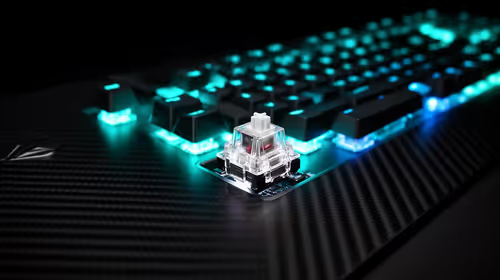
Hall Effect switches vs Mechanical switches for mMO and live-service games is mostly about compatibility, budget, upgrade path, and setup fit. SA buyers should check device support and real needs before expecting a clear win from either option.
Read more
A fake 113GB GTA VI ISO reportedly used empty padding around a small malware payload. SA gamers should delete unofficial builds, keep Windows security active and wait for official channels.

Wi-Fi 6E vs Wi-Fi 6 matters for 4K video editing when files move across a network. The real-world difference between Wi-Fi 6E and Wi-Fi 6 for video editing in 4K depends on NAS access, cloud uploads, router range, and SA creator workflows.

The difference between PCIe 5.0 and PCIe 4.0 for SA gamers is mostly bandwidth headroom. Compare GPU slot needs, NVMe speed, motherboard support, and upgrade timing before paying extra for a newer platform.

Gaming PC stuck pixel checks in South Africa should confirm the monitor fault first. Use colour tests, screenshot comparison, cable swaps, display menu checks, and clear photos before deciding on support.

Shokz OpenFit Air 2 earbuds weigh 7.2g each and use a redesigned dual-driver open-ear layout. SA buyers should choose them for comfort and awareness, not maximum isolation.

AMD's current driver now lists a Radeon RX 9050 4GB, while product coverage details a narrowed memory system. SA buyers should weigh the low VRAM ceiling against current local Radeon options.

Samsung Display has demonstrated a 16-inch 2.5K OLED laptop panel running at 300Hz. SA buyers should wait for a named notebook, full panel specifications and a local price before planning an upgrade.

Microsoft says some Windows 11 game crashes after recent updates are linked to RGB-related drivers. Affected SA gamers should confirm the update and driver before using the published registry workaround.

Minisforum's M2 Pro pairs Core Ultra X7, Arc B390 graphics and 32GB onboard memory in 1.8 litres. SA buyers should weigh its fixed memory and $1,439 launch offer against local mini PCs.

Smart monitors can add apps and convenience, but they also add privacy settings and unwanted-software risk. SA buyers should audit the operating system before paying for extras.

Lenovo says Legion Go failures linked to BIOS N3CN42WW are not user error. Affected SA owners should stop retrying the update, preserve proof and open a support case.

The ROG Gjallar gaming soundbar is now listed in the US at $599.99. SA buyers should compare its 2.1.2 audio, wireless bass and built-in chat controls with simpler local options.