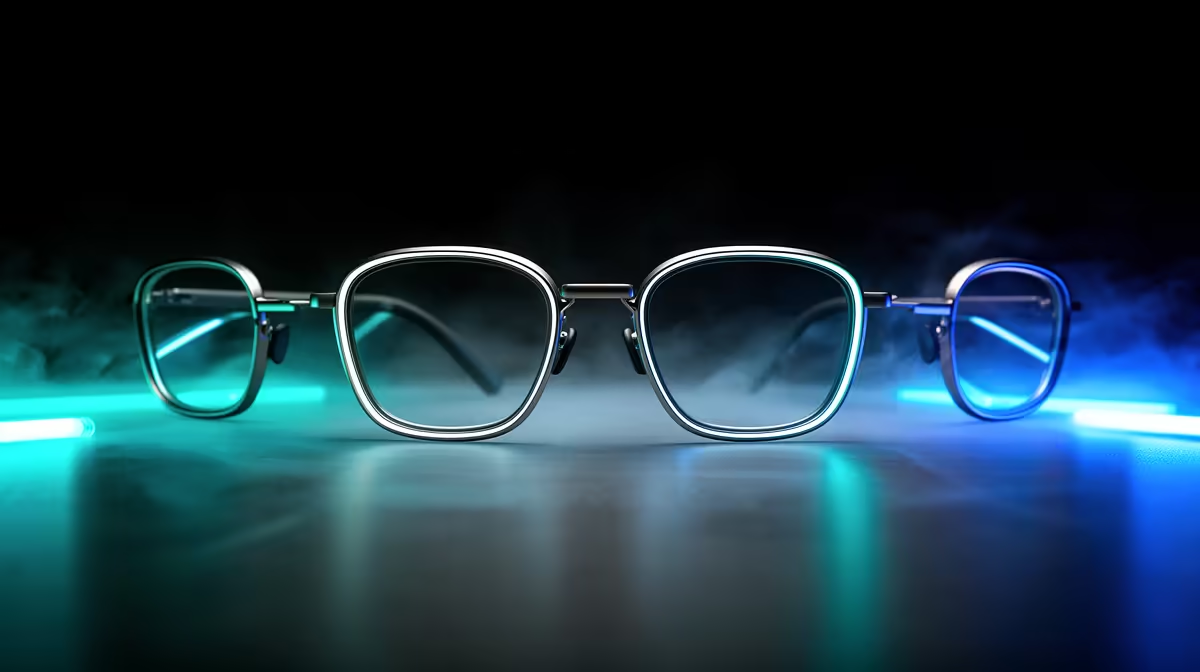
Camera glasses that answer questions, frame a video and translate a menu used to be a prototype reel. Now the AI smart glasses worth buying in South Africa are real products sitting on local shelves, and the shortlist is short and sensible. Meta's two ranges, the Ray-Ban Meta and the Oakley Meta, dominate the practical end of the market because they actually ship here, work with Meta AI, and survive everyday weather.
Quick Answer
The most realistic AI smart glasses in SA are the Ray-Ban Meta, available locally from around R10,745, and the Oakley Meta for the more rugged, sport-leaning buyer. Both pair Meta AI voice assistance with a built-in camera, open-ear audio and IPX4-or-better water resistance. Skip the experimental display-equipped concepts for now and choose between these two ranges.
Why Meta owns the practical end of the market
Plenty of brands have shown AI glasses, but very few are buyable in South Africa with local support and stock. Meta's lineup is the exception. The Ray-Ban frames lean on familiar Wayfarer, Headliner and Skyler shapes, so they look like ordinary sunglasses rather than gadgets, while the Oakley side targets people who want them for running, riding and the outdoors.
The second-generation models push the specs meaningfully: up to 3K Ultra HD video capture and roughly double the battery life of the first wave, moving from around four hours of mixed use to about eight. That battery jump is the single biggest quality-of-life change, because the earlier glasses ran flat faster than most users expected.
Ray-Ban Meta: the everyday pick
For most buyers, the Ray-Ban Meta is the right starting point. The frames are unmistakably Ray-Ban, the open-ear speakers are good enough for podcasts and calls, and the camera is genuinely handy for first-person clips and quick photos without reaching for a phone.
Meta AI is the headline feature. You speak to the glasses, ask what you are looking at, request a translation, or have it describe a scene, and it answers through the speakers. IPX4 water resistance means a drizzle or sweat will not bother them, which matters for daily wear in Cape Town's changeable weather or a humid Durban afternoon.
At around R10,745 for the standard Wayfarer, they sit in premium-sunglasses territory rather than budget-gadget pricing, which is fair given they replace both your shades and a chunk of what you used a phone camera for. You can see the current local options in the AR and smart glasses range at Evetech to compare frame styles and lens choices side by side.
Oakley Meta: built for movement
The Oakley Meta range is the choice if your glasses spend more time on a trail or a bike than at a desk. The HSTN model is the stylish all-rounder with 3K video and the same roughly eight-hour battery, while the Vanguard variant targets serious activity with a tougher IP67 rating, sport-tuned audio and integration with fitness platforms like Garmin and Strava.
That sport focus is the real differentiator. If you want to capture a ride hands-free, glance at a metric, or take a call mid-run, the Oakley side is built around that, whereas the Ray-Ban range is built around looking like ordinary glasses.
What to skip for now
Glasses with a built-in display in the lens exist as concepts and limited releases, but they are not the sensible buy in SA yet. Stock is thin, prices are high, and the everyday usefulness does not match the audio-and-camera approach Meta has refined. For a practical purchase this year, the camera-and-AI glasses are the mature option, and the bestselling accessories at Evetech are a good place to add a charging case or cleaning kit to keep them in shape.
Practical buying notes for South African shoppers
Neither Meta brand has an official retail footprint in South Africa, which means these glasses arrive through third-party importers. That has two real consequences: pricing shifts with the Rand-dollar exchange rate, so the same frame can cost noticeably more or less between months, and warranty support runs through the local retailer rather than Meta directly. Confirm what after-sales support looks like before you commit.
Frame and lens availability also varies by importer stock. The standard Wayfarer shape is the most commonly available, while less common shapes and prescription-lens options may require ordering in. If you need prescription lenses, it is worth asking upfront whether the retailer supports that, since not all import channels offer the full lens catalogue that Meta provides in markets with official support.
Meta AI features: what works and what does not in SA
Meta AI is the headline feature of both ranges, and the core voice-command functionality, asking what you are looking at, requesting a translation, describing a scene, works over an internet connection from any country. Some features like live translation and real-time captions require a smartphone running the Meta View app, which is available for both Android and iOS. The AI assistant connects through the phone rather than processing onboard, so a solid mobile data connection or Wi-Fi matters for the best experience. South Africa's patchy rural coverage means these are primarily urban tools, but in Cape Town or Johannesburg where connectivity is reliable they perform as advertised.
Frequently Asked Questions
Are Ray-Ban Meta glasses available in South Africa?
Yes. Ray-Ban Meta smart glasses are sold locally, with the standard Wayfarer seen from around R10,745. Availability and exact pricing vary by frame and lens, so confirm current stock before buying.
What can AI smart glasses actually do?
They take photos and video, play audio through open-ear speakers, handle calls, and run Meta AI for voice questions, translation and describing what you are looking at. They do not project a screen in your vision.
What is the difference between Ray-Ban Meta and Oakley Meta?
Ray-Ban Meta favours everyday style and discreet looks, while Oakley Meta is built for sport and the outdoors, with tougher water and dust resistance and fitness-app integration on the Vanguard model.
Are smart glasses waterproof?
They are water resistant, not waterproof. Ray-Ban Meta carries IPX4 for splashes and sweat, while the Oakley Vanguard steps up to IP67 for heavier dust and water exposure. Neither is meant for swimming.
How long does the battery last?
The current-generation models run roughly eight hours of mixed use, about double the first wave. The charging case tops them up through the day, so heavy users rarely run flat.
Curious which pair fits your face and your day? Browse the AR and smart glasses range at Evetech to compare Ray-Ban and Oakley Meta options and pick the one that suits how you actually live.