Quick Answer
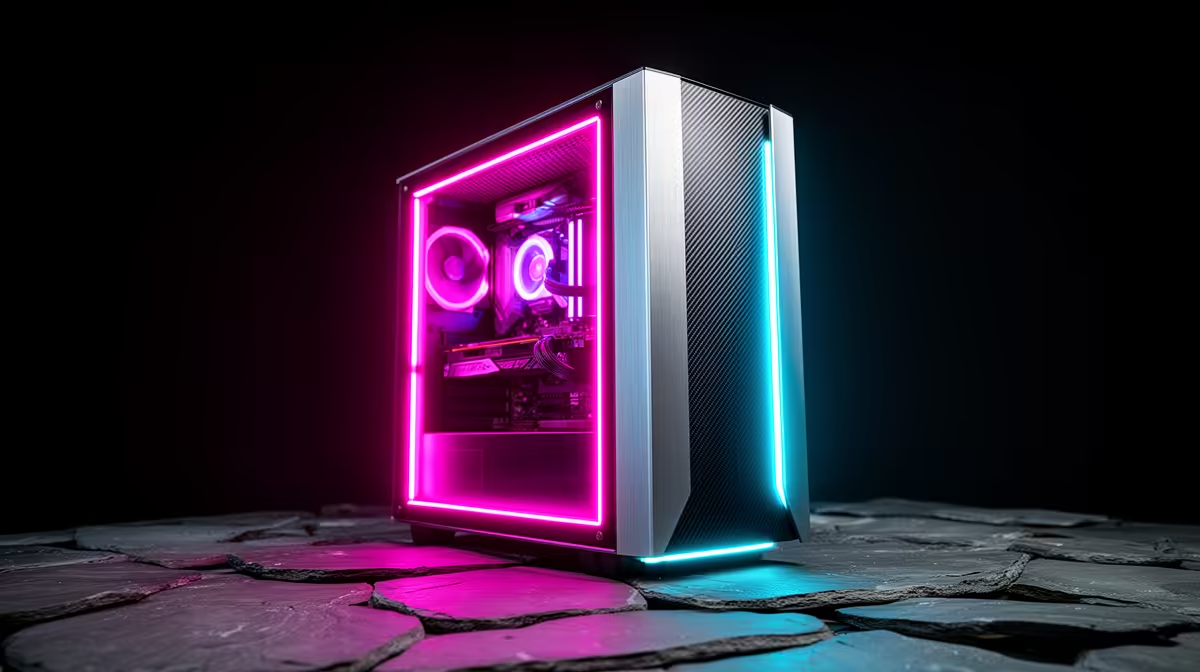
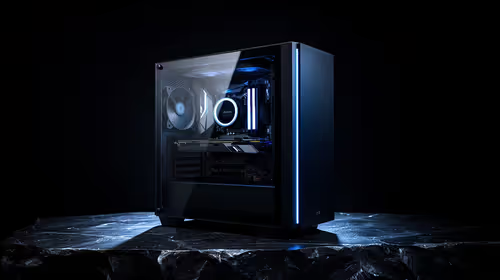
For a rand-conscious enthusiast build, the ideal case costs R1,500 to R2,400 and delivers these specs: mesh or perforated front panel, at least 380mm GPU clearance, three pre-installed 120mm or 140mm fans, front USB Type-C, and tempered glass side panel. You do not need to spend more unless you have an E-ATX board or a 420mm radiator.
The Specs That Matter Most for Performance Per Rand 🎮
An enthusiast gaming build in South Africa typically centres on a Ryzen 7 9800X3D or Core Ultra 7 265K paired with an RTX 5070 Ti or RX 9070 XT. That GPU combination generates 250W to 300W of heat under sustained load. The case must move that heat out reliably. Front panel mesh coverage above 60 percent, at least two 140mm front intake fans, and a single 120mm rear exhaust are the minimum viable airflow configuration. Cases in the R1,600 to R2,200 range from reputable brands consistently hit these marks. Tempered glass on the side adds aesthetic value without meaningful thermal cost if the front panel is properly ventilated.
GPU Clearance and Radiator Support for Future Upgrades 🔧
A rand-conscious buyer should future-proof their case by targeting 400mm GPU clearance and 360mm top radiator support even if current GPU and cooling plans do not require both. A case bought today needs to accommodate the GPU upgrade two years from now, and current-gen flagship cards are pushing 400mm regularly. Top-mounted 360mm AIO support is similarly useful: an air cooler on a Ryzen 7 9800X3D is adequate now, but an AIO upgrade in the next build cycle is common. Cases with these specs in the R1,800 to R2,400 range represent genuinely good value in the SA market where case prices track rand weakness against the dollar.
Cable Management and Build Quality Indicators 🛠️
Poor cable management in a glass-panel case is immediately visible and frustrating. Check for a PSU shroud hiding power cables below the motherboard, rubber grommets on cable routing holes, at least 25mm of space behind the motherboard tray, and hook-and-loop straps or velcro tie points. Cases skimping on these details typically use thinner steel (under 0.6mm) across the entire frame. A solid case should resist flexing when you press the side panel firmly. Vibration noise from fans coupling to thin steel adds up over long gaming sessions, which is why build quality, not just specs, deserves attention at every rand level.
Mid-Tower Beats Budget Full-Tower ⚡
A well-specced mid-tower at R2,000 builds better than a budget full-tower at R1,800. Full-tower pricing at the low end usually means large dimensions with compromised internal layout, shallow cable routing channels, and fewer fan mounting points than a proper mid-tower. Spend on quality over size unless your build genuinely needs the extra space.
FAQ
Do I need a full-tower case for an enthusiast build?
Not typically. A quality mid-tower with 400mm GPU clearance and front 360mm radiator support handles most enthusiast builds based on standard ATX boards. Full-tower is only necessary for E-ATX boards, dual-GPU setups, or extreme triple-radiator cooling.
How important is a front USB Type-C port for gaming?
It is increasingly important for peripheral connectivity. Many gaming headsets, controllers, and portable chargers now use USB-C exclusively. A front-panel Type-C port requires a USB 3.2 Gen 2 internal header on your motherboard, which most current Z890 and X870 boards include.
What fans should I upgrade first in a bundled case?
Upgrade front intake fans first. Rear exhaust fans have less impact on thermal performance because they only need to evacuate air that the front fans have already moved through the case. A pair of 140mm Noctua or be quiet! Pure Wings front fans (around R400 to R700 for the pair) is a worthwhile addition on high-GPU builds.
Want top specs without overspending on your case?
Browse Evetech's range of enthusiast gaming cases and find the best feature set for your rand budget.