Quick Answer
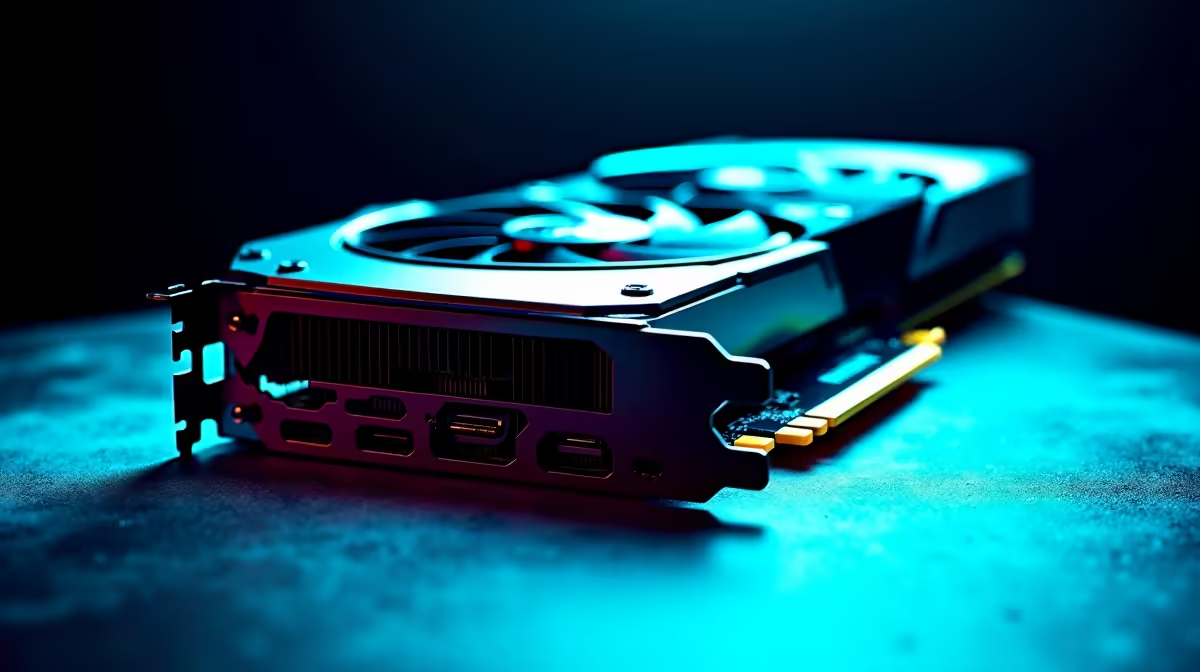
For iRacing at 4K you want a strong mid-to-upper GPU such as an RTX 4070 Super or better to hold high frame rates with the high refresh sim racers need; iRacing rewards 100+ fps for smooth wheel-to-screen feel. The CPU and a high-refresh monitor matter as much as raw GPU power here.
What iRacing Demands At 4K
iRacing is well optimised but benefits hugely from high, stable frame rates, since sim racing precision depends on low latency and smooth motion. At 4K with high settings, a mid-to-upper card holds 80-120 fps on most tracks, with the busiest race starts and full grids pushing it hardest. Triple-monitor or high-refresh single-screen setups raise the bar further, so headroom matters.
VRAM of 12GB+ is comfortable for 4K, and a card that sustains clocks under long race stints, with good cooling, keeps frame pacing consistent through a full event.
Balancing CPU, GPU And Display
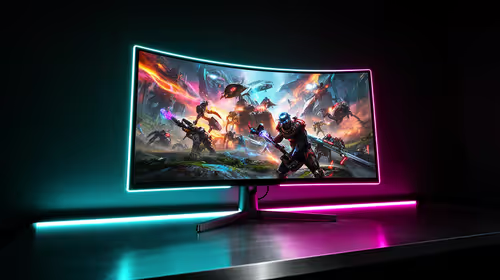
iRacing can be CPU-sensitive with large grids, so a modern 6-or-8-core CPU helps maintain frames when 20+ cars are on screen. For the display, a 4K high-refresh panel (120Hz+) lets you use the frame rate a strong GPU provides. If you run triple screens, expect to need more GPU power than single-screen 4K. Pair the build with a 750W PSU for a mid-to-upper card.
FAQ
What GPU is best for iRacing at 4K?
A mid-to-upper card like an RTX 4070 Super or better, holding 80-120 fps at 4K high. Sim racing rewards high, stable frame rates, so headroom for full grids is worth having.
Does iRacing need a fast CPU?
Yes, especially with large grids. A modern 6-or-8-core CPU keeps frames stable when 20+ cars are on screen, where weaker CPUs cause dips at race starts.
Do I need a high-refresh monitor for iRacing?
It helps a lot. A 4K 120Hz+ panel lets you use the high frame rates a strong GPU produces, giving the smooth, low-latency feel that improves sim racing precision.
For 4K iRacing, pair a mid-to-upper GPU at Evetech with a strong CPU and a high-refresh monitor to keep frames smooth through full grids.