Quick Answer
For recording lectures, three tiers cover every budget: a Fifine K669 USB mic at around R600-R900 for clear note capture, a HyperX SoloCast near R1,200-R1,600 for cleaner voice and tap-to-mute, and a HyperX QuadCast or Blue Yeti from R2,500-R3,500 if you also stream or podcast. Most students never need more than the mid tier.
Budget tier: get clear words down
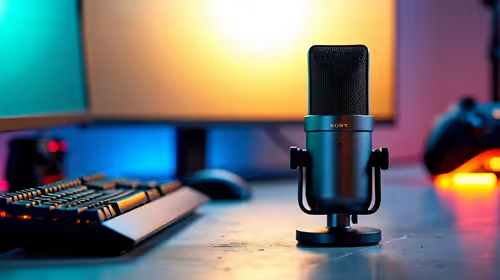
For pure lecture capture and the odd online tutorial, a Fifine K669 or similar cardioid USB mic captures speech far more clearly than a laptop's built-in array. It plugs in over USB, needs no interface, and sits on the desk at R600-R900, which is the cheapest meaningful upgrade for recorded study notes. A cardioid pattern rejects room noise from the sides, so a noisy res corridor bleeds in less.
Balanced and premium: when to step up
The balanced pick, a HyperX SoloCast around R1,200-R1,600, adds a cleaner capsule and tap-to-mute that is handy in live tutorials. Step to the premium tier, a HyperX QuadCast or Blue Yeti at R2,500-R3,500, only if you also stream, podcast or record group projects where polish matters; the extra rand buys multiple polar patterns and a built-in shock mount, not better lecture notes. A R150-R300 pop filter and a desk arm improve any tier more than spending up a level does.
Buying it in South Africa
Evetech ships mics nationwide, and the practical student buy is the budget or balanced tier at R600-R1,600 plus a cheap pop filter. Record at 16-bit 44.1kHz mono for speech, which keeps files small for cloud backup and is more than enough fidelity for lectures. Spend the saved money on a desk arm so the mic clears your keyboard during long study blocks.
FAQ
Which mic tier do I need for recording lectures?
The budget tier, a Fifine K669 at R600-R900, captures clear speech for note-taking. Step to the SoloCast at R1,200-R1,600 only if you want a cleaner capsule and tap-to-mute for live tutorials.
Do I need a premium mic like the QuadCast for study?
No. A R2,500-R3,500 mic is overkill for lectures alone. It pays off only if you also stream, podcast or record polished group projects where multiple polar patterns matter.
What recording settings suit lecture capture?
Record in mono at 16-bit 44.1kHz with a cardioid pattern aimed at your mouth. That keeps file sizes small for cloud backup while staying perfectly clear for spoken notes.
pop filter and a desk arm improve any USB mic more than jumping a price tier does. Buy the mid mic, add the accessories, and stop there.