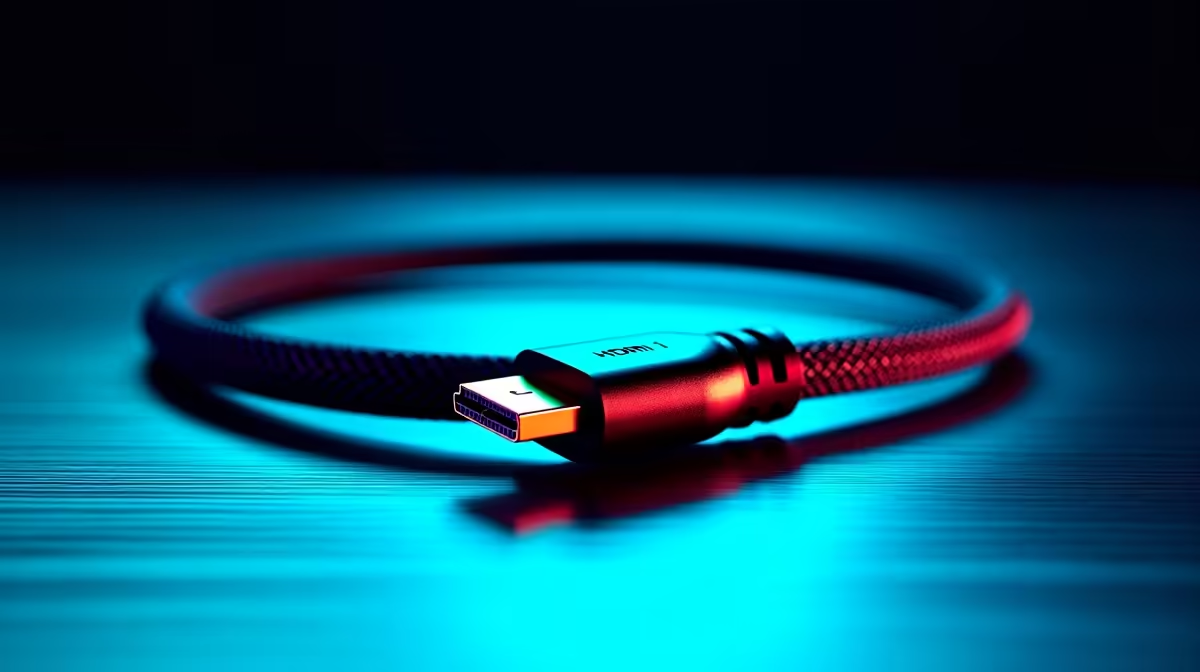
So, you’ve dropped some serious cash on a shiny new PS5, Xbox Series X, or a beastly 4K gaming monitor. Your setup looks incredible, but is your gameplay as smooth as it should be? If you’re still seeing stutter, lag, or missing features, the culprit might be the one thing you overlooked… that little cable connecting it all. Using the wrong one is like putting retreads on a Ferrari. Let's find you the best HDMI 2.1 cable for pure performance.
Why Your New Gear Demands a High-Speed HDMI 2.1 Cable
Before HDMI 2.1, gaming at 4K was often capped at 60 frames per second (FPS). It was good, but not great. The HDMI 2.1 standard smashes that ceiling, offering a massive bandwidth jump to 48Gbps. 🚀
What does that mean for you in South Africa?
- True 4K at 120Hz: Experience incredibly fluid, responsive gameplay on compatible displays. This is a massive advantage in fast-paced shooters and racing sims.
- 8K at 60Hz: While 8K gaming is still emerging, having a capable cable means you're future-proofed for the next generation of content and displays.
- Variable Refresh Rate (VRR): This feature synchronises your display's refresh rate with your console or GPU's output, eliminating ugly screen tearing and stutter for a seamless visual experience.
- Auto Low Latency Mode (ALLM): Your console can tell your TV to automatically switch to its 'Game Mode', ensuring the lowest possible input lag without you touching the remote.
Getting these benefits requires a cable built for the job. A standard, older HDMI cable simply can't handle the data pipeline, which is why exploring options from a reliable brand like GIZZU is the first step to unlocking your hardware's potential.
What to Look For in the Best HDMI 2.1 Cables
Not all cables are created equal. When you're hunting for the best HDMI 2.1 cables for speed and reliability, a few key features separate the champions from the chumps. Price isn't the only factor; build quality and certification are paramount. 🔧
Certification and Build Quality
Look for the official "Ultra High Speed HDMI Cable" certification on the packaging. This is your guarantee that the cable has been tested to meet the strict 48Gbps specification. Beyond the label, consider the physical construction. Braided nylon sheaths, like those found on many of Promate's durable cables, offer superior durability and tangle resistance compared to basic plastic ones. Gold-plated connectors also provide better corrosion resistance, ensuring a solid, reliable connection for years to come.
Check Your Whole Setup!
An HDMI 2.1 cable is only as good as the ports it's plugged into. To get that buttery-smooth 120Hz goodness, make sure both your graphics card or console and your TV or monitor have ports that support the full HDMI 2.1 feature set.
Finding a Reliable HDMI Cable That Won't Empty Your Wallet
Here’s some good news for your wallet. You don't need to spend a fortune to get a high-quality, reliable HDMI 2.1 cable. In the past, premium cables came with outrageous price tags, but today, performance is more accessible than ever. You can find great HDMI 2.1 cables for under R500 that deliver the full 48Gbps bandwidth. ✨
Focus on trusted manufacturers that stand behind their products. For instance, well-known brands like HP offer certified cables that provide peace of mind without forcing you to survive on two-minute noodles for a month. The key is to buy from a reputable source, ensuring you get a certified product that delivers on its promises.
Upgrade Your Connection, Upgrade Your Game
Don't let an outdated cable be the weak link in your high-performance setup. Get the speed and reliability you paid for and eliminate stutter for good. Explore our full range of cable solutions and see the difference for yourself.