Building a smart home that you actually control yourself, with no cloud account holding your devices hostage, has never been easier. Matter devices for Home Assistant crossed 1,100 certified products in early 2026, and the standard now covers far more than lights and plugs. For South African homes running on solar and batteries, the newer energy types make local monitoring genuinely useful rather than a novelty.
Quick Answer
By early 2026 there were over 1,100 Matter-certified products spanning lights, plugs, locks, and sensors, all of which pair cleanly with Home Assistant. Matter 1.4 added solar, battery, and heat pump device types, which suit SA solar setups by letting you monitor energy locally inside Home Assistant rather than through a vendor app.
Why Matter and Home Assistant work so well together
Matter is a single connectivity standard that lets devices from different brands speak the same language. Home Assistant is the open platform that runs on your own hardware and keeps control in your house rather than on a manufacturer's server. Put them together and you get a smart home where a light from one brand and a sensor from another both appear in one dashboard, with automations running locally even if your internet drops.
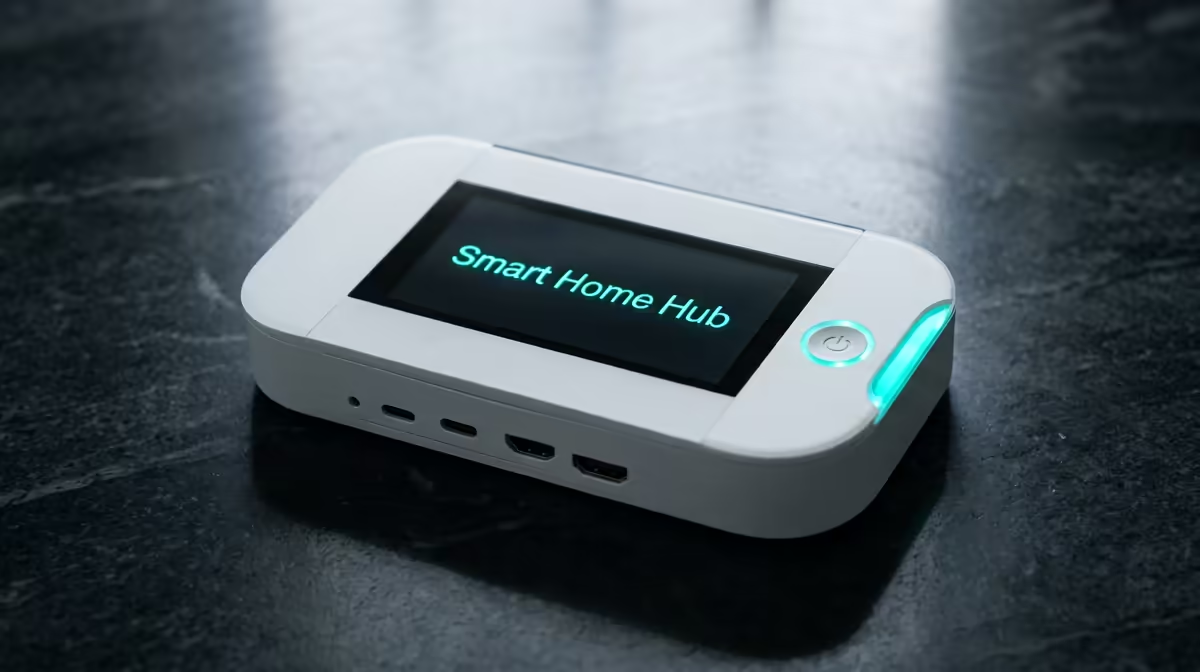
That local-first behaviour matters in South Africa, where a stable connection is not guaranteed everywhere. Devices that respond on your own network keep working when the link to the outside world wobbles. To see what hardware is available for a setup like this, the smart home and appliance products at Evetech cover the categories that pair with a Home Assistant hub.
The device categories worth starting with
Lighting
Smart bulbs and switches are the most common entry point, and Matter support here is mature. A Matter light pairs with Home Assistant in minutes and slots into automations such as sunset-triggered scenes or motion-activated passage lighting. Switches are often the smarter buy than bulbs, since they keep the existing fittings and control everything on that circuit.
Smart plugs
Plugs are the cheapest way to make a dumb appliance controllable. A Matter plug lets you schedule a heater, monitor what a device draws, or cut power to standby loads. For energy-conscious SA households, the monitoring side is as valuable as the switching.
Locks
Matter locks bring keyless entry into Home Assistant with local control, so you can automate locking at night or unlocking for trusted routines. Because the control is local, the lock keeps responding to your dashboard even during an internet outage.
Sensors
Motion, contact, temperature, and humidity sensors are the quiet workhorses of a good smart home. They feed the conditions that drive every useful automation, from turning on a fan when a room warms up to alerting you when a door opens unexpectedly.
Matter 1.4 and SA solar homes
The 1.4 update is the most relevant for South Africa because it added device types for solar power, batteries, and heat pumps. That means inverters, battery systems, and compatible energy devices can report their status into Home Assistant directly. For a home running solar, this turns a pile of separate vendor apps into one local dashboard showing generation, storage, and consumption side by side.
Why local energy monitoring matters here
Solar and battery setups are common in SA homes, and the data they produce is genuinely actionable: when to run heavy appliances, how much charge is left, whether to lean on stored power or the grid. Pulling that into Home Assistant keeps the information on your own network and lets you build automations around it, such as delaying a high-draw task until the batteries are full.
Matter, Thread, and Wi-Fi explained simply
A lot of confusion around Matter comes from the networks underneath it. Matter is the language the devices speak, but they speak it over one of two networks. Wi-Fi suits mains-powered devices such as plugs and many smart lights, since power is not a constraint for them. Thread is a low-power mesh network designed for battery devices like sensors and locks, where sipping power is essential for long battery life.
Why Thread needs a border router
Thread devices cannot reach Home Assistant on their own. They need a Thread border router, a device that bridges the Thread mesh to your main network. Some smart speakers and hubs include one, and standalone border routers exist too. If your first Matter purchases are Wi-Fi plugs and lights, you may not need Thread at all. The moment you add battery sensors or a smart lock that uses Thread, plan a border router into the setup. Knowing this in advance prevents the common surprise of a new device that simply will not pair.
Building reliable automations
The real payoff of Matter in Home Assistant is automation that runs locally and quickly. Because the logic lives on your own hardware, a motion sensor can switch a light in a fraction of a second without a round trip to a distant server. Good automations start small and specific: a passage light that follows movement after dark, a notification when a door opens while you are out, a fan that kicks in when a room crosses a temperature threshold.
Layering sensors for smarter behaviour
The more conditions Home Assistant can read, the smarter your automations become. Combine a motion sensor with a light-level reading so a lamp only switches on when the room is genuinely dark. Pair a contact sensor with presence detection so an open-door alert only fires when nobody is home. This layering is where a local platform shines, because you are free to combine devices from any brand into one rule without a vendor locking you out.
How to begin without overspending
Start with a Home Assistant hub running on modest hardware, add a couple of Matter devices in a category you will use daily, such as lighting or plugs, and grow from there. Resist buying a drawer full of gadgets up front. Each device should solve a real annoyance, whether that is a dark passage at night or an appliance you keep forgetting to switch off.
Thread is worth understanding too, since many Matter sensors and locks use it as their low-power network and may need a Thread border router in the mix. When you are ready to expand, the best-selling accessories at Evetech are a quick way to find the cables, hubs, and extras a growing setup needs.
Frequently Asked Questions
Do all Matter devices work with Home Assistant?
The large majority of certified Matter devices pair with Home Assistant, since both follow the same open standard. Always confirm a specific product lists Matter support, and check whether it uses Thread, which may need a border router.
What is the difference between Matter over Wi-Fi and over Thread?
Wi-Fi suits mains-powered devices like plugs and some lights. Thread is a low-power mesh used by battery sensors and locks, and it needs a Thread border router in your network to bridge to Home Assistant.
Does Matter need an internet connection to work?
No. Matter is designed for local control, so paired devices and Home Assistant automations keep working on your own network even when the internet is down. That local-first behaviour is one of its biggest strengths.
Can Matter help with my solar setup?
Yes. Matter 1.4 added solar, battery, and heat pump device types, so compatible energy hardware can report into Home Assistant for local monitoring of generation, storage, and consumption in one place.
Is it hard to set up Matter in Home Assistant?
Pairing a Matter device is usually a quick guided process inside Home Assistant. The main planning step is deciding whether you need a Thread border router for any Thread-based devices you buy.