Quick Answer
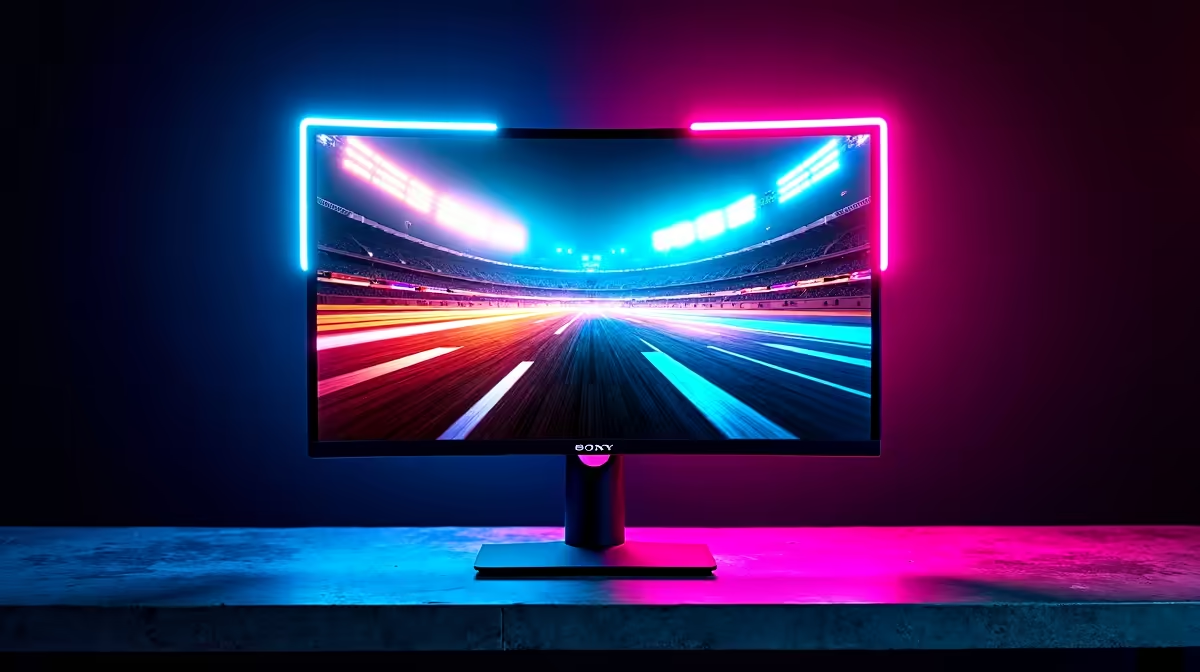
For Rocket League, a 144Hz to 240Hz monitor keeps the fast ball and camera motion crisp, since the game runs well past those frame rates. A 1080p 165Hz IPS panel near R4,500 suits most players; competitive players step to a 1080p 240Hz IPS near R6,500-R9,000.
Why High Refresh Matters in Rocket League
Rocket League's fast-moving ball, quick camera swings and aerial play benefit from high refresh, which reduces motion blur and helps you read the ball's path. The game runs at very high frame rates, often 300fps-plus, on a Ryzen 5 7600 and RTX 4060-class GPU, so the monitor is the limiting factor. The jump from 60Hz to 144Hz is the biggest single improvement; 144Hz to 240Hz is a refinement competitive players value for cleaner motion during aerials.
Picks and Pairing for SA Players
A 1080p 165Hz IPS monitor near R4,500 is the value pick that covers most players. A 1080p 240Hz IPS near R6,500-R9,000 is the competitive choice for the smoothest ball tracking. Look for a 1ms GtG response and FreeSync or G-Sync support to keep the picture tear-free at the game's high frame rates. Pair the monitor with a Ryzen 5 7600 and RTX 4060-class GPU, and cap your frame rate above the refresh for consistent motion.
FAQ
What refresh rate is best for Rocket League?
144Hz to 240Hz. The game runs at very high frame rates, so a high-refresh monitor reduces motion blur and helps you read the ball during fast aerials.
What FPS does Rocket League run at?
Often 300fps-plus on a Ryzen 5 7600 and RTX 4060-class GPU, so the monitor's refresh rate becomes the limiting factor rather than the GPU.
Is 240Hz worth it for Rocket League?
For competitive players chasing the cleanest ball tracking, yes. Most players are well served by a 165Hz panel, which already transforms motion clarity over 60Hz.
Pick a 1080p 165Hz IPS for value or a 240Hz IPS for competition at Evetech, cap your frame rate above the refresh, and Rocket League aerials stay crisp.