Quick Answer
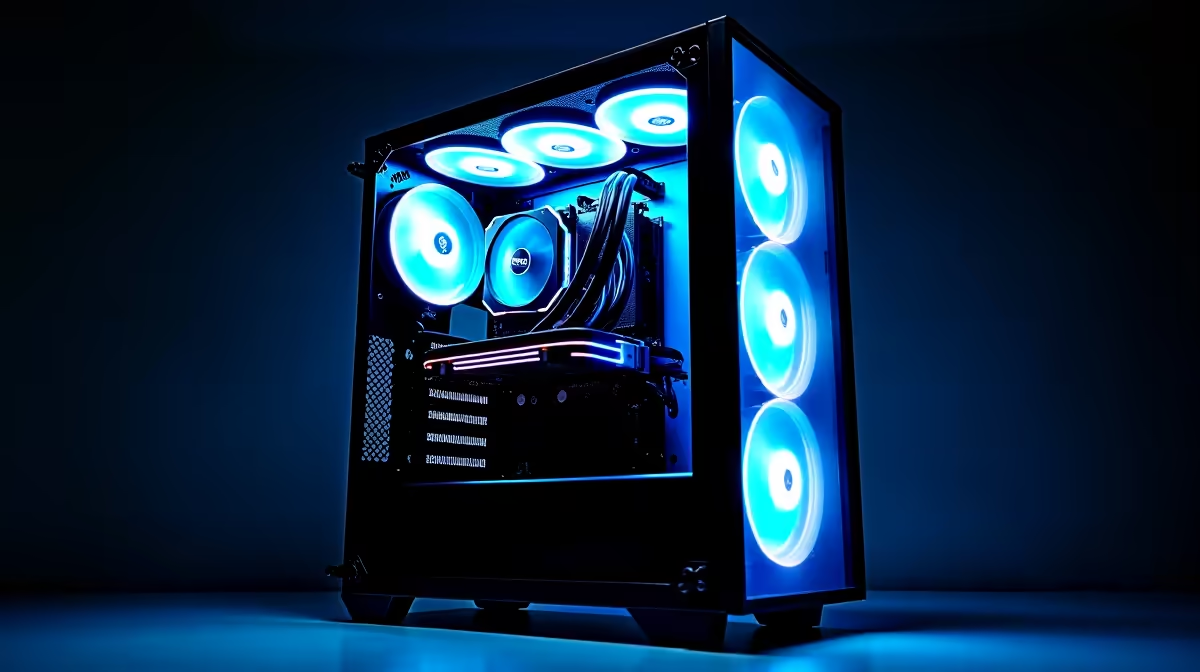
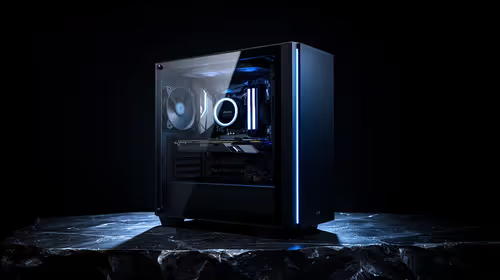
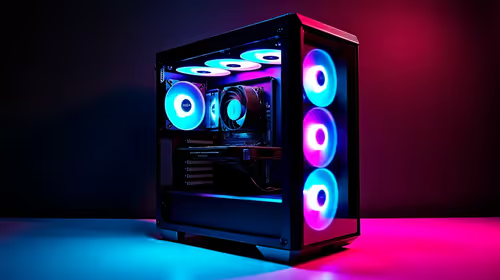
A PC case designed for large GPUs, E-ATX boards, and 420mm liquid cooling needs at minimum: confirmed 305mm x 330mm E-ATX mounting, 420mm or larger GPU clearance (with radiator installed), three 140mm top fan mounts for the AIO, and a dual-chamber interior to separate cables from the airflow path. This combination is available in SA full-tower cases priced from R3,500 upward.
E-ATX Compatibility: What the Case Must Confirm 📐
Not every full-tower supports true E-ATX. The case specification must list 305mm x 330mm as a supported board size, and the mounting hole pattern must match E-ATX layout (which extends beyond ATX in the vertical dimension). Cases that list "E-ATX support up to 280mm" do not support full E-ATX boards and should be eliminated immediately. Beyond the board footprint, the case needs sufficient clearance from the top of the board to the top of the chassis for the CPU cooler or AIO pump fitting. A top-mounted 420mm radiator typically requires 60mm to 80mm of clearance between the radiator bottom and the top of the highest board component. Confirm this gap in the manufacturer's spec or internal photo.
GPU Clearance Requirements for Current-Gen Cards 🖥️
With an E-ATX board installed and a front radiator in position, the effective GPU clearance becomes the determining number, not the empty chassis maximum. A case listing 440mm GPU clearance empty may only offer 380mm with a front 360mm or 420mm radiator. For an AIB RTX 5090 card at 400mm to 425mm in length, this leaves no margin. The correct specification target is a case with 440mm GPU clearance measured with front cooling installed. This typically requires a case with a particularly deep internal volume or a design that positions the front radiator mount independently of the GPU clearance zone, which some flagship cases achieve through offset mounting rails.
420mm AIO Integration and Fan Layout ⚙️
A 420mm AIO occupies three 140mm fan positions in a single mount. Top mounting is thermodynamically preferred because hot coolant rises to the radiator naturally and exhaust air leaves the case without recirculating past the GPU. The top mount needs to clear the RAM sticks, CPU power cables, and any tall VRM heatsinks on the E-ATX board. Front mounting the 420mm AIO is the alternative when top clearance is insufficient, but this warms intake air by 3C to 5C and requires the rear and top fans to compensate. For a workstation running sustained encode or render loads in SA summer conditions, top-mounted is the right default.
Prioritise Internal Depth When Combining GPU and AIO ⚡
The key measurement is the case's internal depth from the front radiator mount to the PCIe slot. This number determines whether a long GPU and a front AIO can coexist. Look for this specific measurement in the case's detailed spec table, labelled as GPU clearance with front radiator or similar. If this figure is not listed, email the manufacturer or check user build photos before purchasing.
FAQ
Can any full-tower case support this component combination?
No. Many full-towers support ATX only or limit radiators to 360mm. Confirm E-ATX mounting, 420mm radiator support, and GPU clearance with radiator installed as three separate verified facts before ordering.
Does an E-ATX case need a specific PSU form factor?
No. E-ATX cases use standard ATX PSUs. The case is larger internally, but the PSU form factor is the same ATX standard used in all desktop cases.
How many fans should a case with these specs include by default?
For a high-performance E-ATX build, plan for three 140mm on the 420mm AIO, two to three additional 120mm or 140mm intakes, and two rear/top exhausts. Total fan count of eight to eleven is typical for a fully cooled flagship build.
Building with a large GPU, E-ATX board, and 420mm cooling?
Evetech stocks full-tower PC cases with the internal clearance and radiator support that these component combinations require. Check the current range and confirm specs before placing your order.