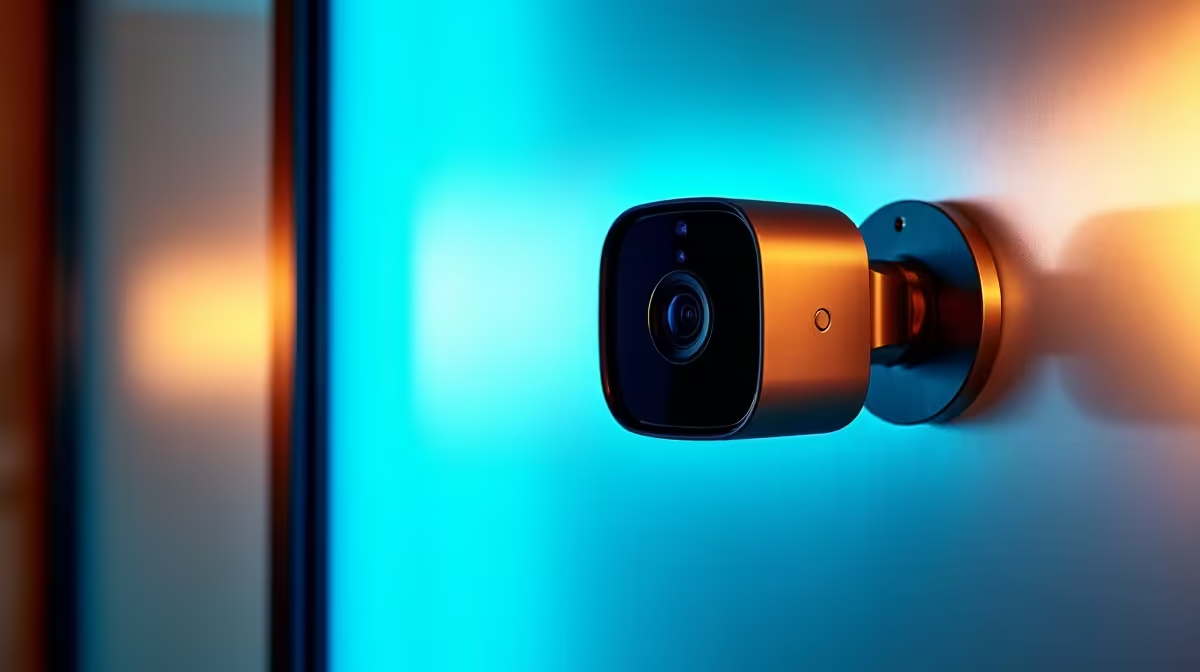
A security camera that demands a monthly fee to unlock motion alerts or store footage turns a one-off purchase into a forever bill. Across a few cameras that quietly adds R90 to R180 each per month, which is more than the hardware costs within a couple of years. Subscription-free security cameras break that cycle by recording everything locally, to a microSD card or a network video recorder, with AI detection and remote viewing working at no ongoing cost.
Quick Answer
The best subscription-free cameras record AI-detected events and continuous footage to a microSD card or an NVR, so person and vehicle detection, local storage and remote viewing all work for free after you buy the hardware. Reolink leads this space in 2026, with cards taking up to 512GB locally and NVR kits storing weeks of footage with no cloud account required at all.
How Subscription-Free Storage Actually Works
A subscription camera streams its footage to the maker's cloud and locks the useful features, history, smart alerts, downloads, behind a recurring plan. A subscription-free camera flips that: the recording lives on storage you own. For a single camera that means a microSD card slotted into the unit; for a multi-camera setup it means a network video recorder, a small box with a hard drive that all the cameras feed into over your network.
The detail that makes this genuinely free is where the smart processing happens. On a well-designed local camera, the person and vehicle detection runs on the device itself, so you still get filtered alerts that ignore swaying trees and passing shadows without a cloud subscription paying for that intelligence. You keep the smart features and lose only the monthly bill. As a bonus, footage that never leaves your property is private by default, which matters more to many households than the cost saving.
MicroSD Cameras for One or Two Spots
If you are covering a front door, a driveway or a single room, a standalone camera with a microSD slot is the simplest route. Reolink's lineup is the standout here. The Argus 4 Pro is a strong wireless outdoor option that records to a microSD card of up to 512GB and adds full-colour night vision in low light without needing a bright spotlight, useful for a dark SA garden or side passage where you do not want a floodlight blazing all night.
For indoors, the E1 Zoom offers pan, tilt and optical zoom with clear footage at an accessible price, again storing locally on a card up to 512GB. A 512GB card holds a long rolling buffer of motion events, and once it fills, the camera overwrites the oldest footage automatically, so you always have recent history without ever touching a subscription. These single-camera setups are the easiest way to start; the everyday accessories best sellers cover the memory cards and mounting bits you will want alongside them.
Choosing the right card
Use a high-endurance microSD card rated for continuous video writing, not a standard phone card. Surveillance cameras write constantly, and a card built for that workload lasts far longer. Size it to how much history you want: larger cards simply mean more days before the loop overwrites.
NVR Systems for Whole-Property Coverage
Once you are running four cameras or more, a network video recorder makes more sense than juggling individual cards. An NVR kit, such as Reolink's 16-channel system with a 4TB drive, connects all your cameras to one recorder that stores everything centrally with room to expand. You get continuous recording across every camera, a single place to review footage, and weeks of history on a drive you own outright.
For a South African home or small business this is the route that scales cleanly. Wiring cameras back to an NVR over network cable also makes them more reliable than purely wireless units and lets the recorder power them over the same cable in a PoE setup, cutting the number of plugs you need. The upfront cost is higher than a couple of microSD cameras, but with no monthly fees it is cheaper over any realistic ownership period. The broader smart home and appliances range at Evetech carries the cameras, recorders and hubs to put a full local system together.
Continuous versus event-only recording
Decide whether you want footage rolling around the clock or only when something moves. Continuous recording captures everything but fills storage faster; event-only recording, triggered by the camera's detection, stretches a drive much further while still catching what matters. Most NVR systems let you mix the two per camera, so a busy entrance can record continuously while a quiet side wall records only on detection.
Protecting local storage from theft and damage
Local storage is private and subscription-free, but it does have one vulnerability a cloud account does not: the camera and the card are in the same place. If a camera is stolen or damaged in an incident, the footage of that incident may go with it. There are a few practical answers to this. For microSD setups, position the camera so it is not easily reached by someone at ground level, and configure instant alert clips sent to your phone the moment detection fires, so you have the key frame even if the camera is later removed. For NVR systems, keep the recorder inside the property rather than near the door or in a garage, and enable encrypted remote backup to a second local drive or a NAS if you have one, so the recorder failing does not mean a total loss.
Optional: combining local and cloud without a subscription
Some cameras, including several Reolink models, let you record locally to a microSD or NVR while also sending short alert clips to a free tier of their cloud service at no cost. This hybrid approach keeps your full footage on-site under your control but deposits a short clip of each detected event in the cloud as an offsite safety copy. The key is that the local recording remains complete and independent: the cloud clip is an extra layer, not the primary copy, and it requires no paid plan. Confirm this capability before you buy if offsite backup matters to you, since not every brand offers a genuinely free clip tier.
Checking compatibility before you buy
For an NVR system, the most reliable approach is to buy cameras and the recorder as a matched kit from the same brand, since they are tested to work together and the AI detection features activate without manual configuration. Mixing brands is possible with ONVIF-compatible equipment but can mean losing on-camera AI detection features that rely on proprietary communication between the camera and its own NVR. For microSD cameras, verify the card slot is accessible without dismounting the camera if you want to swap cards easily.
Frequently Asked Questions
Do subscription-free cameras still have smart detection?
Yes. Good local cameras run person and vehicle detection on the device itself, so you get filtered smart alerts without paying a cloud subscription. The intelligence is built into the hardware rather than rented monthly.
MicroSD or an NVR, which should I choose?
Use microSD cameras for one or two spots where simplicity matters. Move to an NVR once you have four or more cameras, since it centralises storage, holds far more footage and is easier to manage than many separate cards.
How much footage does a 512GB card hold?
It depends on resolution and whether you record continuously or on events, but a 512GB card holds a long rolling buffer of motion-triggered clips. When full, the camera overwrites the oldest footage automatically, keeping recent history available.
Is local footage private?
More private than cloud storage, yes. Footage recorded to your own microSD card or NVR stays on your property and does not pass through a third-party server, which is a key reason many households choose local storage.
Are subscription-free cameras cheaper overall?
Over any realistic ownership period, clearly yes. You avoid the R90 to R180 per camera monthly fee that subscription brands charge, so after the hardware is paid for there is nothing further to spend.