Quick Answer
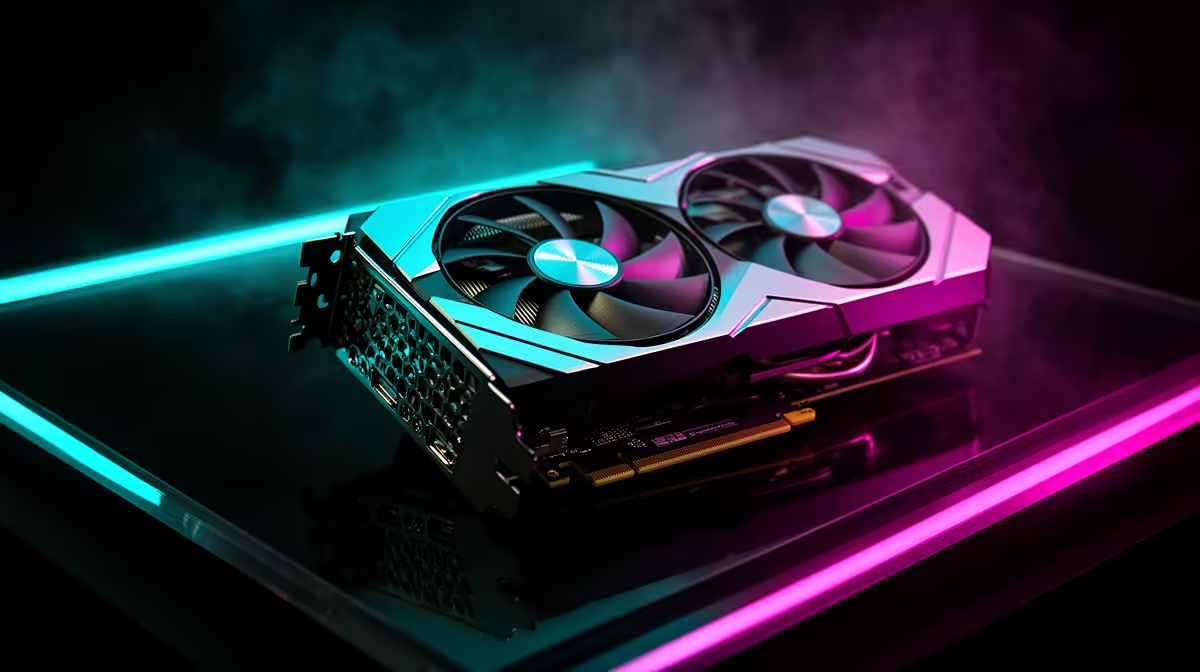
For Stellar Blade at 4K, a R20,000 GPU budget should target RTX 5070-class or better value if stock and pricing align. Expect to tune settings or use upscaling for stable 60 fps rather than assuming native 4K Ultra is automatic. Keep the R20,000 figure written with the comma so it is clearly twenty thousand rand, not twenty rand.
What The Game Actually Needs
Stellar Blade at 4K is GPU-heavy, so plan around 60 fps targets, DLSS or FSR-style upscaling, and 12GB or more VRAM where possible. If your current monitor is 1080p 60Hz, buying the biggest GPU in budget will not improve the visible result much. A 144Hz or 1440p display changes the calculation.
For a balanced SA build, pair the GPU with a Ryzen 5 5600, Ryzen 5 7600, Core i5-12400F, or better, plus 16GB to 32GB RAM and a 1TB NVMe SSD. Do not let an old CPU turn the new card into wasted spend.
Sensible GPU Shortlist
Under a R20,000 GPU ceiling, compare RTX 4060, RTX 5060, RX 7600 XT, RTX 5070, and any strong special that fits your PSU and case. The right answer is not always the most expensive card. For Stellar Blade, settings, resolution, and monitor refresh decide the useful tier.
Check PSU wattage, 8-pin or 12V connector needs, case clearance, and DisplayPort output before buying. A 650W quality PSU is a sensible planning point for many midrange builds, but exact card requirements matter.
FAQ
Is R20,000 too much for Stellar Blade?
It can be too much if Stellar Blade is your only target and you play at 1080p. Use the budget for a better monitor, SSD, or balanced GPU instead of overspending on unused frames.
What fps should I expect?
For lighter games, expect very high fps on modest GPUs. For heavier titles at 4K, plan around 60-120 fps depending on GPU tier, settings, and upscaling.
Should I upgrade CPU or GPU first?
Upgrade the GPU first if the CPU is already a modern 6-core chip. Upgrade the platform first if you are still on an old 4-core CPU or slow memory.
Buyer check
Before spending the full R20,000, check monitor refresh rate, PSU connectors, case clearance, and the games you actually play each week.