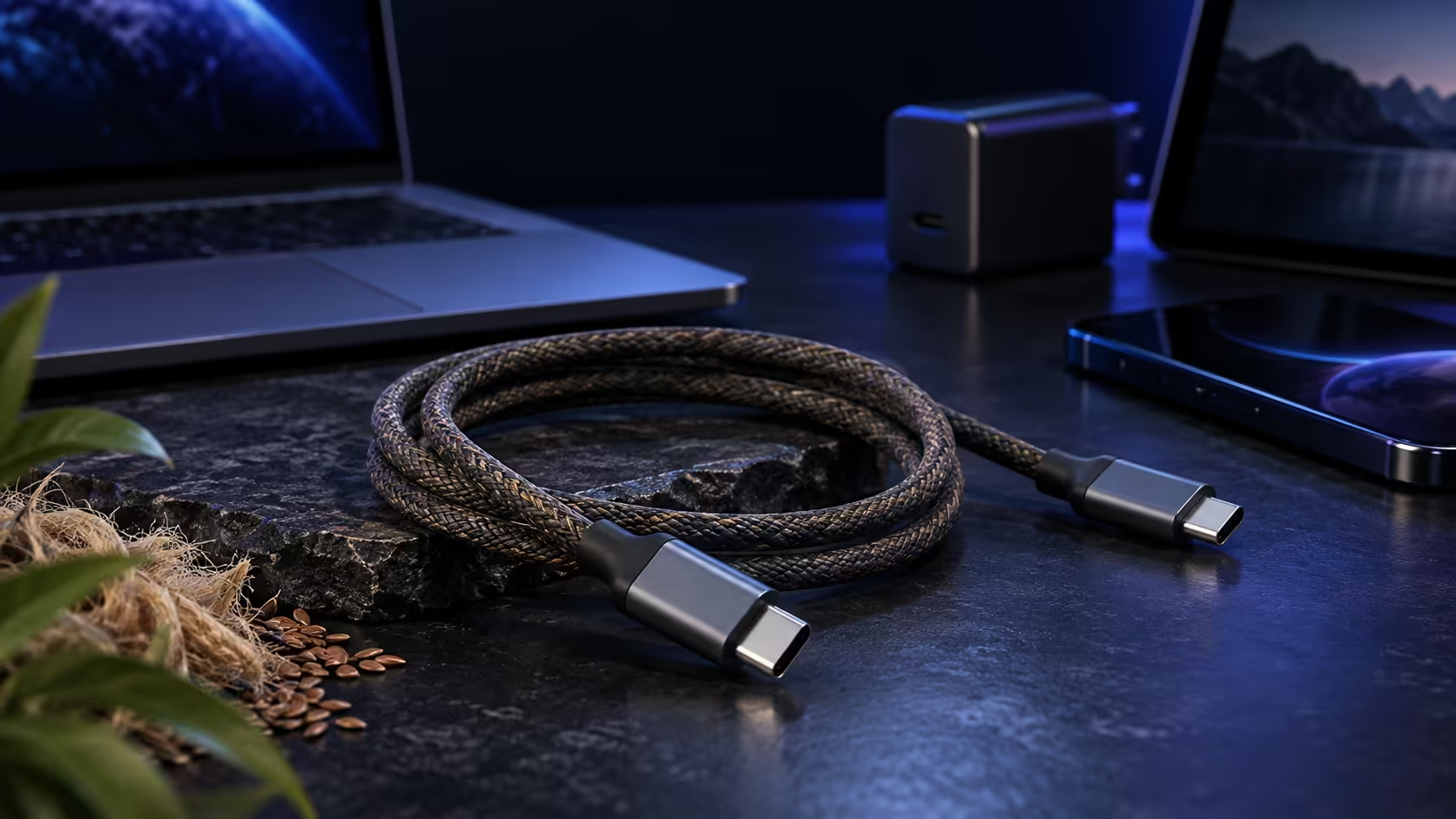
Bio-based nylon USB-C cables get marketed with an environmental angle, but the material itself is a modest, honest change rather than a transformation, and being clear on the actual limits of that claim stops you overpaying for the wrong reason.
Quick Answer
Bio-nylon replaces part of the petroleum feedstock in the braid, leaving the electrical side untouched. Durability is still the bigger environmental lever, which is why the 30,000-bend rating on the R399 Anker 544 matters more than the polymer source does.
🔍 Why this specific claim is worth understanding properly
Sustainability language on USB-C electronics packaging ranges from genuinely meaningful to almost entirely decorative, and bio-based nylon sits closer to the meaningful end precisely because it names a specific, checkable substitution rather than a vague promise. Understanding exactly what changed, and just as importantly what did not, is what lets a buyer weigh this claim fairly against everything else the cable offers, rather than either dismissing it outright or treating it as more significant than it actually is.
🌱 What "bio-based" specifically changes
On a cable in the comprehensive cable range, bio-based nylon substitutes a portion of the petroleum-derived feedstock normally used to manufacture nylon with plant-based sources instead, shifting where the raw material comes from without altering nylon's fundamental chemical structure or mechanical properties. On the Anker 544, this accounts for 46% of the cable body's exterior, a genuine and specific figure rather than a vague sustainability claim.
🏷️ Reading a bio-nylon claim on a product page
A listing that states an exact percentage, such as 46%, alongside the term bio-based nylon is making a specific, checkable claim rather than a vague gesture toward sustainability. Vaguer language, such as "eco-friendly materials" without a figure attached, is worth treating with more scepticism, since it commits to nothing measurable. The habit of looking for a specific number applies here just as it does to a cable's charging rating or bend life: a real figure is worth something, a feel-good phrase on its own is not.
🧵 Durability: comparable, not different
Because bio-nylon shares standard nylon's mechanical properties on a USB-C cable, a bio-based braid performs comparably on abrasion resistance and flexibility, meaning a buyer is not trading durability for the environmental angle. The cable's actual durability comes from its bend rating and connector build instead, both of which are independent of which specific type of nylon the jacket happens to be woven from.
♻️ The honest environmental picture
Replacing part of a USB-C cable's feedstock is a smaller lever than simply making the cable last longer, since a cable that survives four years instead of one prevents three entire replacement units from being manufactured at all. Bio-nylon is a genuine improvement wherever it is used on a cable, but it was never meant to substitute for durability as the main lever behind cutting the footprint of something bought and thrown away over and over.
🛒 Buying it for the right reason
Choose a bio-nylon cable because it pairs a real material change with genuine durability, as the Anker 544 does with its 30,000-bend rating, rather than because the material claim alone sounds appealing. For a cable that lives in a laptop bag or gets handled daily, that combination of durability and material genuinely earns its price, and our gaming accessories collection covers the rest of a wider desk or bag refresh happening at the same time.
🏭 Where the feedstock substitution actually happens
The nylon in a USB-C cable's braid is manufactured from chemical building blocks that can be sourced from petroleum or, increasingly, from plant-derived alternatives that produce chemically equivalent material once processed. Bio-based nylon simply swaps part of that upstream sourcing without changing the manufacturing process that turns the raw material into braided cable jacket, which is why the finished product behaves identically to a standard nylon braid in every way that matters to a buyer.
This upstream-only change is also why bio-nylon cables cost only slightly more than standard ones, since the additional cost sits in sourcing the alternative feedstock rather than in retooling an entire manufacturing line to produce a fundamentally different product.
Frequently Asked Questions
Does bio-based nylon feel different from standard nylon to the touch?
No, the two are generally indistinguishable by feel, since the change affects the material's origin rather than its texture or physical properties.
Is a bio-nylon cable more expensive than a standard nylon one?
Typically only a small amount more, since the manufacturing process itself is largely unchanged, with the difference sitting mainly in feedstock sourcing.
Does the 46% bio-based figure apply to the whole cable or just the jacket?
It specifically covers the cable body's exterior, meaning the braid itself, rather than the internal conductors or the connector housing.
Is bio-nylon biodegradable at the end of the cable's life?
Not inherently, since it retains nylon's standard chemical structure, so disposal and recycling considerations remain similar to a standard nylon cable regardless of feedstock source.
Should environmental impact be the main reason to choose this cable?
It is a genuine secondary benefit, but the primary reasons remain the charging rating, certification and bend life, with the material choice as a bonus on top of those.
Does the bio-based content affect how the cable feels when coiled tightly?
No, flexibility and coiling behaviour come from the braid's weave and the internal conductors, not from whether the nylon feedstock happens to be plant-based or petroleum-based.
Are bio-nylon cables tested to the same standards as standard ones?
Yes, USB-IF certification and any published bend rating apply identically regardless of the braid material, since those tests evaluate the finished product's electrical and mechanical performance rather than its feedstock origin.
Will bio-nylon eventually replace standard nylon across the whole cable industry?
That trend seems plausible as feedstock costs shift over time, though standard nylon remains widely used today, so checking a specific product's own claim rather than assuming one or the other is still the reliable approach to take.
Does a bio-nylon cable need any special care compared with a standard one?
No, ordinary handling and the same occasional wipe-down that suits any braided cable is all a bio-nylon one ever needs, with no additional care steps ever required simply because part of the jacket's content happens to come from a plant-based source rather than petroleum.
Ready to choose a cable that pairs a real material improvement with genuine durability?
Check the bend rating alongside the bio-based content, not the material claim alone.