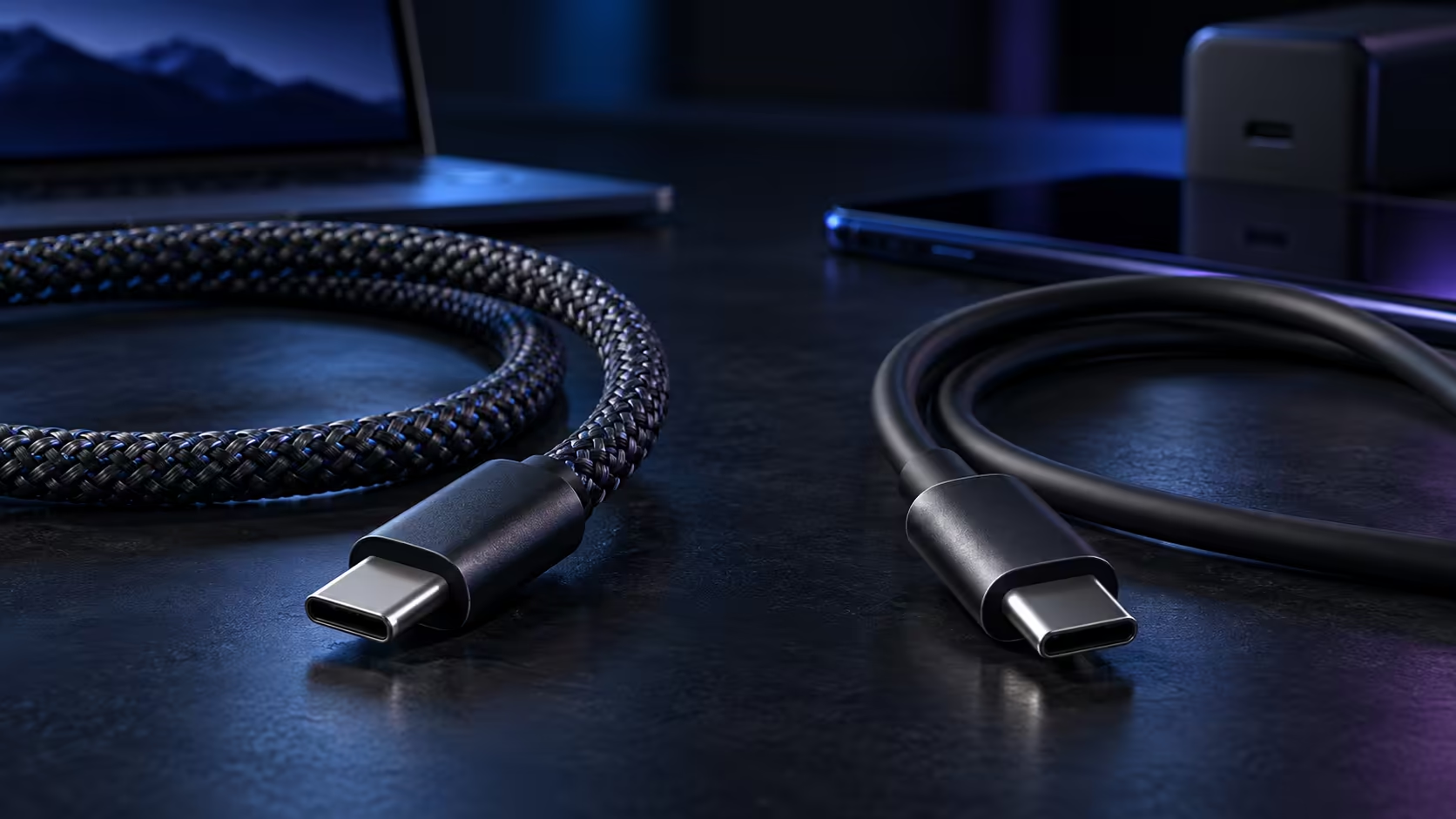
Braided nylon versus standard USB-C cables looks like a durability question at first glance, but the braid itself only ever protects one part of the cable, and it is not the part that actually fails most often.
Quick Answer
A braid resists abrasion; it does nothing for the connector, which is where cables actually fail. That makes the bend rating the number worth comparing, and the Anker 544 pairs bio-nylon with a 30,000-bend figure at R399, with warranty cover handled locally.
🧵 What a braid actually protects against
A braided jacket, whether standard nylon or the bio-based version on the Anker 544, resists surface abrasion far better than a plain rubber or TPE sleeve, standing up to being dragged across a desk edge, rubbed against a bag's zip, or coiled tightly for storage. This is a genuine and visible benefit, and it is the reason braided cables tend to look newer for longer even after months of daily handling, holding their finish where a plain jacket would already show scuffs and discolouration.
🔌 Where cables actually break down
The connector, not the middle of the cable, is where most USB-C failures originate, at the exact point where the internal conductors meet the plug and take the most mechanical stress from repeated plugging, unplugging and bending at an angle. A braid does nothing to reinforce this specific joint, since the reinforcement it provides covers the length of the cable body rather than the connector itself. This is why a heavily braided cable can still develop a loose or intermittent connection at the plug while its jacket looks unmarked.
🧴 What actually causes a braid to fray in the first place
A braid frays from repeated friction against a sharp edge, such as a desk corner or a bag's zip pull, rather than from ordinary flexing on its own, and it tends to show up first at the last 20mm before the connector, exactly where a cable gets handled most. Routing a cable so it does not rub against a fixed edge every day extends a braided jacket's life considerably more than the braid material itself does, since the fibres are being worn away mechanically rather than fatigued from bending.
📊 Why bend rating is the number that actually matters here
A bend-rating test flexes the whole assembly, connector joint included, through repeated cycles until a conductor breaks or the signal drops out, which is a very different stress from the surface-only wear a braid's abrasion resistance is built to handle. The Anker 544, in the comprehensive cable range, combines bio-nylon, for surface durability, with a 30,000-bend rating, addressing the failure point that actually determines how long the cable lasts under daily use.
🗃️ A quick way to compare two similar-looking cables
Laid side by side, two cables can look almost identical at 1.8m each: same USB-C connector shape, same rough thickness, same dark colour. Telling them apart reliably means lining up their stated numbers directly against each other, amp rating against amp rating, bend cycles against bend cycles, rather than trusting a visual impression at the shelf. A cable that looks slightly thicker is not necessarily rated higher, since thickness can come from extra insulation just as easily as from heavier internal conductors, and only the printed figures actually settle the comparison.
🔬 Reading past marketing language on a cable's own listing
A product description that leads with words like "premium braided design" or "ultra-durable" is describing the jacket, not the USB-C connector or the internal wiring, and it is worth reading past that language to find the two numbers that actually matter: the current rating in amps and the bend cycle count if one is published. A cable that leads with material language and never states either figure is one worth being cautious about, since the marketing is filling space that a genuine spec sheet would otherwise occupy.
🛒 Choosing between standard and braided options
Standard nylon and bio-nylon braids perform comparably on abrasion resistance, since the bio-based content changes the material's source rather than its mechanical properties. Choose based on the bend rating and the e-marker's power class first, since those numbers determine whether the cable meets your charging needs and survives daily handling, and treat the braid material itself as a secondary preference once those two are confirmed. Warranty cover on the Anker 544 is handled locally, which matters given that a cable's failure mode is usually intermittent rather than an obvious break.
For a cable that lives inside a laptop backpack, bend rating matters even more than usual, since that daily in-and-out handling is exactly the kind of flex cycle the rating measures. Our accessories best sellers page is worth a look if the cable is one of several small items you are replacing at once.
Frequently Asked Questions
Does a braided cable last longer than an unbraided one overall?
It depends on where the failure happens. A braid extends the life of the cable body against surface wear, but the connector's own durability, measured by bend rating, matters just as much or more for overall lifespan.
Can I tell a cable's bend rating just by feeling the braid?
No. Bend rating comes from internal conductor design and connector construction, none of which is visible or detectable by handling the outer jacket alone.
Is bio-nylon as strong as standard nylon braiding?
Yes. The bio-based content changes where the raw material comes from rather than its mechanical strength, so a bio-nylon braid holds up just as well in daily use as a standard petroleum-based one.
Why do some braided cables still fray at the connector end?
Because the braid typically stops just short of the connector housing, leaving that specific joint reliant on strain relief and internal build quality rather than the braid itself.
Does washing or wiping down a braided cable damage it?
A quick wipe with a dry or slightly damp cloth is fine for most braided jackets, though soaking a cable or getting moisture into the connector itself is worth avoiding regardless of the jacket material.
Can a braid trap dust or lint over time?
Yes, more than a smooth rubber jacket does, since the woven texture gives dust and lint fibres something to catch on. A dry brush or a quick wipe every so often keeps it looking clean without any risk to the cable underneath.
Does the colour of a braided cable fade faster than a plain jacket's colour?
Braided fibres can lighten slightly with prolonged direct sunlight exposure, much like fabric does, though this is a cosmetic change only and has no bearing on the cable's electrical performance underneath at any point during its working life.
Ready to judge cable durability by more than just the jacket?
Check the bend rating and the connector build, and treat the braid as a bonus rather than the main event.