Quick Answer
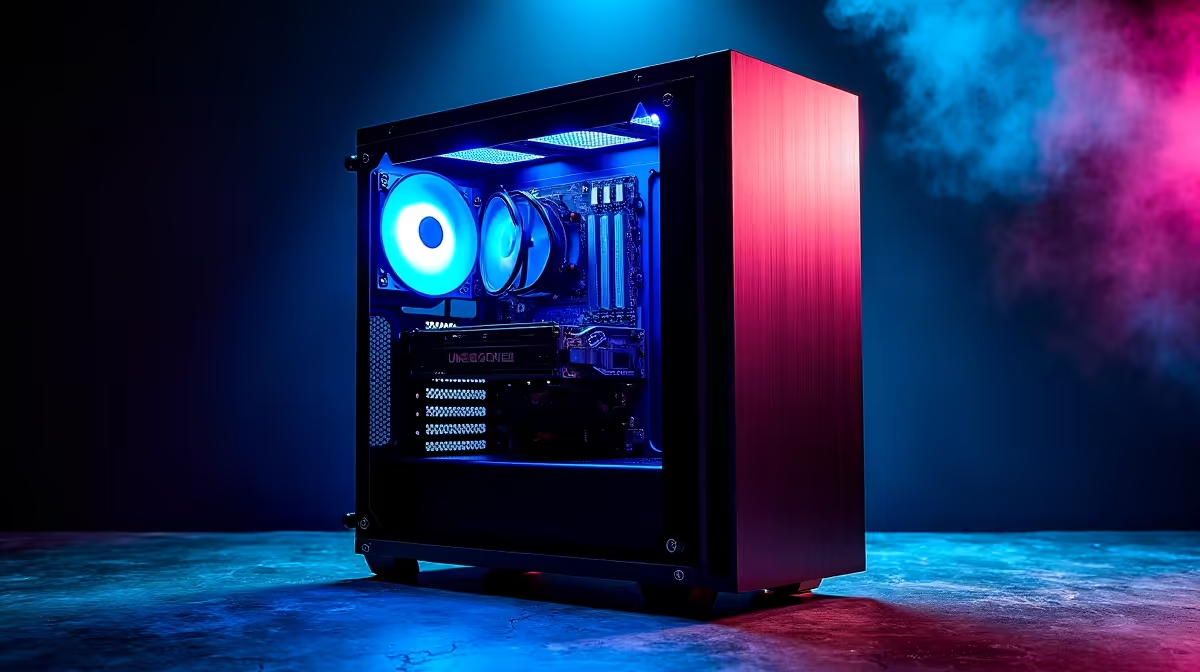
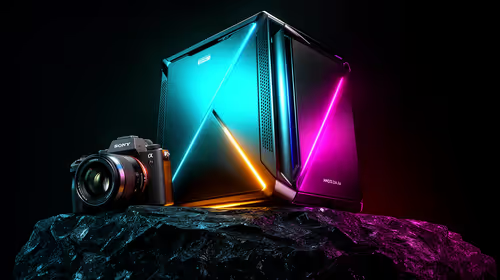
Buy now only when the current part blocks backup and storage planning; otherwise plan the next upgrade around capacity, compatibility and warranty. For most SA buyers, a useful PC case sits around R1,200-R3,800 and should be judged against ATX support, 160 mm cooler clearance and 300 mm-plus GPU room. Use examples like Corsair 4000D Airflow, Cooler Master TD500 or NZXT H5 Flow class as a reference class, then confirm current Evetech stock and warranty before choosing.
Buy Now When It Removes A Limit
For backup and storage planning, start with the job the hardware must do every week. A PC case should solve a clear problem: clean airflow, easier building, safer GPU clearance and a layout that does not fight future upgrades. If it does not change the daily experience, keep the money for the part that does.
The useful baseline is practical rather than flashy. Check ATX support, 160 mm cooler clearance and 300 mm-plus GPU room and compare it with the PC, desk, room size and workload you already have. In SA builders planning airflow, desks and future GPU size, the better buy is usually the option that fits cleanly, has local support, and leaves no awkward cable, heat or space problem behind.
Upgrade Later When The Setup Can Wait
Price bands help prevent overbuying. Entry-level options can be good when the workload is light, while mid-range models often give the best mix of durability and features. Premium only makes sense when the rest of the setup is already strong enough to benefit from it.
Use numbers to keep the choice honest: capacity in GB or TB, refresh in Hz, wattage in W, node count, outlet count, fan size, or port speed. A student desk in a residence room, a family gaming corner and a creator workstation do not need the same tier, even when the product name is similar.
Plan The Next Step
Before ordering, confirm motherboard size, GPU length, CPU-cooler height, radiator support, front-panel ports and desk or cockpit placement. Many bad upgrades are not bad products; they are good products bought for the wrong setup. This check matters more when the room is shared, the PC is older, or the next upgrade is already planned.
Also check how the item will be used after month one. Shared spaces need lower noise and easier cleaning. Study setups need reliability and simple controls. Gaming builds need enough headroom for future parts without paying for extreme specs that sit unused.
FAQ
What should SA buyers check first?
Check fit, warranty and the one spec that affects the actual workload. For PC cases, that usually means comparing ATX support, 160 mm cooler clearance and 300 mm-plus GPU room against the PC, room and daily routine before chasing extras.
Is the cheapest option good enough?
Sometimes, especially for light backup and storage planning, but the cheapest unit must still meet the baseline spec. If it saves a few hundred rand but adds noise, instability or replacement risk, the saving is weak.
When is premium worth paying for?
Premium is worth paying for when it protects expensive hardware, improves a task you do daily, or gives measurable headroom such as higher Hz, more TB, better W capacity or stronger ports. If the benefit is only cosmetic, stay mid-range.
your current setup, the target spec and a maximum rand amount before comparing PC cases; it stops a small upgrade from becoming an oversized basket.