Quick Answer
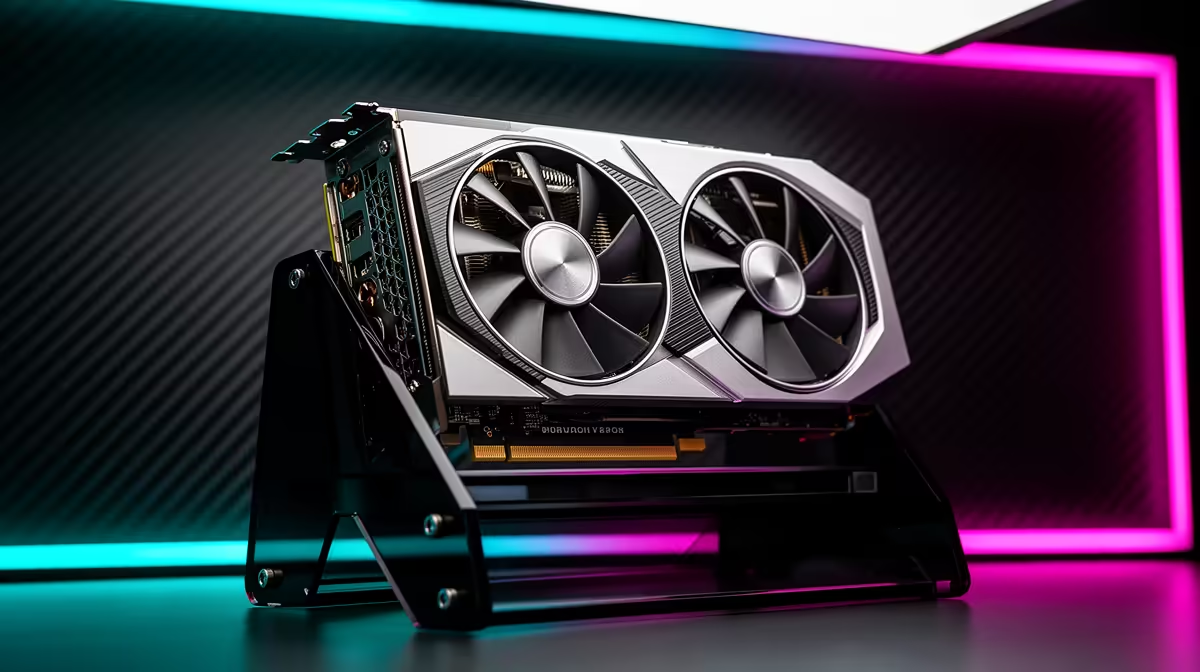
Yes, a built-in graphics card holder (GPU brace) prevents GPU sag effectively. Modern triple-fan flagship cards like the RTX 5090 and RX 9070 XT weigh between 1.5kg and 2.2kg, which is enough to visibly bend the PCIe slot over time. A case-integrated brace contacts the GPU shroud and distributes that weight onto the chassis rather than the slot.
Why GPU Sag Is a Real Hardware Risk 🖥️
GPU sag occurs when the weight of a heavy graphics card causes the PCIe x16 slot to flex downward over months or years. The primary risks are a poor PCIe contact at the edge connector (which can cause intermittent rendering artefacts), stress fractures in the PCB, and visible cosmetic deflection of up to 10mm on the most extreme cases. Flagship triple-fan cards carry most of this risk because of their extended heatsinks and dense copper heat pipes. The RTX 5090 Founders Edition, for example, measures 336mm in length and carries significant mass in its three-fan shroud. On a standard mid-tower installation without a support brace, visible sag is often noticeable within three to six months.
How Built-In GPU Braces Work 🔧
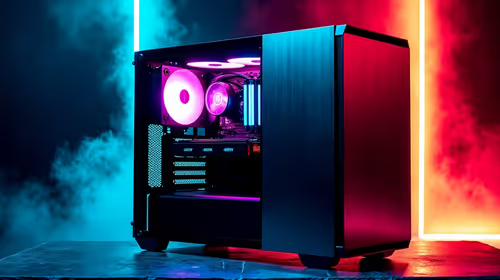
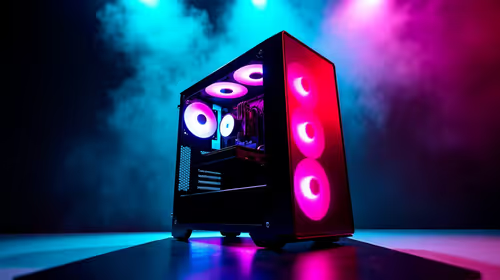
Case manufacturers integrate GPU braces in two main forms: a fixed horizontal bracket that slides under the GPU shroud, and an adjustable arm with a padded contact point that raises or lowers to match the specific card thickness. Adjustable designs are superior because they accommodate different GPU heights without creating pressure points on the shroud. Some cases include magnetic or snap-lock braces that prevent the GPU from moving forward during transport, which is useful if you attend LAN events. The brace should make contact with the GPU without lifting the card away from the PCIe slot, as upward force on the slot edge connector creates its own alignment problem.
Aftermarket Braces vs Case-Integrated Solutions 💡
If your current case lacks a built-in brace, aftermarket GPU support brackets are available locally for between R150 and R450. These attach to a PCI slot cover or rest on the case floor via a telescoping support rod. They work adequately but require adjustment each time you remove the GPU. Case-integrated solutions are more elegant because they are part of the chassis design and do not occupy a PCI bracket slot. When selecting a new premium case, checking the spec sheet for a built-in GPU holder is a minor detail that pays dividends with heavy flagship hardware.
Align the Brace Without Lifting the Card ⚡
When fitting a GPU brace, position it so it just contacts the underside of the GPU shroud with zero upward pressure. You should be able to slide a piece of paper between the brace and the shroud and feel slight friction rather than a gap or firm resistance. Over-tightening lifts the PCIe edge connector and can cause the same contact issues you are trying to prevent.
FAQ
Does GPU sag actually damage graphics cards?
Over time, significant sag can stress the PCIe slot on the motherboard rather than the GPU itself, and in extreme cases causes intermittent disconnections. The GPU's own PCB is generally robust, but the motherboard PCIe slot is the more vulnerable component in a sagging installation.
Is vertical GPU mounting a better solution than a brace?
Vertical mounting eliminates sag entirely by orienting the GPU parallel to the side panel. The trade-off is reduced airflow if the GPU sits within 20mm of a tempered glass panel. A horizontal installation with a brace usually provides better thermals with similar visual impact if you use a well-designed case with a side window.
Are GPU braces universal for all graphics card sizes?
Adjustable braces accommodate most card heights and lengths, but very short dual-fan cards and very long triple-fan cards both sit at the extremes. Check that the brace's adjustment range matches your specific GPU dimensions before relying on it.
Protecting a heavy flagship GPU investment?
Evetech carries premium cases with built-in GPU support braces and a full range of graphics cards to pair with your next build.