


PCIe 5.0 vs PCIe 4.0 for Video editing in 4k in SA
PCIe 5.0 vs PCIe 4.0 for video editing in 4k is mainly about fit, features, compatibility, cost, and upgrade path, not one automatic winner. SA buyers should match the choice to the setup.
Read moreCase Fan upgrade path for competitive gamers should be shortlisted around the job it must do. South African buyers should compare airflow, clearance, noise, and upgrade room, warranty path, and upgrade room before treating any pick as best.
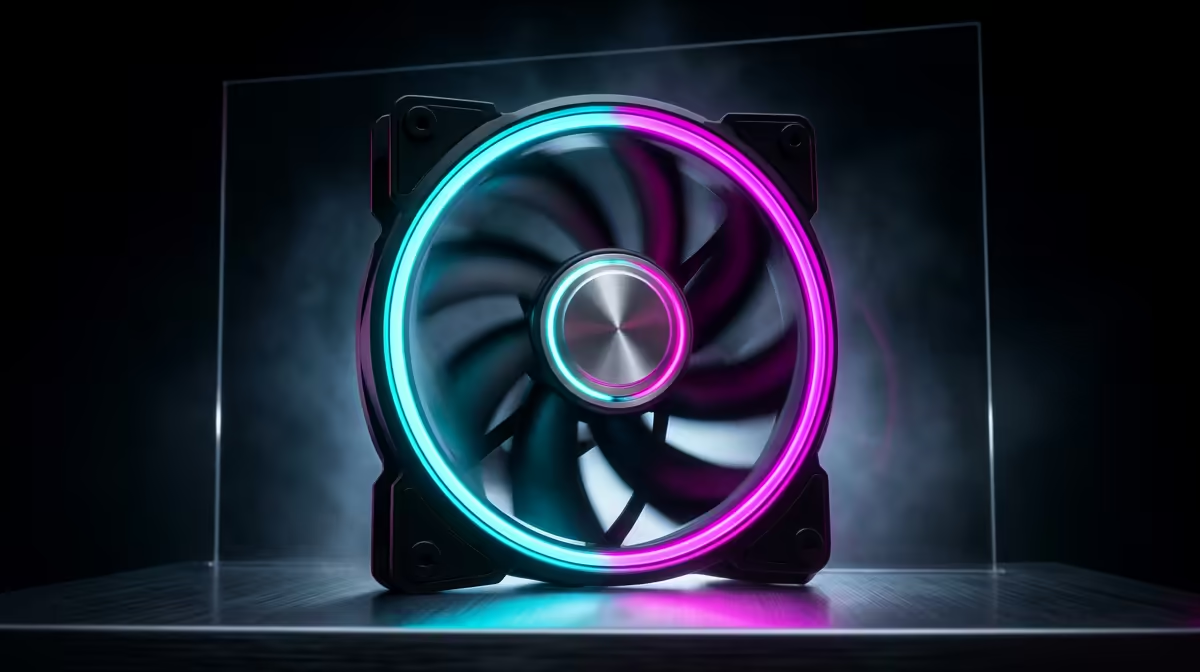
Replace a case fan when it rattles, stalls, or no longer clears heat; reseat or clean it first if airflow only dipped recently. A quality 120mm fan costs about R250 to R450 and a 140mm around R350 to R600, so a full intake-and-exhaust refresh runs well under R2,000.
Airflow is measured in CFM and noise in dBA, and they pull against each other. A balanced 120mm fan around 60 CFM at 28dBA suits most cases. High static pressure matters for pushing air through a dense radiator or filter, while high CFM suits open intake mounts. NSFAS pays a R5,200 device allowance, which on its own does not cover even the cheapest R8,000 laptop, so accessories like this are usually a separate budget line.
Confirm your case takes 120mm or 140mm fans before buying, since 140mm units move more air at lower RPM and noise but need the mounting holes. Set up positive pressure with slightly more intake than exhaust to keep dust out, and make sure arrows on the fan frame face the airflow direction you intend. Two well-placed fans beat four random ones.
Competitive marathons, holiday binges, and LAN weekends keep a GPU and CPU pinned for hours, where steady airflow stops thermal throttling that quietly costs you frames. A clean front-intake plus rear-exhaust pair holding CPU temps under 80C is enough for most mid-range builds; only step to higher-RPM fans if you still throttle.
A quality 120mm fan runs about R250 to R450 and a 140mm around R350 to R600. Refreshing intake and exhaust with two or three quality fans typically costs under R2,000, which is cheap insurance against throttling.
Clean and reseat first; dust and a loose mount cause most sudden airflow drops. If the fan still rattles, stalls, or temps stay above roughly 80C under load after cleaning, replace it.
Use high CFM fans on open intakes where air flows freely, and high static pressure fans on radiators and dense dust filters where air must be pushed through. Many cases benefit from a mix of both.
run a quick monitoring tool under load to log CPU and GPU temps, then target the hottest path with one front-intake and one rear-exhaust 120mm fan rated under 30dBA.
PCIe 5.0 vs PCIe 4.0 for video editing in 4k is mainly about fit, features, compatibility, cost, and upgrade path, not one automatic winner. SA buyers should match the choice to the setup.
Read more
Wi-Fi 7 vs Wi-Fi 6e for competitive esports comes down to router support, latency goals, device compatibility, and coverage. SA buyers should match the choice to the real network setup.
Read more
ATX 3.1 vs ATX 3.0 for mMO and live-service games buyers - what changes is mostly about compatibility, budget, upgrade path, and setup fit. SA buyers should check device support and real needs before expecting a clear win from either option.
Read more
LGA 1851 vs LGA 1700 can affect Twitch and YouTube streaming when gaming and encoding share CPU resources. For SA creators, the real-world difference depends on encoder choice, memory support, motherboard cost, thermals, and upgrade plans.
Read more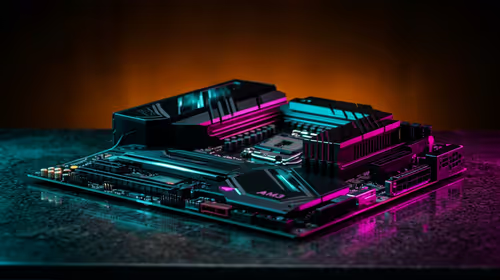
X870E vs X670E for aaa single-player gaming is mainly about fit, features, compatibility, cost, and upgrade path, not one automatic winner. SA buyers should match the choice to the setup.
Read more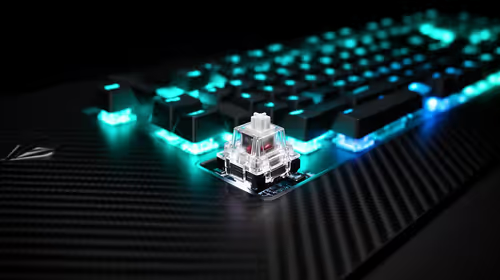
Hall Effect switches vs Mechanical switches for mMO and live-service games is mostly about compatibility, budget, upgrade path, and setup fit. SA buyers should check device support and real needs before expecting a clear win from either option.
Read more
A fake 113GB GTA VI ISO reportedly used empty padding around a small malware payload. SA gamers should delete unofficial builds, keep Windows security active and wait for official channels.

Wi-Fi 6E vs Wi-Fi 6 matters for 4K video editing when files move across a network. The real-world difference between Wi-Fi 6E and Wi-Fi 6 for video editing in 4K depends on NAS access, cloud uploads, router range, and SA creator workflows.

The difference between PCIe 5.0 and PCIe 4.0 for SA gamers is mostly bandwidth headroom. Compare GPU slot needs, NVMe speed, motherboard support, and upgrade timing before paying extra for a newer platform.

Gaming PC stuck pixel checks in South Africa should confirm the monitor fault first. Use colour tests, screenshot comparison, cable swaps, display menu checks, and clear photos before deciding on support.

Shokz OpenFit Air 2 earbuds weigh 7.2g each and use a redesigned dual-driver open-ear layout. SA buyers should choose them for comfort and awareness, not maximum isolation.

AMD's current driver now lists a Radeon RX 9050 4GB, while product coverage details a narrowed memory system. SA buyers should weigh the low VRAM ceiling against current local Radeon options.

Samsung Display has demonstrated a 16-inch 2.5K OLED laptop panel running at 300Hz. SA buyers should wait for a named notebook, full panel specifications and a local price before planning an upgrade.

Microsoft says some Windows 11 game crashes after recent updates are linked to RGB-related drivers. Affected SA gamers should confirm the update and driver before using the published registry workaround.

Minisforum's M2 Pro pairs Core Ultra X7, Arc B390 graphics and 32GB onboard memory in 1.8 litres. SA buyers should weigh its fixed memory and $1,439 launch offer against local mini PCs.

Smart monitors can add apps and convenience, but they also add privacy settings and unwanted-software risk. SA buyers should audit the operating system before paying for extras.

Lenovo says Legion Go failures linked to BIOS N3CN42WW are not user error. Affected SA owners should stop retrying the update, preserve proof and open a support case.
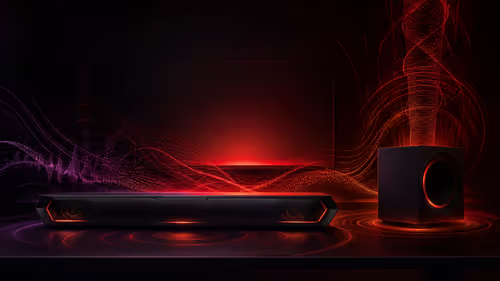
The ROG Gjallar gaming soundbar is now listed in the US at $599.99. SA buyers should compare its 2.1.2 audio, wireless bass and built-in chat controls with simpler local options.