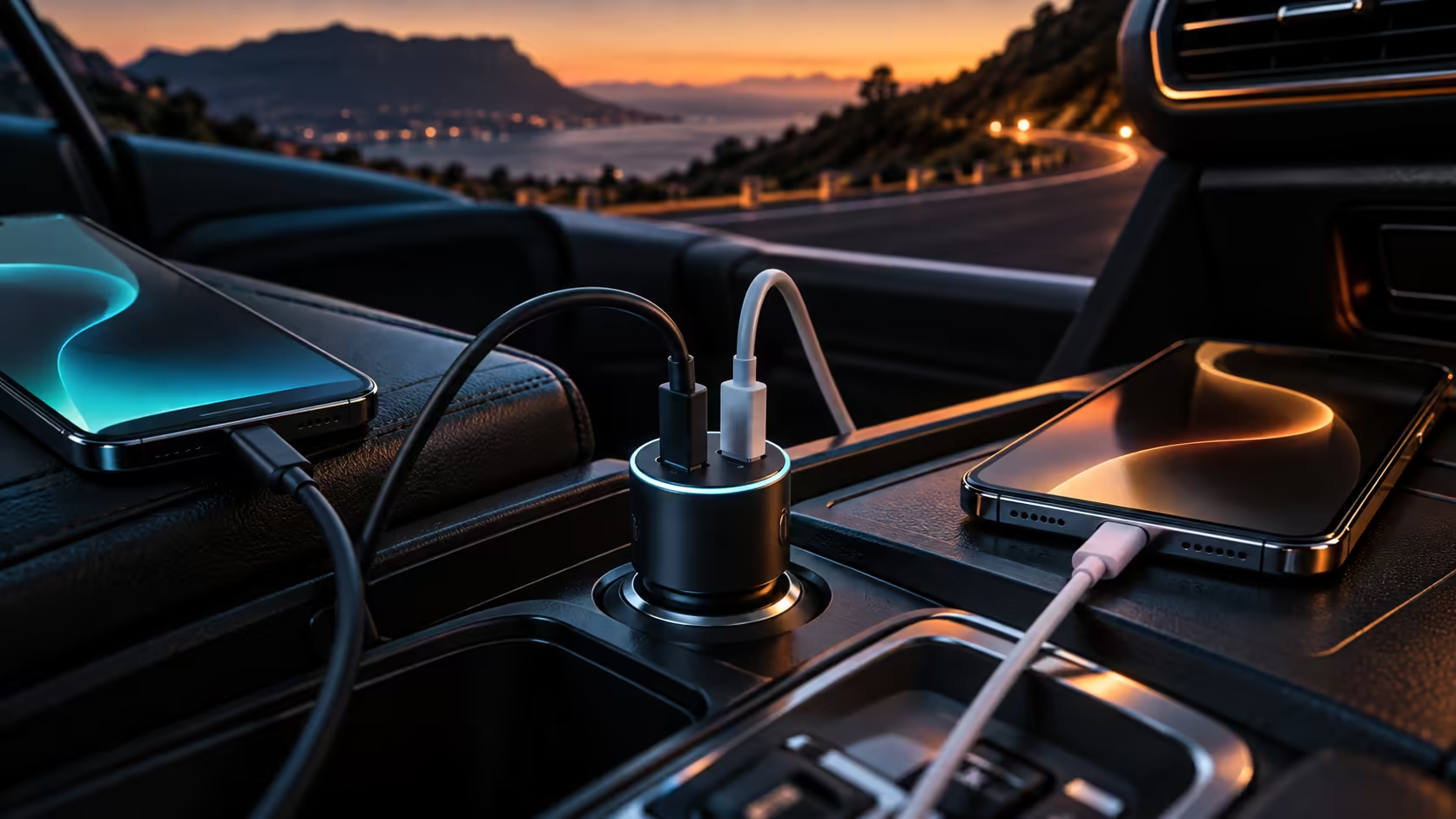
Choosing a fast car charger in South Africa comes down to how the car actually gets used, not to a spec sheet comparison run in isolation. A solo commute, a shared household car and a long-distance work vehicle each point toward a different answer, even when they are all shopping from the same shelf.
Quick Answer
Start from how the car is used: a solo driver benefits most from putting everything on the 30W USB-C PPS port, while a car with a regular passenger needs both ports working, USB-C for the primary phone and 22.5W USB-A for the second. On a Johannesburg to Cape Town run the phone is running maps, music and calls simultaneously, so the charging rate has to outpace that drain rather than just keep the battery from dropping. Anker's answer to both cases is one R349 unit, with a local warranty behind it.
🚗 Solo driver: put everything on one port
A single regular user of the car has no reason to split attention between two ports, since nothing else is drawing from the shared converter. Plugging into the 30W USB-C side gives that phone the full ceiling the whole trip, with PPS handling the fine voltage matching as the battery state changes.
This is the simplest case and the one where the printed 30W figure is also the honest, achievable figure, because there is no second negotiation competing for the same internal supply.
👥 A shared car needs both ports working
The moment a partner, a regular passenger or a lift-club member is in the car most days, both ports matter. Anker's charger settles both sides at 12W each once they are drawing together, which is still a real improvement over an old-style socket but noticeably below either port's solo figure.
Planning a household purchase around that lower, shared figure, instead of whichever bigger number sits in bold on the box, is what separates a charger choice that matches reality from one that quietly disappoints the first day two phones actually compete for the plug.
🧭 Long hauls change the maths again
A Cape Town to Johannesburg run puts a phone through hours of continuous navigation, streaming audio and cellular data at once, which is a heavier draw than the short errands most car chargers are tested against in casual use. USB-C with PPS matters most exactly here, since the trip is long enough for the fine voltage matching to add up to less heat over several hours rather than a handful of minutes.
For that same reason, a power bank as a backup is worth carrying on a genuinely long trip, covering the moment a rest stop means the car charger is briefly out of reach. Buying the charger itself locally, from the car charger range, keeps any warranty claim a short trip away rather than an overseas shipping problem. The Apple accessories range is worth a look too for anyone kitting the whole car out around one ecosystem.
🧳 The family car case sits between the two extremes
A family car on a December run to the coast is neither a solo commuter nor a simple two-person split. Back-seat devices, a tablet for the kids, a second phone for a co-driver, and the driver's own navigation phone can all reasonably want a socket at once, which is more demand than one dual-port charger comfortably serves on its own.
For that case, the honest answer is not to expect one charger to cover everyone. A second charger in a rear-seat or centre-console socket, where the car has one, spreads the load across two separate 12V supplies rather than forcing several devices to compete for two ports fed by one converter. Where only a single socket exists, prioritising the driver's navigation phone on the faster port and accepting that back-seat devices trickle-charge more slowly is the realistic trade-off, rather than a compromise anyone chose deliberately.
💡 A simple rule for picking between the three cases
If only one person in the car regularly charges a phone, buy for that single 30W path and stop there. If two people share the car most days, buy for the shared 12W figure rather than either headline number, since that is the honest daily reality. If the car regularly carries more than two people charging devices at once, plan for a second charger or a second socket rather than expecting one unit to stretch further than its converter allows.
🛣️ One more variable worth naming: route, not just distance
A 30-minute crawl through a city centre with navigation constantly rerouting can draw more from a phone than a two-hour highway stretch where the map barely updates once the route is set. Distance alone is a rough proxy for how much charging capacity a trip actually needs; the amount of active rerouting, live traffic data and voice guidance matters just as much.
Frequently Asked Questions
Does a solo driver need both ports on a dual-port charger?
Not really. A single regular user gets the full solo ceiling from one port every time, since nothing else draws from the shared converter.
What changes once a passenger is added to the equation?
Both ports start negotiating against the same shared budget, settling lower than either port's solo figure whenever both are active at once.
Why does PPS matter more on a long road trip than a short errand?
The fine voltage matching reduces heat throughout the session, and that benefit compounds over several hours of continuous use rather than a brief top-up.
Is a power bank worth carrying alongside a car charger on a long trip?
Yes, as backup for moments away from the car, though it is a supplement to a car charger rather than a replacement for one.
What if the car only has one working 12V socket for a family trip?
Prioritise the driver's navigation phone on the faster port, since that device is doing the most safety-relevant work of the trip, and treat back-seat charging as a slower, secondary use of whatever the shared budget leaves over.
Does buying a more expensive charger fix the family-car problem?
Not on its own. A single dual-port unit still runs from one shared converter regardless of price, so a household regularly charging more than two devices at once is better served by a second charger or a second socket than by simply paying more for one pricier single unit that still shares the same underlying budget.
Ready to pick the right charging setup for how your car actually gets used?
Have a look at the car charger range and plan around solo or shared use before you buy.