Quick Answer
For high-altitude locations like Johannesburg (1,753m above sea level) and Pretoria, static pressure fans with higher RPM ratings (1,500 RPM or above) are the right choice because thinner air reduces cooling efficiency by roughly 10 to 15 percent compared to coastal cities. Opt for 120mm or 140mm fans rated at 2.5 mmH2O static pressure or higher to compensate.
Why Altitude Affects Cooling Performance 🏔️
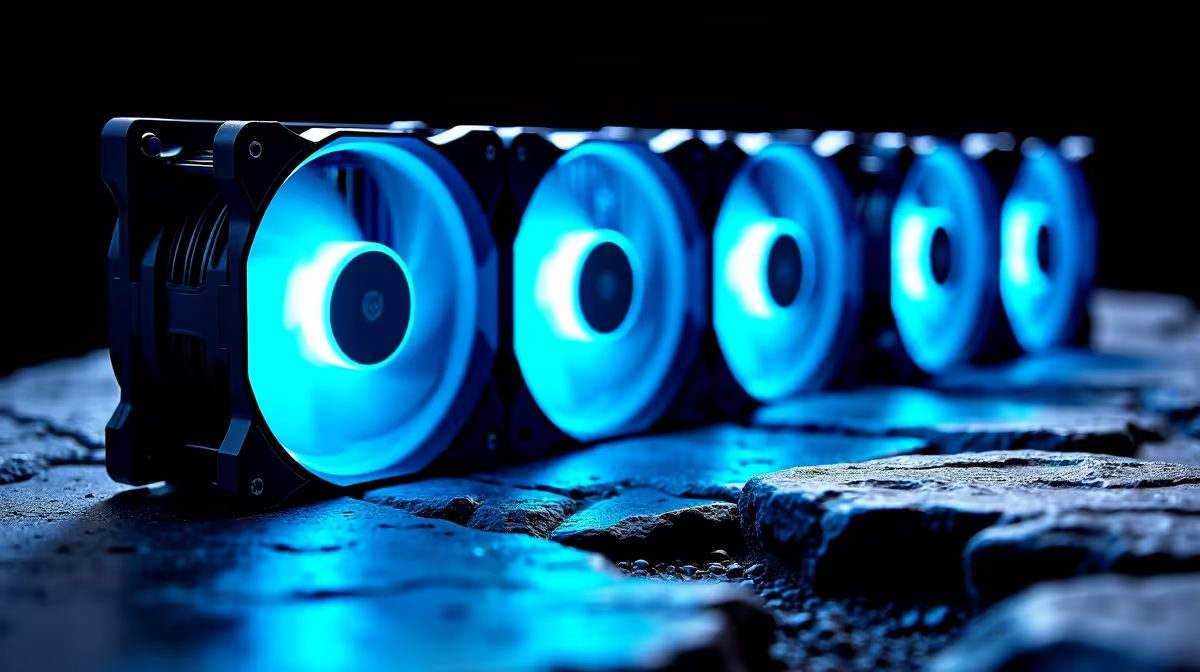
At Johannesburg's elevation, air density is noticeably lower than at sea level. Standard PWM case fans tuned for sea-level conditions move less heat per cubic metre of air, which means your CPU and GPU thermals run hotter under sustained load. Static pressure fans are designed to push air through restrictive paths such as heatsinks, radiators, and tight mesh fronts, making them inherently better suited to thin-air conditions. Look for fans rated above 2.0 mmH2O static pressure; popular options include the 120mm variants in the Noctua, Corsair LL, and be quiet! Silent Wings ranges.
Choosing the Right Specs for SA Interiors 🌡️
Gauteng summers push indoor temps into the low 30s without air conditioning, which stacks on top of altitude-related inefficiency. For a mid-tower with a 240mm AIO or tower cooler, use two or three static pressure fans as intake and at least one as exhaust. Aim for a fan rated at 40 CFM or higher so net airflow stays positive despite the thinner air. Budget around R250 to R450 per quality 120mm static pressure fan from Evetech. If your case has a dust-filtered mesh front panel (common in Lian Li, Fractal, and DeepCool designs stocked locally), static pressure fans recover more of their rated performance than airflow-type fans do through the same mesh.
Fan Configuration Tips for High-Altitude Builds 🔧
In a standard ATX build at altitude, a 2-intake, 1-exhaust configuration works well for GPU-heavy rigs; the positive pressure keeps dust at bay while maintaining adequate heat removal. If you are running a 360mm AIO, mount the radiator as a front intake with three static pressure fans pushing air in. Keep the top and rear as exhaust. Monitor temperatures with HWInfo64 and target CPU idle below 45 degrees Celsius and GPU idle below 50 degrees Celsius. If you exceed these at altitude, increase fan curve aggression in your motherboard BIOS before buying replacement fans.
Altitude Compensation Quick Fix ⚡
Bump your fan curve's midpoint 5 to 10 percent higher in BIOS to account for thinner Highveld air. This small adjustment keeps thermals stable without replacing hardware and costs nothing.
FAQ
Does altitude really make a measurable difference to PC thermals?
Yes. Independent thermal testing shows CPU temperatures can rise 5 to 12 degrees Celsius at 1,700m versus sea level under the same workload, primarily because air holds less heat per unit volume. Static pressure fans partially offset this by maintaining flow through restrictive surfaces.
Can I use standard airflow fans instead of static pressure fans at altitude?
Airflow fans work if your case has wide, unobstructed intakes, but they underperform behind mesh panels or heatsink fins. For the Gauteng climate and elevation combination, static pressure fans provide more consistent results and are worth the modest price premium.
What is a good budget for case fans for a mid-range SA build?
Allocate R700 to R1,200 for a set of three quality 120mm static pressure fans. Brands stocked at Evetech cover a range from R230 to R450 per fan, giving you room to choose based on noise levels and RGB preference.
Ready to cool your Highveld build properly?
Evetech stocks a full range of 120mm and 140mm static pressure fans suited to South African environments. Browse the cooling category to find the right fan for your case.