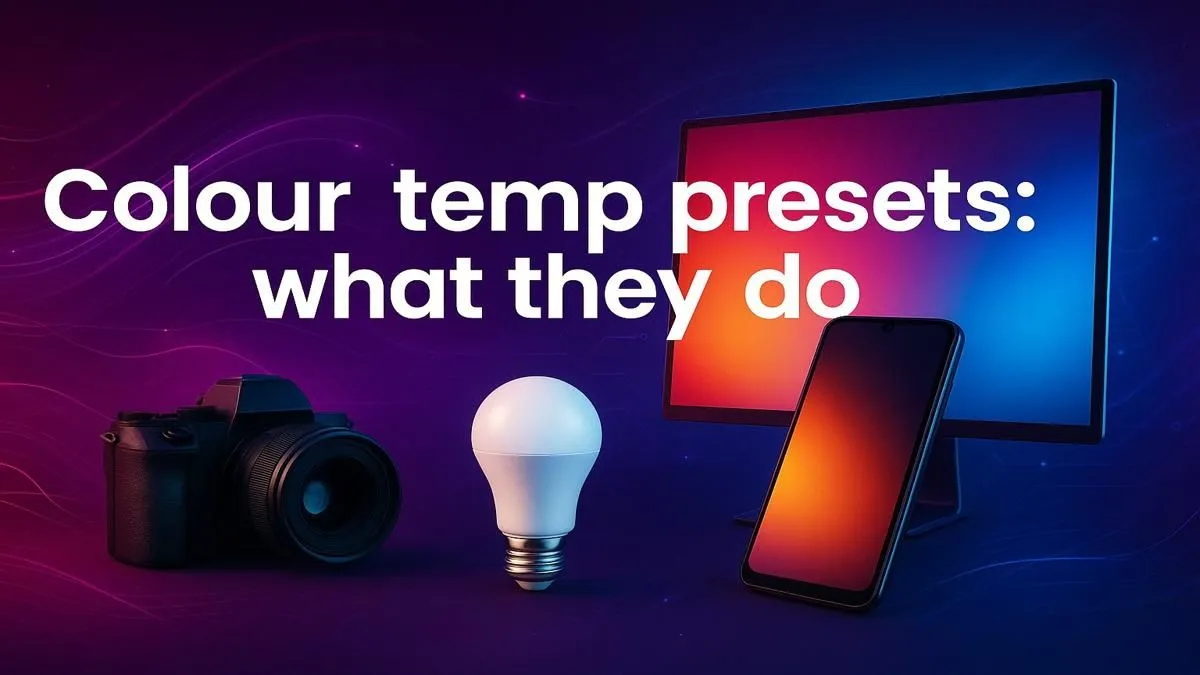
Ever felt your screen colours were just… off? Too blue and harsh during a late-night grind, or too yellow and washed out in a vibrant game? You’re not imagining things. That feeling is all about your monitor's colour temperature, and mastering its presets is the key to unlocking better visuals, reduced eye strain, and even a competitive edge. Let's decode what those "Cool," "Warm," and "Standard" settings actually do for your display.
What Exactly Are Colour Temperature Presets?
Think of colour temperature presets as quick filters for the "whiteness" of your screen's light. Measured in Kelvin (K), this scale defines the hue of white light, from a warm, reddish-yellow glow to a cool, bluish tone. It's a bit like the light from a candle versus a bright fluorescent tube.
Most monitors offer a few standard options:
- Warm (around 5000K): This setting has a noticeable yellowish or reddish tint. It reduces blue light, making it much easier on the eyes for reading text or during late-night sessions. 🌙
- Neutral / Standard (around 6500K): This is the magic number. 6500K is the industry standard for sRGB, web content, and broadcast video. It provides the most accurate, true-to-life colour representation, making whites look pure white.
- Cool (around 9300K): This gives the screen a distinct blue tint. It can make images appear brighter and more vibrant, which some people prefer in brightly lit rooms, but it can also lead to faster eye fatigue and less accurate colours.
Understanding these basics is the first step to optimising any of the fantastic PC monitors available today.
How to Use Colour Temperature Presets for Different Tasks
Your ideal setting isn't static; it changes based on what you're doing. Knowing how to use colour temperature presets effectively can transform your experience, whether you're working, playing, or creating.
For Competitive Gaming 🎯
In fast-paced shooters like Valorant or Apex Legends, visibility is everything. A slightly cooler colour temperature can make colours pop and details in shadowy areas appear sharper. However, cranking it too high can wash out the image. Start with the "Standard" preset on any of our all gaming monitors and nudge it slightly cooler to find your sweet spot for maximum clarity.
For Creative Work
If you're editing photos or videos, colour accuracy is non-negotiable. You need to see the true colours of your work. The "Neutral" or "6500K" preset is your best friend here. It ensures the content you create looks the same on other calibrated screens. This is especially crucial on high-resolution 5K & 4K monitors where every pixel counts.
Software Solutions 💡
Don't forget about software-level controls! Windows has a built-in "Night Light" feature (Settings > System > Display) that automatically warms your screen's colour temperature after sunset. It's a great way to reduce blue light exposure and help you wind down for a better night's sleep without fiddling with your monitor's OSD.
For Late-Night Sessions & Reading
Staring at a cool, blue-toned screen late at night can disrupt your sleep patterns. Switching to a "Warm" preset significantly reduces eye strain and makes reading long documents or articles much more comfortable. This is a fantastic feature whether you're on a big screen or using one of the latest portable monitors for work on the move.
For Cinematic Immersion
Watching a movie on your PC? A slightly warmer colour temperature can create a more cinematic, film-like feel. It dials down the harshness of a standard digital display, making for a more comfortable and immersive viewing experience, especially on beautiful curved monitors that wrap you in the action.
Beyond Presets… Taking Full Control 🔧
While colour temperature presets are incredibly useful, most displays also offer manual RGB (Red, Green, Blue) controls for fine-tuning. For absolute professionals, a hardware calibrator is the ultimate tool for perfect colour. But for the vast majority of us, simply choosing the right preset for the task is a massive improvement.
Don't forget that your physical setup matters too. Proper lighting and ergonomic positioning, often achieved with quality monitor accessories like adjustable arms, can also impact how you perceive colour.
Ultimately, the best setting is the one that works for you. Experiment with your monitor's colour temperature options to see what feels best for your eyes and enhances your experience. Taking a moment to switch from "Cool" to "Warm" at the end of the day might be the best upgrade you make. And if your current screen just isn't cutting it, there are always some incredible PC monitor deals to be found. ✨
Ready to See the Difference?
A great monitor is the window to your digital world. Understanding colour temperature is just the start. Explore our massive range of PC monitors and find the perfect display to conquer your world.