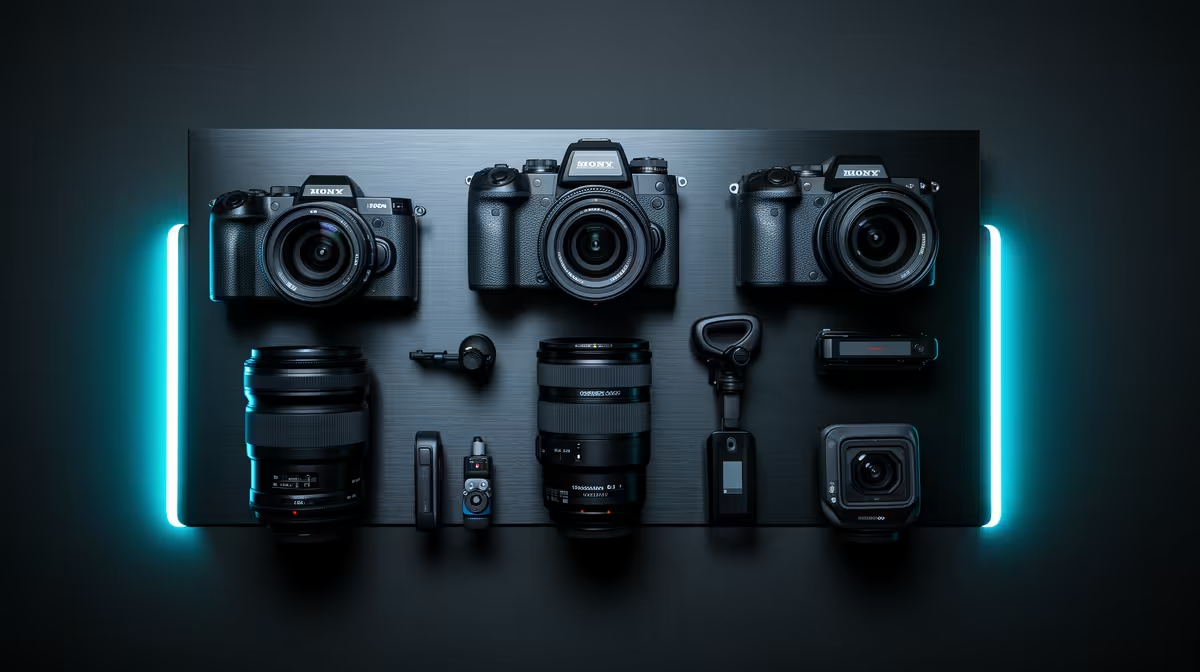
A mobile video production studio is only as useful as what fits inside one carry bag. Leave something critical behind on a location shoot in Joburg or Cape Town and the gap in your kit becomes visible in the final edit: audio that sounds like it came from a different production, a shaky shot no stabiliser can rescue, or a face lost in shadow because there was no light source to work with. A well-assembled mobile video production studio starts with a short, ruthlessly prioritised list and builds outward from the items that cause the most obvious problems when absent.
Quick Answer
A mobile video production studio requires a camera, a dedicated microphone, a portable LED panel, a compact tripod, and spare batteries per device. Audio matters as much as the camera, so a wireless lavalier or shotgun mic ranks above any other accessory. The full kit should fit in one padded bag under 20 litres.
🎙️ Audio Is Not Optional
The most reliable way to ruin a location video is to record audio on the camera's built-in microphone. Built-in mics capture everything in the environment at equal weight: your subject's voice, wind interference, ambient street noise, and the handling noise of the camera body itself. The result sounds hollow and amateurish regardless of how sharp the image is, because human listeners are extraordinarily sensitive to audio quality and will disengage from even a compelling visual if the sound distracts them.
Two microphone types suit a mobile setup. A wireless lavalier system clips to the subject's lapel and captures voice from close proximity, largely independent of background sound. The transmitter sits on the subject's belt and the receiver attaches to the camera, keeping the audio chain self-contained. The subject can move freely within the wireless system's range without audio quality changing, which suits interview formats and walking presentations.
A shotgun microphone mounted to the camera's hot shoe captures directional audio pointed at the subject. It rejects off-axis sound more aggressively than a built-in mic, works without a transmitter-receiver chain, and is the faster setup option for stationary subjects. The ideal mobile kit carries both, using the lavalier for the primary subject and the shotgun as a backup recording.
The Field Recorder as Audio Insurance
A compact field recorder weighing under 300 grams logs audio independently of the camera. If the wireless system drops mid-take, the field recorder has the backup. Synchronising backup audio in post requires a visible or audible sync point at the start of each take. This small discipline removes one of the most frustrating post-production problems: a take with perfect camera work and compromised audio that cannot be recovered.
Field recorders also offer better preamp quality than most mid-range cameras, so plugging a lavalier directly into the recorder via XLR produces a cleaner signal than running the same mic through the camera's 3.5mm input.
💡 Portable Lighting for Indoor and Shaded Locations
Cameras struggle in low-light and mixed-light environments. A portable LED panel resolves this by giving you a controllable, consistent light source that you carry with you.
A 5-watt foldable LED panel is the practical minimum. At around 1,500 lux at half a metre, it provides enough output to light a face cleanly in a shaded outdoor location or an underlit indoor interview setting while fitting into a camera bag without burden.
Bi-colour panels that adjust from warm tungsten (around 3,200K) to daylight balance (around 5,600K) save time at mixed-light locations. A bi-colour panel matches any lighting environment without gels, removing a fumbling step during a fast-moving shoot.
Battery life on a compact LED panel typically runs around 90 minutes at full power. Carrying a USB power bank extends this indefinitely. For shoots longer than two hours, a spare fully charged power bank is a standard item in the bag.
📷 Camera and Stabilisation
The camera sits at the centre of the kit, but the camera upgrade diminishes in visible impact once audio and lighting are sorted. A mid-range mirrorless or compact camera in good light with clean audio produces more compelling content than a top-tier camera in a poorly lit, poorly recorded setup.
Stabilisation choices shape how the kit travels. A gimbal produces cinematic smooth motion but adds weight, complexity, and charging management. For a mobile kit aimed at frequent travel between locations, a compact folding tripod under a kilogram is a more practical anchor. For moving shots, in-camera stabilisation combined with a handheld operating style handles most interview and vlog formats adequately.
Pro Tip ⚡
Pack your cables last and check them first. A missing 3.5mm to XLR adapter or a dead USB-C to micro-USB charging cable kills a shot that all the other gear could have captured. Keep a small zipper pouch with one spare of each cable the kit depends on and treat it as part of the checklist, not an afterthought.
🎒 Fitting the Kit Into One Bag
A padded 20-litre bag accommodates the full kit described here with room for cables, a cleaning cloth, and a compact reflector. Camera in the main compartment with lens attached, LED panel in a padded sleeve, lavalier system in the front pocket, spare batteries in the same front pocket so they are the first things you find when power starts running low.
Weight distribution matters for a day-long carry. Heavier items, the camera and field recorder, go against your back. Lighter accessories go in the outer pockets.
The discipline that makes the mobile kit work is a consistent pre-shoot checklist. Every device charged. Every spare battery confirmed. Every cable present and tested. A five-minute check the evening before eliminates the class of failures that only appear when you are standing at a location an hour from home.
Frequently Asked Questions
What microphone type is best for a mobile video production shoot?
Either a wireless lavalier or a shotgun microphone, depending on subject movement. A wireless lavalier captures voice from the subject's lapel, handling movement freely within wireless range. A shotgun mic is faster to set up and works well for stationary subjects. Carrying both gives flexibility and a backup audio chain.
How many spare batteries should a mobile kit carry?
At least two spares per device. A mobile studio needs roughly six hours of backup capacity across camera, wireless mic transmitter, and portable LED. Lithium AA batteries as a universal backup covers the gap a flat battery creates at the worst moment.
Does a mobile production studio need a separate light?
Yes, for anything indoors or in shade. A 5-watt foldable LED panel at around 1,500 lux at half a metre lights a face cleanly without adding significant weight to the carry bag.
Which tripod works best for a mobile production kit?
A compact folding tripod under one kilogram. It provides stable framing for static and slow-pan shots, fits inside or straps to a 20-litre camera bag, and requires no separate carry case.
Can the full mobile studio kit fit in a single bag?
Yes. A padded 20-litre bag fits a camera with lens, a portable LED panel, a lavalier wireless system, a compact tripod, a field recorder, and a cable pouch.
Is a field recorder worth adding to a mobile kit?
For serious audio quality, yes. A compact field recorder under 300 grams logs a backup audio track independently of the camera and provides better preamp quality than most mid-range camera inputs.
Ready to build a mobile video production kit that travels anywhere and misses nothing?
Browse the camera accessories, microphones, and portable lighting range for South African content creators and assemble a setup that fits in one bag and performs on every shoot.