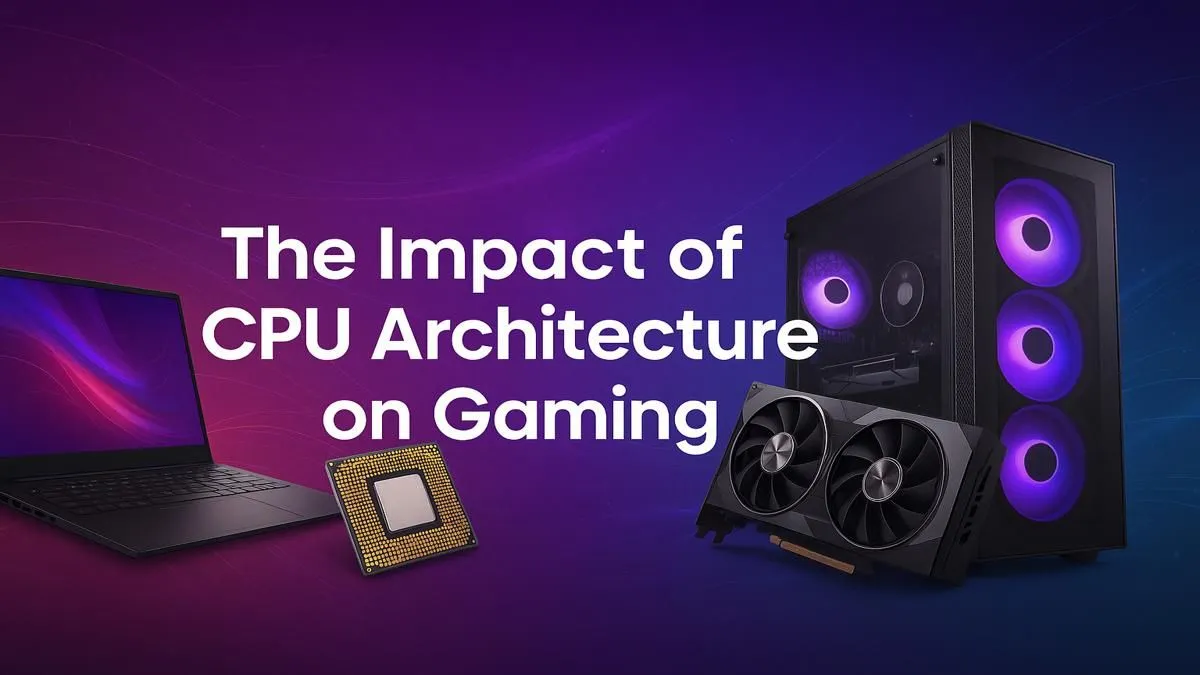
Chasing that buttery-smooth 144 FPS in your favourite shooter but still hitting frustrating stutters? You’ve tweaked every in-game setting, but the secret to unlocking consistent performance might not be your graphics card. It’s deeper… hidden in your processor’s DNA. We're talking about CPU architecture for gaming, the unsung hero of your rig's performance. Understanding this is the key to building a truly powerful PC, and we're here to break it down, no jargon allowed. 🚀
Understanding CPU Architecture: More Than Just Gigahertz
For years, the marketing battle was all about clock speeds (GHz) and core counts. While important, they don't tell the whole story. Think of CPU architecture as the master blueprint for a processor. It defines how efficiently the cores work, how they talk to each other, and how quickly they can process instructions. A newer, more refined architecture can do more work per clock cycle than an older one, even at a lower speed.
This efficiency is often measured as IPC (Instructions Per Clock). A higher IPC means a smarter, faster CPU. It's the difference between a bakkie and a sports car... both can have a 3-litre engine, but the design (architecture) determines which one wins the race. Getting to grips with CPU architecture for gaming is crucial for making a smart investment.
The Big Showdown: Intel's Hybrid vs. AMD's Cache King
Today’s gaming CPU landscape is dominated by two brilliant, but different, design philosophies. Understanding them will help you decide which team to back for your next build.
Intel's Performance and Efficient Cores (P-cores & E-cores)
Intel shook things up with their hybrid architecture. Instead of filling a chip with identical cores, they combined two types:
- Performance-cores (P-cores): These are the heavy lifters, designed for maximum single-threaded speed. Your game will primarily run on these.
- Efficient-cores (E-cores): These smaller cores handle background tasks like Discord, OBS, or your browser, preventing them from stealing resources from your game.
This approach is fantastic for gamers who also stream or multitask. By offloading background processes, it ensures the P-cores are free to push out maximum frames. It’s a clever design that reflects how we actually use our PCs. You can see this tech in action across Intel's latest Core processors.
Don't Forget The Motherboard! 🔧
When upgrading your CPU, always check for socket compatibility. A new CPU architecture often requires a new motherboard chipset and socket type (e.g., Intel's LGA 1700 or AMD's AM5). Mismatched parts simply won't work, so double-check your specs before you buy!
AMD's 3D V-Cache Technology
AMD's Zen architecture is already a powerhouse, but they took it a step further for gamers with 3D V-Cache. They figured out how to stack a massive amount of L3 cache (ultra-fast memory) directly on top of the processor.
Why does this matter? Games love cache. Having more game data instantly accessible to the cores reduces the time the CPU has to wait for information from your RAM. The result is a significant FPS boost in many titles, making CPUs like the Ryzen 7 7800X3D an absolute favourite among competitive gamers. This focus on a massive cache is a defining feature of AMD's Ryzen lineup designed for gaming dominance.
How the Right Architecture Elevates Your Game
So, what does all this tech mean for your late-night gaming sessions? ✨
A superior CPU architecture for gaming directly translates to:
- Higher Average FPS: The processor can feed your graphics card with data faster, pushing your frame rates higher.
- Better 1% Lows: This is arguably more important. Good architecture improves performance consistency, drastically reducing those jarring stutters and frame drops that get you eliminated.
- Future-Proofing: As games become more complex and utilise more cores, a modern architecture will be better equipped to handle them.
Ultimately, choosing between the latest architectures from Intel and AMD depends on your specific needs and budget. But by looking beyond the sticker numbers and understanding the design philosophy, you're empowered to make a much smarter choice when choosing the right CPU processor for your ultimate gaming rig.
Ready to Unleash Peak Performance?
Understanding CPU architecture is your first step to building a truly powerful gaming rig. Whether you bleed blue for Intel or red for AMD, the right processor is waiting. Explore our massive range of CPUs and find the perfect heart for your machine today.