Quick Answer
Custom water cooling loops deliver the lowest temperatures and quietest high-end builds, but they're a premium, advanced project - a full CPU-and-GPU loop runs roughly R8,000-R20,000+ in parts at Evetech. For most SA gamers a 360mm AIO (R2,000-R4,000) gives 90% of the benefit for a fraction of the cost and effort.
When A Custom Loop Makes Sense
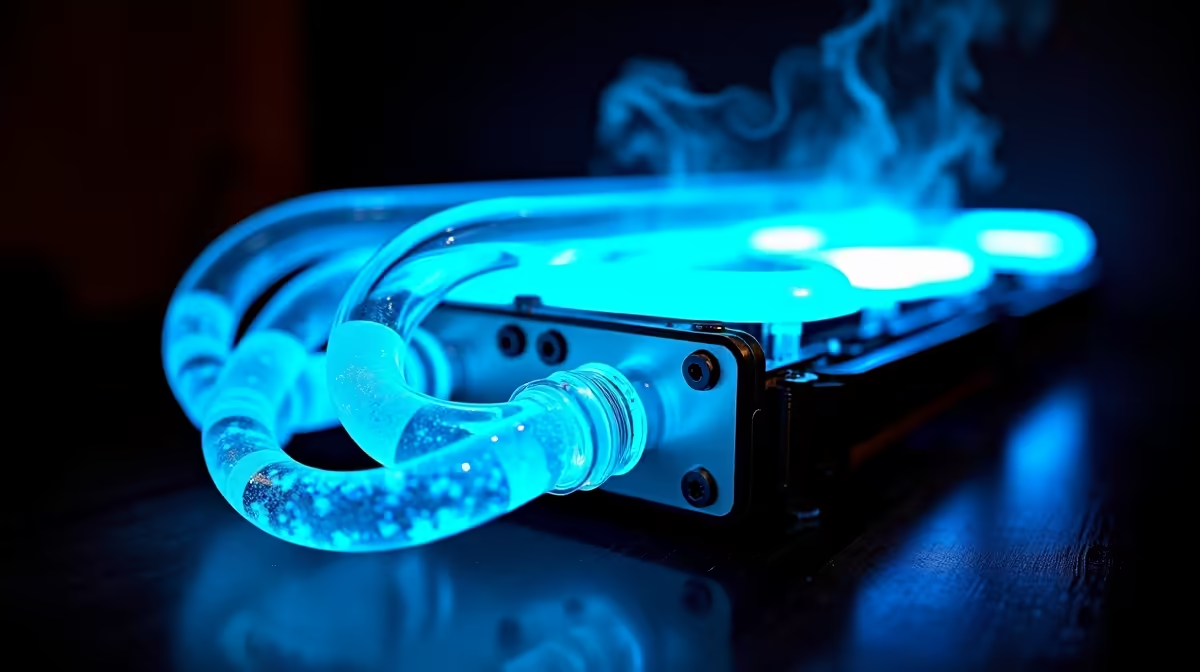
A custom loop cools a CPU and GPU with a single coordinated system, holding a flagship Ryzen 9 9950X3D and RTX 5090 at low temperatures even under sustained load, while running near-silent. It also looks stunning. But it's an advanced build with real risk - leaks, maintenance and high cost. It makes sense for enthusiasts with a high-end rig who want the best thermals, silence and aesthetics, and who accept the upkeep.
What A Loop Costs And Includes
A full custom loop needs a CPU block, a GPU block, one or two 360mm radiators, a pump-reservoir combo, fittings, tubing and coolant - roughly R8,000-R20,000+ depending on parts and whether you cool the GPU too. Add the time and care to assemble and leak-test it. By contrast, a 360mm AIO at R2,000-R4,000 cools a high-end CPU excellently with no maintenance.
Maintenance And Risk
Custom loops need periodic coolant changes (roughly yearly) and careful leak-testing before powering on. A leak can damage components, so this is not a beginner project. Build it slowly, test the loop outside the system first, and run it 24 hours before trusting it with the GPU.
FAQ
Is a custom water cooling loop worth it?
Only for high-end enthusiast builds wanting the best thermals, silence and looks. For most gamers a 360mm AIO at R2,000-R4,000 gives most of the benefit far more simply.
How much does a custom loop cost in South Africa?
A full CPU-and-GPU loop runs roughly R8,000-R20,000+ in parts, plus the time to assemble and leak-test it carefully before use.
Do custom loops need maintenance?
Yes. Plan a coolant change roughly yearly and leak-test thoroughly before powering on. A leak can damage parts, so it's an advanced, careful project, not beginner-friendly.
| Leak-test a new loop with the PC powered off for 24 hours before turning it on - a leak onto live components is the costliest mistake.