If you are weighing this up from Joburg, Durban, or the Cape, the honest trade-offs matter more than marketing copy.
Quick Answer
For relaxed couch co-op, DDR5-6000 CL30 is more than enough; DDR5-7200 adds cost without a felt benefit on the big screen. Save it for the GPU.
DDR5-6000 in short
Couch play on a TV is rarely memory-bound, so DDR5-6000 keeps everything smooth at the frame rates a living-room setup targets.
When DDR5-7200 makes sense
DDR5-7200 is overkill for shared-screen sessions. The money buys a better GPU or a faster SSD, both of which you would actually notice.
What couch co-op sessions actually needs
For couch co-op sessions the priority is smooth shared-screen play and quiet operation. Match the part to that goal rather than the bigger number, and the rest of the build (GPU, monitor, cooling) decides far more than this single choice.
Spending smart in rand terms
Rand pricing and local stock shift week to week, so anchor the decision to your real use case rather than the loudest spec. Set a firm budget, list the must-haves versus the nice-to-haves for ddr5 ram, and shortlist two options you can actually buy in stock now. That discipline beats chasing a headline number you will never feel in daily use, and it keeps the rest of the build from being starved.
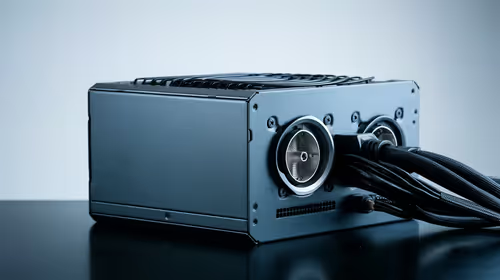
A quality 650W 80+ power supply runs about R1,400 locally, the kind of unglamorous part that is worth budgeting for properly.
FAQ
Which is better for couch co-op sessions, DDR5-6000 or DDR5-7200?
DDR5-6000 is the value default and covers couch co-op sessions well. Step up only if your workload is genuinely bound by what the other option improves.
Where should I spend the saving?
Put it toward the GPU or the monitor for couch co-op sessions. Those choices change the experience far more than this comparison does.
Does my platform support both options?
Check the motherboard and CPU first, since support varies. The right ddr5 ram only helps if your board can actually run it at its rated spec.
terms and the RMA path with Evetech support before checkout, because a smooth return process is worth real rands later.