A Dell OptiPlex computer can look like an inexpensive route to a desk-ready office PC, but the badge covers many ages, sizes and configurations. The useful comparison is not old versus new in the abstract. It is the particular machine''s remaining life, service history and parts limits against the cost of a current system that has a clear warranty and known starting point.
Quick Answer
An older OptiPlex may handle basic documents, browser work and email when its condition and specification suit the job, but it needs a model-by-model inspection. Check the processor generation, memory type, storage health, ports, operating-system support and power arrangement before treating a low asking price as value. For a South African business, a new PC can be easier to budget for when warranty handling and replacement parts matter.
🧩 The OptiPlex name does not tell the whole story
OptiPlex is a business desktop family rather than one fixed specification. A small unit from several years ago and a newer tower can share the family name while differing in processor platform, memory slots, graphics options and available connections. Ask for the service tag or exact model, then inspect the configuration in front of you instead of making a decision from a listing headline.
Start with the workload. A reception computer opening a booking system has different needs from a finance desk keeping several browser tabs, spreadsheets and video calls open. Storage deserves the same attention as the processor: an ageing hard drive can make an otherwise adequate machine feel slow and creates a data-risk concern if it is near failure.
Operating-system support is another practical boundary. A system that no longer receives the security and driver support required for its intended software may force a replacement sooner than expected. That cost belongs in the decision even when the computer starts and appears neat on the desk.
🔌 Small cases can hide expensive limits
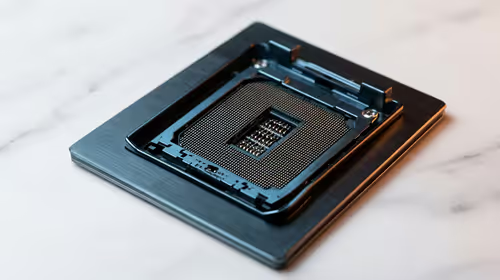
Many office desktops were designed to stay compact, quiet and easy to deploy in quantity. Those are useful traits, yet small-form-factor machines can use short expansion cards, restricted airflow, tight drive bays or custom power layouts. They may accept a simple memory or storage change while leaving little room for larger upgrades later.
Open the case only where the seller permits it, or ask for clear internal photographs and specifications. Identify the power supply, SATA connections, free memory slots and the physical clearance around the expansion area. A standard tower tends to give a technician more working space, but it still needs the exact board and power details checked before a purchase.
External connectivity matters too. Count the USB ports you actually need, confirm display outputs match the existing screen, and test audio and network sockets. A business can avoid a surprising amount of desk disruption by making that list before moving hardware between branches. If a new display is part of the refresh, compare suitable office monitors on their own merits instead of assuming an old desktop will dictate the choice.
✅ A used purchase needs evidence, not optimism
Ask for a condition record covering the drive, memory, ports, fan noise and any repairs already done. Test the machine under normal use, including a restart and each display connection. Listen for an unusually loud fan or repeated clicking from a mechanical drive, and look for intermittent behaviour rather than accepting a single quick boot as proof of health.
The selling terms matter alongside the hardware. Keep the invoice, identify what is included, and understand the seller''s remedies if the machine is not as represented. The Consumer Protection Act can be relevant in some transactions, but it does not make worn components new or guarantee that an obsolete platform becomes suitable for current workloads. Clear documentation is more useful than assumptions about future recourse.
South African offices also need to consider downtime. Sending a computer away for assessment can be more disruptive when a key staff member has no spare device. A familiar local warranty path and a configuration chosen for available replacement components reduce the amount of guesswork when a failure occurs.
📶 What a new system changes
A new machine offers a known baseline: current components, no hidden service history, and a warranty path that can be planned before a problem appears. That is often more valuable than a headline comparison of processor names, especially where an employee depends on the PC every day and cannot simply wait for a used part to arrive.
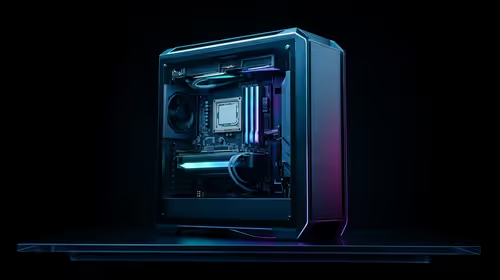
It also lets the buyer choose the form factor around the work. A compact desktop might suit a reception counter, while a conventional tower can be sensible for a workstation expected to gain storage or expansion cards. Browse pre-built PC deals for complete-system options, then compare Intel PC configurations where that platform fits the software and support plan. The point is not to replace a working machine for its own sake; it is to select a system with a defensible useful life.
Do not overlook migration. Move files with a verified backup, record software licences, and confirm access to email, accounting tools and shared folders before retiring the previous computer. A clean handover is often the difference between a sensible refresh and a difficult first week with a new desk setup.
Make the decision around total working life
An older OptiPlex can be a measured choice where the exact unit is healthy, the workload is light and the price recognises the remaining risk. It becomes less persuasive when it needs several upgrades immediately, lacks suitable ports, or depends on proprietary pieces that will be hard to replace.
Write down the expected role, critical software, minimum connections, support expectation and likely upgrade needs. Then compare each candidate against that list. A new PC with fewer compromises may be preferable for core staff, while a well-tested used unit can sometimes serve a limited secondary role. Neither answer follows from the brand name alone.
Frequently Asked Questions
What is a Dell OptiPlex computer used for?
It is a business-desktop family found in several chassis sizes and configurations. The right use depends on the exact generation, storage, memory and condition rather than the family name.
Why are compact office desktops harder to upgrade?
Their cases can restrict space, cooling, card length and power connections. Check the particular chassis and motherboard before budgeting for any expansion.
Is a used office PC always bad value?
No. It can be sensible when the unit is tested, the workload is modest and the price reflects its age, but its service history and remaining support still need attention.
What should I test before buying an older desktop?
Check the drive, memory, ports, display outputs, fan behaviour, restart process and operating-system compatibility. Retain the condition record and invoice.
Does the Consumer Protection Act remove used-PC risk?
It may provide recourse where applicable, but it does not undo component wear or extend platform support. Documented terms and a realistic assessment remain important.
Which desktop shape is easiest to maintain?
A standard tower commonly offers more internal room than a tiny chassis. The best choice still depends on desk space, required ports and the future work planned for it.
Ready to plan a dependable office refresh?
Explore Evetech pre-built PCs and monitor options, then match the system to the work your team needs to complete each day.