Triggers have two jobs that are often confused: measuring a gradual pull and shortening the movement needed for a digital action. Hall Effect triggers with micro switch stops let the GameSir G7 Pro support both styles without pretending one is best for every game.
Quick Answer
At R1,499, the GameSir G7 Pro combines magnetic Hall Effect trigger sensing with micro switch stops. Full travel suits graduated control such as throttle or braking, while the stops create a shorter actuation path for games where rapid trigger presses matter more.
🧲 See what Hall Effect sensing measures
A Hall Effect trigger reads movement through a magnetic principle. It can track travel as the player presses, allowing a game to receive graduated input instead of only an on-off command.
That analog range is useful when the amount of pull has meaning. Racing games can use trigger position for throttle and brake control, while other titles may apply it to acceleration, aiming or another variable action.
The sensing label describes how trigger position is detected. Spring resistance, shape, hand size and game calibration still affect the feel. Test a slow press and return to see whether the complete trigger suits the user.
The G7 Pro uses Mag-Res TMR sticks as well, but those thumb modules measure a different movement. Magnetic sticks do not turn the triggers into sticks, and Hall Effect triggers do not describe aim precision.
Compare controller specifications in Evetech's gaming controller category, keeping stick and trigger functions in separate columns.
🔘 Understand what the stops change
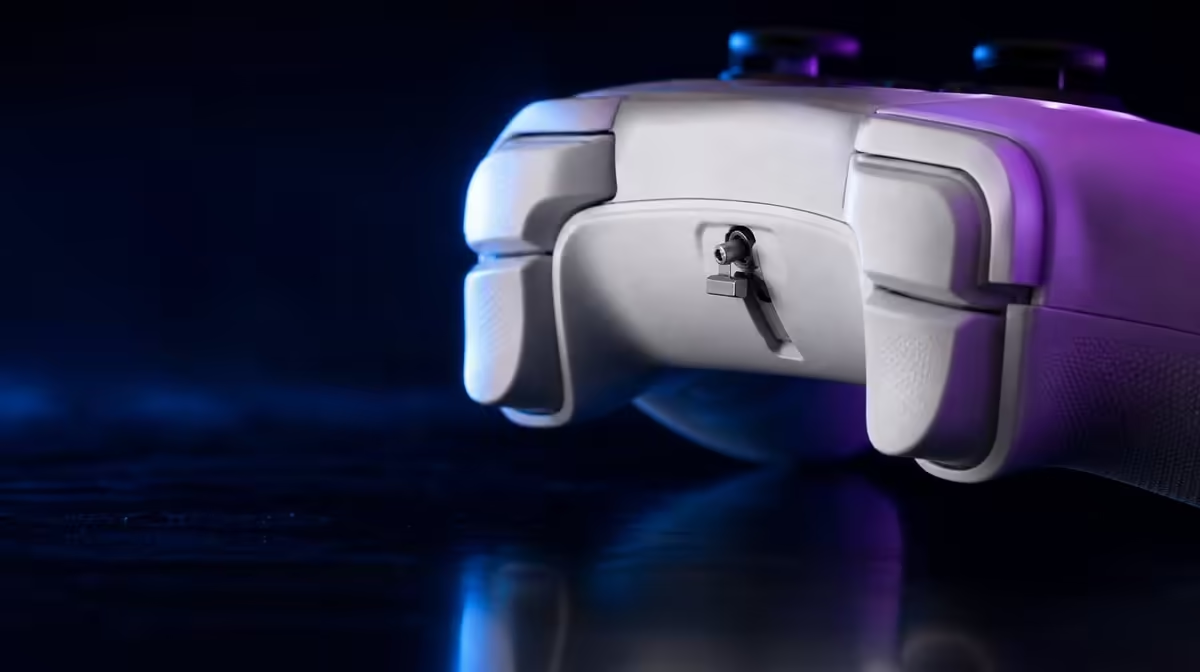
Micro switch stops reduce the usable trigger movement. Instead of travelling through the full analog range, the control can actuate after a shorter pull.
This can suit an FPS action treated as a digital command, where the player wants a quick press rather than fine throttle control. The shorter movement can reduce finger travel, but it does not aim, decide or fire at the right moment for the player.
For racing, leave full travel available so a gradual squeeze can represent partial braking or acceleration. Engaging a short stop for that task can remove useful control range.
Other genres need a decision by action. A game may use one trigger for a binary command and the other for variable input. Test both roles before applying the same setting mechanically.
The stop does not make every game easier. It changes physical travel and actuation style. Player timing, game mapping and comfort remain responsible for the result.
Think about fatigue as well as speed. A shorter movement can reduce repeated finger travel in a suitable action, while an awkward stop position can make the hand tense. Use a longer ordinary session after the short training drill and note whether control stays deliberate.
Do not infer a universal dead zone or actuation point from the Hall Effect label. Game settings can alter how analog travel is interpreted, and the stop changes the physical movement available. Check the input inside the title being configured.
Use Evetech's gaming accessories page to review the complete play setup around the controller.
🧪 Run a two-scene trigger test
Choose one scene that uses analog input and another that rewards a quick command. A racing practice lap and an FPS training area can provide clear contrasts.
With full travel, press from zero to maximum slowly. Watch whether the vehicle or action changes progressively and whether the return feels consistent. Repeat several times with each finger position normally used.
Engage the micro switch stop for the rapid-action scene. Count accidental presses and missed actions, not only apparent speed. A shorter path that causes poor control may need more practice or a return to full movement.
Run a mixed sequence next. Alternate movement, aim and trigger use so the control is tested while other fingers are occupied. A setting that feels fast in isolation may be less comfortable once the player is steering with the TMR stick and reaching a macro button.
Repeat the scene with the stop removed without changing sensitivity or connection. Ask whether the shorter pull improves access, consistency, fatigue or none of them. Write the result by game rather than turning it into a permanent controller verdict.
Keep the platform route stable. Xbox uses the G7 Pro through a cable, PC can use wired or 2.4GHz, and Android connects by Bluetooth. Do not change connection and trigger configuration in the same comparison.
If macro buttons are mapped, disable or ignore them during the initial trigger test. The controller has four, but an extra input should not contaminate the assessment of trigger travel.
🛠️ Save configurations by game
Create a small profile note for each title: platform, connection, left trigger mode, right trigger mode and any macro mapping. This makes it faster to restore a purposeful setup.
Start a new game with full trigger travel. Shorten it only after identifying an action that benefits from binary-style actuation. This avoids carrying an FPS preference into a racing title by habit.
Include a reset line on every profile. It should state how to restore full analog travel and the default button map. This prevents a specialised configuration from confusing the next player or making a different genre appear unresponsive.
If both triggers receive different roles, test them independently. One could keep graduated movement while the other uses a stop for a quick command, provided the game mapping supports that plan. The ability to choose by action is more useful than treating left and right as an inseparable pair.
At R1,499, the G7 Pro's trigger value comes from choosing between behaviours. A player who uses both racing and action games can gain more from that adaptability than someone who never changes the controls.
Platform fit remains the first gate. A wireless Xbox requirement is not met, PC has wired and 2.4GHz choices, and Android uses Bluetooth. Trigger flexibility adds value only after the expected connection is acceptable.
Give full travel, short travel, finger comfort and repeatability separate scores. That makes the final recommendation about controlled input rather than repeating the magnetic label.
Revisit the scores after several sessions. A stop that initially feels unfamiliar may become useful with practice, while an exciting short pull can reveal accidental presses later. Keep the game profile adjustable until the repeated result is clear.
Document which finger and action produced the conclusion. Another player or genre can reach a different valid trigger choice.
Review Evetech's best-selling accessories after deciding which trigger task must improve, then check current availability.
Frequently Asked Questions
What does a Hall Effect trigger measure?
It measures trigger travel magnetically, allowing a graduated input where the game supports it.
What do micro switch stops change?
They shorten the available pull so the trigger can behave more like a quick-actuation control.
Which trigger setup is included on the G7 Pro?
It pairs Hall Effect sensing with micro switch stops.
Why keep full trigger travel for racing games?
Full movement can preserve graduated throttle and brake input instead of collapsing it into a short command.
When can shorter travel help in an FPS?
It can help when a trigger action is binary and the player prefers less finger movement before actuation.
Do trigger stops make every game easier?
No. They change travel, while game design, mapping and player execution determine usefulness.
Can the Hall Effect label describe trigger feel?
Not completely. It states the sensing method, not every mechanical or ergonomic characteristic.
Want one trigger to serve two different jobs?
Explore Evetech's gaming controllers and test the G7 Pro with full racing travel before switching to a shorter action-game pull.