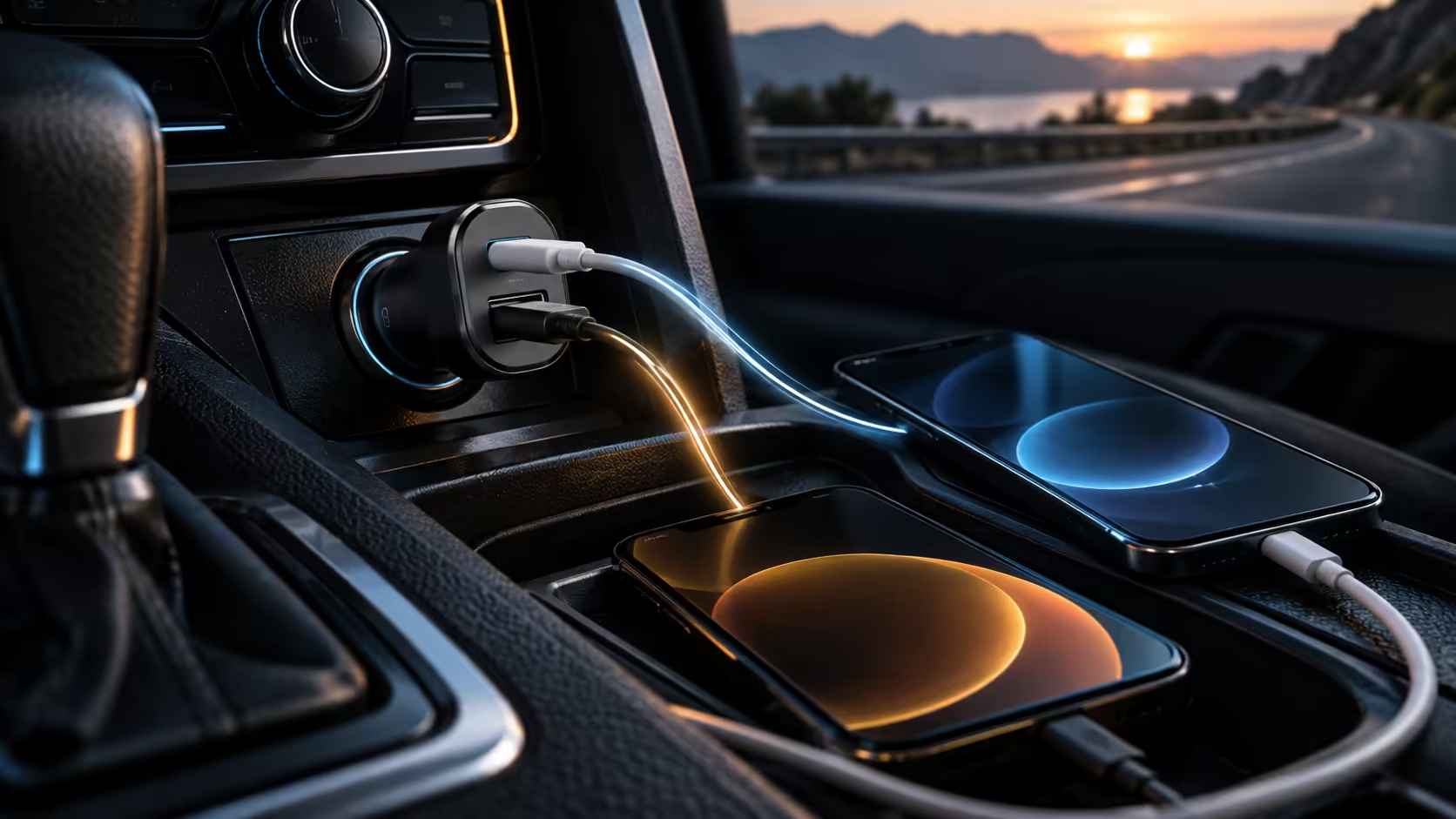
Choosing between a dual-port car charger and a single-port one is really a question about how many people regularly need a socket in the same car, not about which charger is objectively better built.
Quick Answer
A single-port charger dedicates its entire output to one device, so a 30W-rated single-port unit reliably delivers close to that figure the whole time it is in use. A dual-port unit like Anker's two-port charger splits one internal supply between two outputs, giving 30W USB-C or 22.5W USB-A when either runs alone, and settling at 12W each once both are drawing at once. It costs R349.
🔌 What each design is actually optimising for
A single-port charger has a simpler job: one converter, one negotiation, one device to serve, and the entire converter's output, up to its full 30W or similar, is available to whatever is plugged in for as long as it is the only thing connected. There is no sharing logic to design around, because there is nothing to share with.
A dual-port charger takes on the added complexity of dividing that same converter's output fairly between two independent negotiations running at once. That complexity buys flexibility, covering a passenger's device without a second charger, at the cost of a lower guaranteed figure per port whenever both are genuinely busy together.
⚡ When single-port genuinely wins
For a car with exactly one regular user charging exactly one device, a single-port charger delivers its full 30W rated figure with total reliability, since there is never a second claim on the same supply to worry about. There is a simplicity argument here too: nothing to think about regarding shared budgets, sequencing or which port to use for which device.
A solo commuter, or anyone who genuinely never has a passenger reaching for a spare port, loses nothing by choosing single-port and often pays slightly less for the equivalent solo wattage than an equivalent dual-port unit would cost.
👥 When dual-port earns its price
The moment a second regular user of the car exists, a partner, a lift-club member, a passenger who reaches for a spare port out of habit, dual-port stops being a convenience feature and becomes the practical answer. Buying two single-port chargers for two separate sockets works too, where the car has two sockets to use, but many vehicles only offer one accessible 12V outlet within easy reach of the front seats.
For that common case, one dual-port unit covering both people from the single socket that is actually reachable beats needing a second charger and a second, less convenient socket. The same logic extends to a desk USB hub sharing one supply among several devices, which is why the single-port-versus-multi-port question shows up well beyond just the car.
🚗 The middle case worth naming honestly
A car with an occasional passenger, not a daily one, sits in between the two clean cases. A dual-port charger still covers that occasional need without requiring a second purchase, and the shared-power behaviour only actually applies on the days both ports are genuinely in use, which for an occasional passenger might be rare enough not to matter in practice.
For that reason, dual-port is the more flexible default even for a mostly-solo driver, since it costs little extra over an equivalent single-port unit and covers the occasional day a second device needs power. A power bank is still the better fit for something that must stay powered permanently, a dashcam being the obvious case, whichever charger design ends up in the car.
Frequently Asked Questions
Is a single-port charger actually more reliable than a dual-port one?
Not in terms of build quality, but a single-port unit's rated figure is a guarantee whenever it is used, since there is never a second device competing for the same supply.
Does a dual-port charger cost much more than an equivalent single-port one?
Usually only a small premium, which is why dual-port is often the sensible default even for someone who rarely needs the second port.
Can I just buy two single-port chargers instead of one dual-port unit?
Yes, if the car has two accessible sockets. Where only one socket is within easy reach, a dual-port unit serves both people from that one location.
Does a dashcam count as a second device for this decision?
Yes. A dashcam that stays plugged in permanently occupies one port continuously, which is worth factoring into whether dual-port or a dedicated second socket suits the car better.
🧮 Working the actual numbers for your household
A useful exercise before buying is simply counting how many days out of a typical 7-day week a second device genuinely competes for a socket, rather than guessing. A driver who can count on one hand the days a passenger charges alongside them is closer to the single-port case in practice, even while owning a dual-port charger for the flexibility. A driver who cannot remember the last day only one device was charging is squarely in the shared-power case, and worth planning around that reality rather than the two headline numbers on the box.
That same count also decides whether a second charger for a second socket, where the car has one, is worth the extra spend. If the answer is most days, splitting the load across two genuinely separate sockets removes the shared-power ceiling entirely, since each converter then only ever serves one device.
Is there a downside to buying dual-port even if I rarely need the second port?
Not a meaningful one. A port sitting unused makes no claim on the shared supply at all, so a mostly-solo driver loses nothing by keeping the flexibility available for the rare day it gets used.
Is a three-port charger ever worth it over a two-port one?
For a car that regularly carries three or more people charging at once, yes, though the shared-power arithmetic simply extends further, dividing the same converter's output three ways instead of two whenever all three are active.
Does buying dual-port mean giving up any of the solo speed I had before?
No. A dual-port unit still delivers its full solo figure to a single device whenever the second port sits idle, exactly as a single-port charger would in the same situation.
Ready to decide between one port and two for your car?
Have a look at the car charger range and count how many devices actually need power at once.