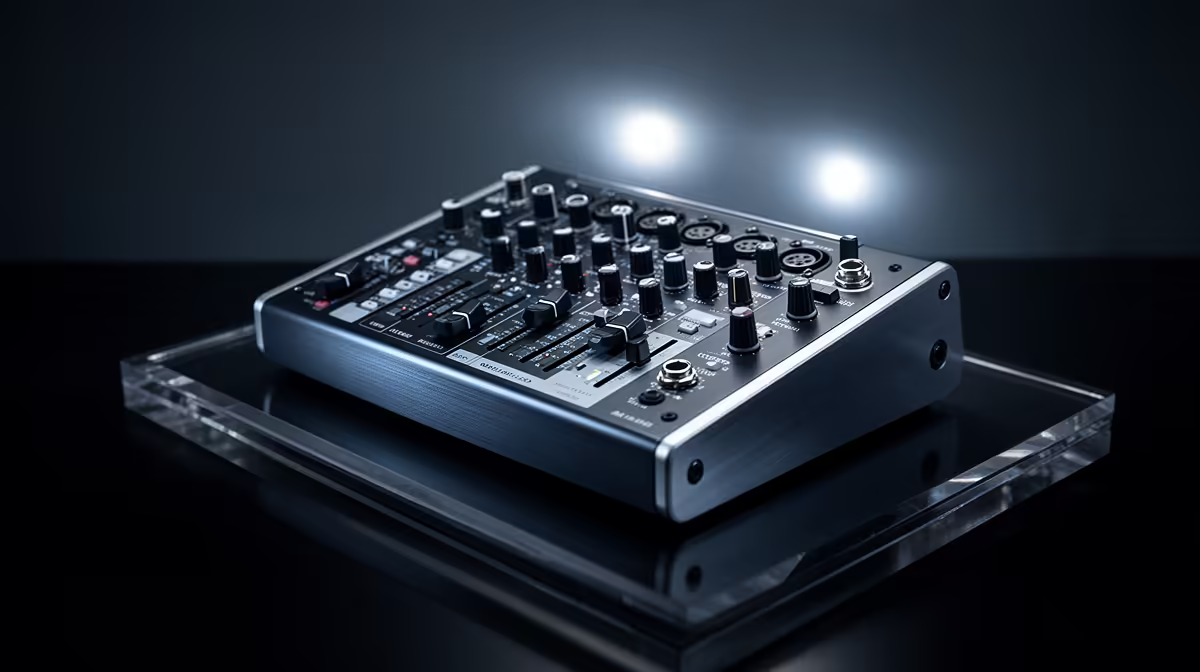
A mixer that lives on one desk and never moves is easy to specify. A portable all-in-one USB audio mixer asks harder questions: does it weigh under a kilogram, does it still run two condenser mics cleanly, and does it actually pack into a laptop bag alongside everything else you carry? The feature list that matters for mobile use strips away rack-style luxuries and focuses on the small number of specifications that determine whether the unit works cleanly out of a bag on a table in an unfamiliar room.
Quick Answer
For a portable all-in-one USB audio mixer, prioritise dual XLR combo inputs with 48V phantom power, low-noise high-gain preamps, and both USB and Bluetooth connectivity. Keep total weight under 1kg. Those five features cover the vast majority of portable podcast, stream, and interview scenarios in a single compact unit.
🔌 Input Connectivity: Why Two XLR Combo Jacks Are the Baseline
A portable mixer with only a single XLR input cannot run a standard two-person interview. Two combo jacks -- each accepting either an XLR cable for a microphone or a 6.35mm jack for an instrument -- set the minimum for practical mobile use, whether the second channel holds a co-host, a guest, or a backup mic for redundancy.
Both jacks need to supply 48V phantom power independently. Condenser microphones require this to bias their capsule electronics, and the ability to power two condensers simultaneously means you are not restricted to dynamic mics when a better-sounding condenser is what you own. Some compact mixers supply phantom power from one channel only, which limits your mic pairing; confirming per-channel phantom availability before purchase matters.
The gain range on each input determines how widely you can vary your mic selection. A clean 55 to 65dB of gain covers everything from hot condensers down to low-output broadcast dynamics. Units that top out at 45dB cannot drive a dynamic microphone to proper recording levels without digital boost, which is noisier than analogue gain.
⚡ Size and Weight: The Numbers That Make or Break Portability
True portability begins with total chassis dimensions. A footprint around 18 to 22cm wide and 13 to 15cm deep fits into the secondary compartment of a standard 15-inch laptop bag. Units that extend beyond those dimensions start competing with the laptop for space, at which point the "portable" claim is technically true but practically inconvenient.
Weight is the deciding factor for frequent travellers. A unit between 700g and 900g disappears into a bag without noticeably shifting the weight on your shoulder. Units that reach 1.2 to 1.5kg become a conscious addition; they fit in the bag but you feel them. For a South African podcaster catching a flight between Cape Town and Joburg for an interview, that 300g difference over a full day of travel is not trivial.
Physical faders rather than touch-sensitive panels make a specific difference on the road. Faders let you adjust levels by feel without looking at the unit, which matters when the mixer is positioned below a laptop screen in a cramped hotel room or a co-working space desk. A 60mm throw gives you fine level control through tactile feedback alone.
Pro Tip ⚡
Before your first mobile session, tape a small piece of card over the fader positions at your standard levels. When you unpack in a new location you can set levels to their marked positions before the software is even open, saving the time of a full level-check run in an unfamiliar acoustic environment.
🎙️ Routing: USB and Bluetooth Working Together
A single USB-B or USB-C cable is the core routing link, connecting the mixer to a laptop or recording PC and presenting the unit as an audio interface to any DAW or streaming application. No driver installation should be needed; class-compliant USB audio is supported natively by both Windows and macOS.
Bluetooth adds a second input source that USB alone cannot cover. For a travel set where you want to route backing music, intro tracks, or a smartphone call into the mix, Bluetooth handles that without occupying a physical input channel. USB feeds the DAW recording; Bluetooth feeds the music. That is a two-source setup the mixer manages internally without external splitters or adapters.
Multi-output USB routing, where each mic appears as a separate track in the recording software, matters if you edit interviews. A summed stereo recording forces you to cut both hosts simultaneously; separate tracks let you reduce a cough on one voice without touching the other. Not all portable units offer multitrack USB, but it is worth confirming if post-production editing is part of your workflow.
🔧 Onboard Effects for Self-Contained Sessions
Onboard reverb, compression, and EQ presets let you deliver polished audio in locations where a laptop with a full processing chain is not available. For a session running from a tablet, a phone, or a low-power machine in a venue, built-in effects mean the mixer does the processing rather than the host device.
Selectable voice modes, typically optimised presets for speech clarity versus musical warmth, let a non-technical presenter pick a setting by name and run with it. That is faster than opening a DAW plugin chain on a tablet at a conference table. The trade-off is less precise control than software, but for portable broadcast use the convenience outweighs the flexibility loss.
Frequently Asked Questions
How many XLR inputs does a portable mixer need for a two-person podcast?
Two combo jacks are the minimum. Each should have its own gain control and its own 48V phantom power supply so that two condenser mics can run simultaneously at independent levels. A mixer with a single XLR and a second 3.5mm input forces one host onto an inferior connection.
What total weight should a genuinely portable mixer stay under?
Under 1kg keeps the unit comfortable in a laptop bag for a full travel day. Units between 700g and 900g are the practical sweet spot: light enough to stop being noticeable, but heavy enough to have solid build quality and proper connector spacing. Anything above about 1.2kg earns the "transportable" label more accurately than "portable."
Why do portable mixers need both USB and Bluetooth?
USB connects the mixer to a laptop for recording and streaming software. Bluetooth handles a separate audio source such as backing music, a phone call, or intro tracks from a mobile device, without using a physical input channel. The two routes work simultaneously, covering both the recorded signal chain and live audience audio in one compact unit.
Are hardware faders worth having on a compact body?
Yes. Physical faders let you ride levels by feel during a live recording without watching the unit, which matters when you are also managing a conversation and monitoring a speaker. Touch controls require a visual check and precise tap pressure; a fader you can nudge by a centimetre is faster and more reliable when hands are busy.
Which single specification matters most for a live stream on the road?
Preamp noise. A high-gain, low-noise input stage keeps quiet mics clean at the gain levels portable sessions often require. Without it, dynamic mics at 55dB of gain will hiss audibly, and no amount of routing convenience, Bluetooth connectivity, or onboard effects will recover the signal quality you lost at the first analogue stage.
Ready to run a professional podcast setup from a single bag?
Browse the portable mixer and audio interface range at Evetech to find compact units that cover two mics, USB recording, and Bluetooth routing without filling your carry-on.