Quick Answer
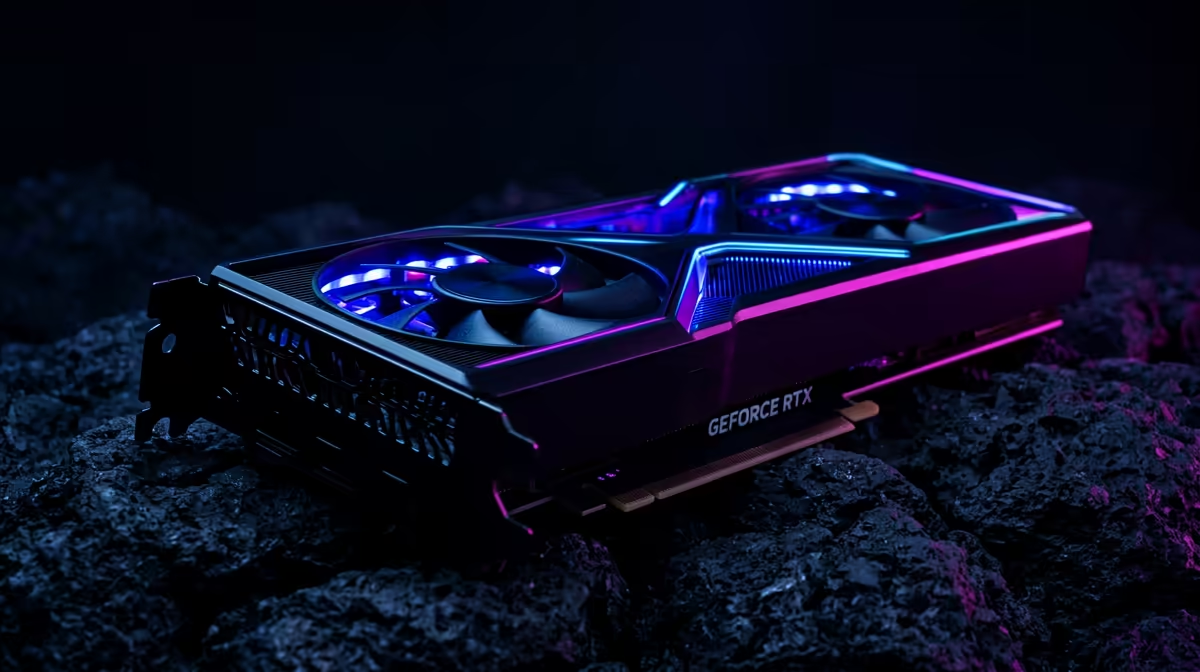
A flagship GPU only makes sense in South Africa if you run 4K 120Hz or higher, or do GPU-heavy creator work; for pure 1440p gaming it is overspend. The current flagships clear 90-140 fps at 4K ultra in most titles, with 16-32GB of VRAM that future-proofs four-plus years.
What Separates A Flagship From A Tier Below
The jump to a flagship buys three things: raw 4K throughput, large VRAM (16-32GB), and ray-tracing headroom. In practice that means 4K ultra at 90-140 fps where the next tier down sits at 60-80. The difference is most visible at 4K 120Hz and in heavy ray-traced scenes, and almost invisible at 1080p.
For creators, the VRAM and encode blocks matter more than fps. Large video timelines, 3D scenes and AI workloads benefit from 24-32GB, which is the real reason many SA buyers pick a flagship over a mid-card.
Cooling, Power And Whether You Actually Need It
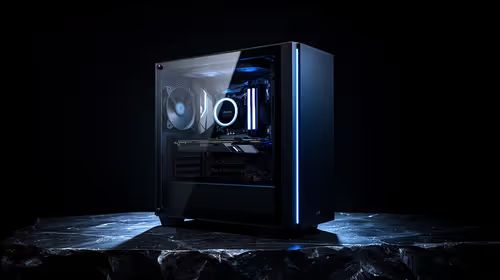
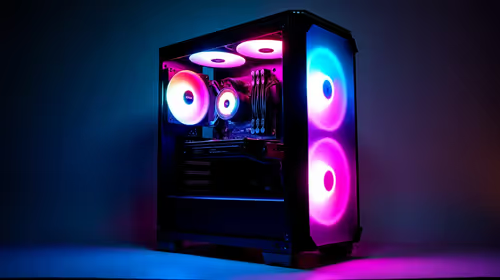
Flagships draw 350-575W and need a 1000W PSU plus a case with 350mm+ clearance and strong airflow. They run hot, so a mesh-front case keeps them under 75C. Before buying, be honest about your panel: a flagship behind a 1440p 144Hz screen wastes half its capability.
FAQ
Do I need a flagship GPU for 1440p gaming?
No. At 1440p a mid-to-upper card already exceeds 144 fps in most games, so a flagship's extra power goes unused unless you move to 4K or high-refresh 4K.
What PSU and case do flagships require?
Plan on a 1000W PSU and a case with at least 350mm GPU clearance and mesh airflow. Flagships draw 350-575W and dump a lot of heat into the case.
Are flagships worth it for content creation?
Often yes. The 24-32GB VRAM and stronger encoders speed up video export, 3D rendering and AI tasks far more than they help gaming, which is the strongest justification for the price.
panel is 1440p, skip the flagship and put the saving toward a 4K 144Hz monitor first, then revisit the GPU once you can actually use the extra horsepower at 4K.