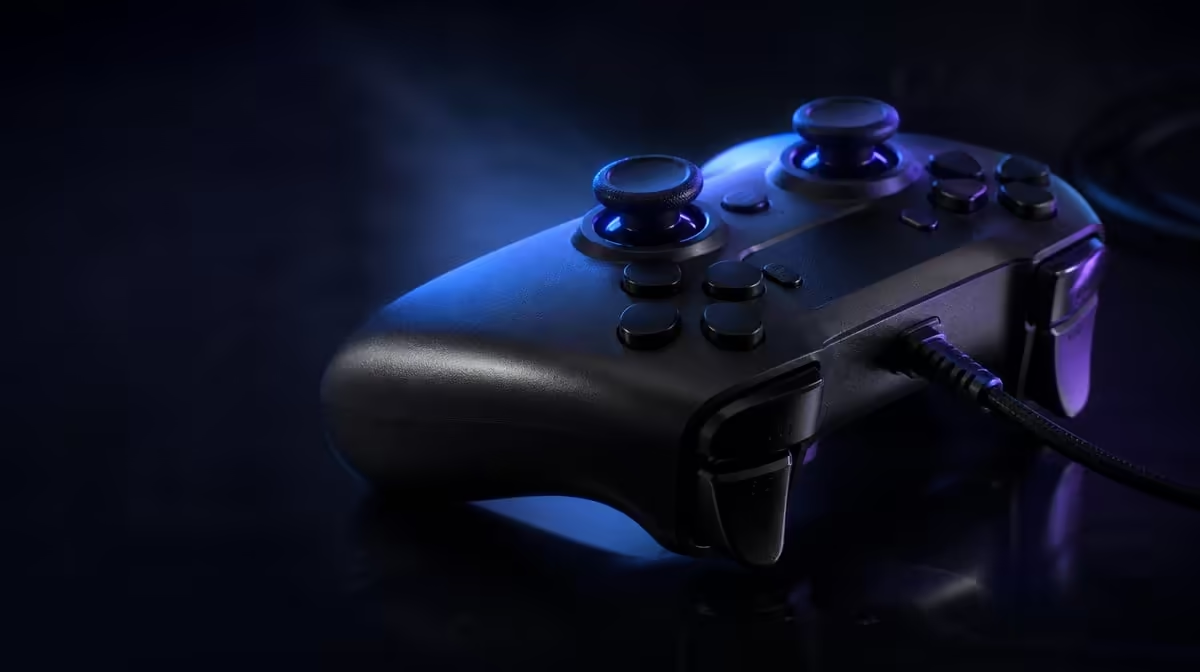
Magnetic sensing appears twice on the G7 HE, but the controls do different jobs. G7 HE Hall sticks and magnetic triggers translate two-axis movement and graduated finger travel into Xbox input, giving the R899 wired pad a contact-reducing analog foundation.
Quick Answer
The G7 HE uses Hall sensing for both sticks and magnetic sensing for both triggers. At R899, those controls avoid rubbing potentiometer tracks in their position measurement, while calibration, game curves, physical condition and player technique still shape the result.
🕹️ Hall sticks report two axes
Each stick combines horizontal and vertical position. Moving right changes one axis; moving diagonally changes both. Hall sensing reads that position magnetically instead of through a rubbing electrical track.
This reduces one wear path associated with contact-based measurement. It does not remove the stick's moving parts or guarantee a perfect centre after impact, contamination or unsuitable calibration.
Test the untouched centre first. Move each axis slowly, trace the perimeter and allow a natural return. Keep dead zones at the known baseline until the observation is recorded.
Compare Hall-equipped pads in Evetech's gaming controller category, using the G7 HE's wired Xbox layout as the complete context.
🎚️ Magnetic triggers report travel
The triggers use magnetic position sensing for their graduated press. A game can turn that travel into acceleration, braking or another variable action when its software supports a range.
Press each trigger slowly in an input display and watch the response rise and fall. Repeat with consistent finger speed. The physical spring and player grip remain separate from the sensing method.
Load the intended title with default settings next. A response curve may compress, expand or reinterpret the signal, so software feel should not be attributed to the sensor alone.
Assess trigger stop, force and travel through direct use. The useful feature is magnetic sensing within the R899 controller.
🎯 Controls interact during real play
Aim while pressing a trigger to see whether grip pressure disturbs the stick. A sensor can report cleanly while the hand shifts the controller and moves the thumb.
Dual rumble can introduce another physical influence. Test analog precision with vibration on and off inside a supported game's settings, without assuming the feedback pattern is universal.
Rear-button assignments may reduce thumb travel, but preserve one profile during the analog test. Remapping and sensitivity changes should not occur in the same comparison.
The wired lead needs slack. Pull from the console direction can tilt the pad and affect small analog motions without indicating a magnetic-control problem.
🧪 Preserve a useful baseline
Write down stick centre, trigger range behaviour, game, curve and cable position. Repeat the sample after normal use and after any faceplate change.
Store the controller without pressure on sticks or triggers, keep exposed areas dry and remove surface dust gently. Magnetic measurement still depends on sound physical ownership.
The Evetech setup-accessory range and present best-seller list provide wider context. No surrounding product replaces a recorded analog baseline.
The G7 HE's magnetic control story is strongest when it stays precise: two stick axes, two trigger ranges, one known profile and observable results.
Create four separate test cards rather than one broad analog note. The left stick card records centre, movement and return. The right stick card adds fine aim. Each trigger card records gradual press, hold and release in a game that exposes travel.
Use the same seated position for every card. Cable pull, wrist angle and grip pressure can alter the player's movement enough to make a sensor comparison misleading. Mark the surface and cable route beside the software profile.
Add a combined test only after individual controls pass. Hold a target with the right stick while pressing a trigger, then move with the left stick and repeat. This shows whether finger force disturbs the other hand.
Repeat the combined test with dual rumble active during a known event. Vibration can increase grip pressure and affect both stick and trigger technique. Record the difference without assigning it to magnetic sensing automatically.
When a result changes, preserve the working settings and isolate one layer. Use another input screen, reload the default curve or change only the cable position. Avoid recalibrating every analog control from one uncertain game moment.
Faceplate work also deserves a before-and-after record. A cosmetic panel should not affect sensors, yet the complete control check confirms that the panel was reseated without obstructing movement.
Review all four cards after a month. Stable results establish useful ownership evidence, while a specific change identifies exactly which axis, trigger or software context needs attention.
At R899, the G7 HE earns magnetic-control value through this precision. The feature is not merely that magnets exist; it is that the player can observe, tune and return to a dependable analog state.
Add one cross-control fault rule: when aim shifts only during trigger pressure, inspect grip before changing Hall calibration.
When a trigger response changes only in one title, restore its default curve before judging magnetic hardware.
Keep each control card independent enough that one failed result does not erase three passing baselines.
Review the complete set after transport, storage or an impact. The same four checks create a calm recovery path.
Include one game that uses both sticks differently and one action that uses gradual trigger travel.
Do not merge left and right results simply because all four controls use magnetic sensing.
Store the cards with the controller rather than relying on a profile name alone.
The magnetic-control explanation remains credible when every claim points to a named control, test and result.
Add a neutral-profile recovery test. Change one curve safely, close the game and restore the default from the written card. This shows whether the player can separate sensor observations from a software experiment.
Use slow diagonal stick paths as well as cardinals. Two axes move together, and a combined direction may reveal technique or range behaviour that straight lines miss.
For triggers, compare a partial hold while the right stick performs a small correction. The hand interaction is part of actual play and may explain movement that does not appear when each control is tested alone.
Repeat the combined task with headset and rear profile active. Cable tension or a gripping-finger action can alter posture. Keep those influences in the record rather than attributing them to the magnetic controls.
Store the four cards beside the controller and date every update. Over time, this creates a precise history of two Hall sticks and two magnetic triggers without collapsing them into one vague claim.
Review the cards after a game update and preserve the earlier curve. A software change can alter the on-screen response while every magnetic sensor continues reporting position normally, so dates keep the distinction visible.
Frequently Asked Questions
Which G7 HE controls use Hall sensing?
Both sticks use Hall sensors for their two-axis position.
Are the triggers potentiometer based?
The G7 HE uses magnetic trigger sensing, avoiding a rubbing measurement contact.
Does magnetic sensing guarantee perfect aim?
No. Calibration, settings, physical condition, game curves and technique remain important.
Why test sticks and triggers together?
Trigger grip can disturb the stick hand during real play, so the combined task reveals physical interaction.
What price includes all four magnetic analog controls?
The GameSir G7 HE costs R899 as a complete wired Xbox controller.
Ready to see what each magnetic control contributes?
Browse Evetech's gaming controllers, then record separate stick and trigger baselines before tuning a game profile.