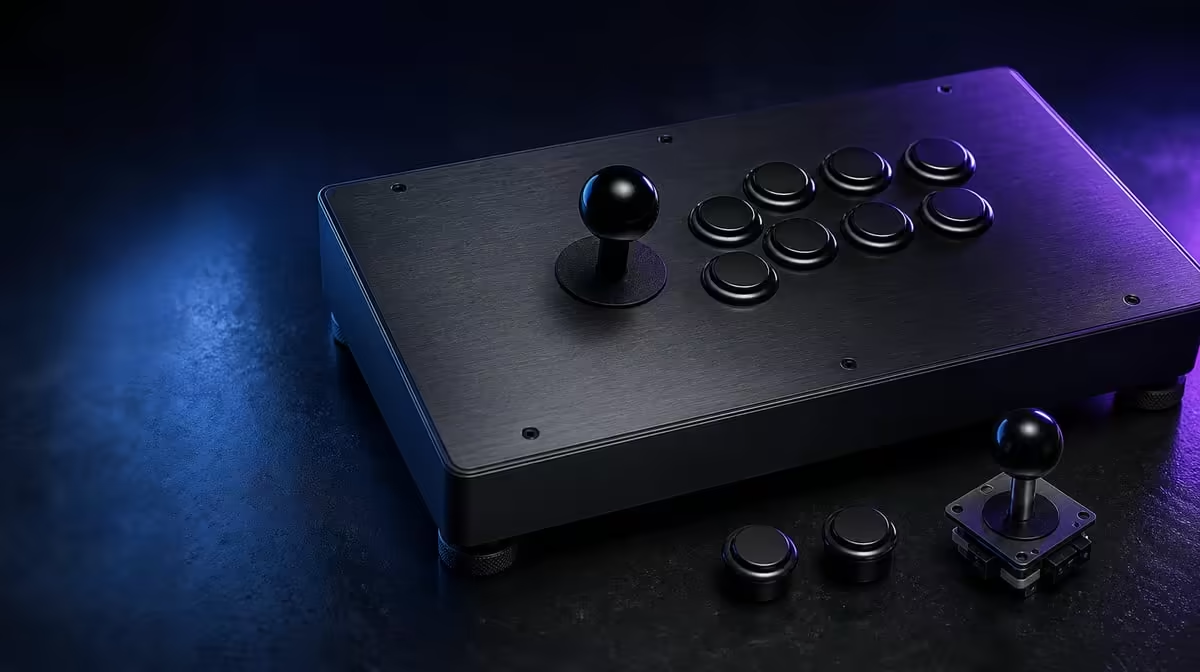
Arcade controls perform different jobs even when players experience them as one move. In the Sanwa Denshi fightstick components inside the GameSir C2, the joystick handles direction and the separate buttons handle actions; their interaction with the enclosure, wiring and software turns those mechanisms into a playable layout.
Quick Answer
The R1,799 GameSir C2 uses Sanwa Denshi controls for its arcade lever-and-button system, giving buyers a named component family to assess. Identify the installed models, gate shape, connectors and mounting directly before planning any replacement.
🕹️ The joystick creates directional states
Moving the lever activates up, down, left or right, with paired activations forming diagonals. The player should test each point separately in an input display before using circles or special moves as proof. A complete motion can hide one corner that appears only occasionally.
Neutral return matters as much as outward movement. Watch whether a direction clears before the next one begins. A slow command history can reveal overlapping cardinals, a cut corner or a hand that holds the previous point too long.
The direction toggle changes how these commands are presented to a supported setup. It does not identify or reshape the physical gate. Record the setting and keep it constant while evaluating lever feel.
Inspect the installed joystick model and restrictor, then follow appropriate guidance before buying a gate, shaft or complete lever.
Technique can mimic a component fault. Test the same corner from both sides of the screen and ask whether the failure follows the hand's weaker movement. A physical issue is more likely to remain tied to the same lever position across contexts.
Do not force the lever harder when a direction disappears. Extra pressure lengthens the motion and may make neutral recovery less consistent. Slow history gives better evidence than striking the boundary.
🔘 Buttons provide individual actions
Each arcade button gives an action finger a separate target. Check every cap with repeated single presses, then move through pairs used in real commands. Look for one clear on-screen response and a consistent return without inventing force or travel measurements.
Reach is part of component performance. A well-made button outside a player's comfortable hand span may be less usable than a nearer control. Evaluate the outer row, wrist angle and neutral finger position during a full session.
Sound alone is not a reliable fault test. The enclosure can make healthy buttons resonate differently. Compare sound with input history, physical return and repeated behaviour before treating one note as evidence of failure.
The Key Lock may intentionally protect particular functions, so note its state during button tests. A locked action and a malfunctioning component belong to different diagnostic paths.
Finger assignment can change the result without changing a part. Run the same button sequence with a relaxed, planned hand position and watch whether unused fingers brush neighbouring caps. An accidental action is not automatically a switch failure.
Repeat the test after a normal session. Heat from the hands and fatigue can alter technique, while a repeatable component symptom should remain observable. Compare notes rather than relying on the memory of one press.
🔧 Mounting and connections decide fit
A replacement part has to fit the faceplate opening, enclosure depth, mounting arrangement and electrical connection. Shared brand identity does not guarantee those interfaces match. Measure and identify the actual C2 component rather than ordering from appearance.
Photograph the original wiring only if the unit is opened through suitable steps. Label connectors, separate fasteners and change one item at a time. The known working state is valuable evidence and should remain recoverable.
The C2 confirms a customisable faceplate, but cosmetic access is not proof of universal internal serviceability. Artwork removal and control replacement require different information, tools and risk decisions.
Evetech's gaming accessories category is useful for the surrounding station. Internal arcade compatibility still needs exact component-level evidence.
Preserve original parts after any appropriate change. Label them and record why the modification was made. A working reference protects future diagnosis and allows the C2 to return to its earlier state.
Test enclosure closure before reconnecting. A pinched lead, trapped print or mis-seated panel can create a problem unrelated to the replacement component. Visual inspection belongs between reassembly and software testing.
🎯 Judge components inside a complete controller
PS4 and Xbox One define the supported starting point for this R1,799 C2 test. Establish recognition, validate the game map and then assess the Sanwa layout over repeated play.
Component reputation should not overshadow posture, direction mode or software handling. Record missed inputs and accidental actions through a fixed drill. Repeat it on another day to separate a first impression from a stable pattern.
Compare alternative complete devices through Evetech's gaming controller range. Replacing several parts may cost time and rand that could be weighed against a different enclosure from the start.
Evetech's accessories best sellers page provides a view of current availability for the surrounding station. Keep the final decision focused on observed consistency and confirmed fit.
Care also shapes component life. Keep exposed controls free of loose dust, avoid moisture and store the enclosure without weight on its lever. Maintenance should remain gentle unless a defined symptom justifies an appropriate deeper procedure.
The clearest component explanation ends with three practical checks: identify the family, observe the function and inspect the exact interfaces. That keeps replacement decisions tied to the installed hardware.
Create an input map before service work. Give every button a game action, mark each direction and note the current toggle plus Key Lock state. After a compatible change, repeat the map in the same screen and compare only the component that moved.
Use photographs for mechanical relationships, not as a substitute for measurements. An image can preserve wire routing and orientation while still hiding enclosure depth or connector size. Record the exact dimension through an appropriate method when fit depends on it.
Ask whether the component problem appears outside one game. A missing action tied to a single custom map points somewhere different from a physical button that remains absent in a console menu. This software-versus-hardware split protects the parts budget from a diagnosis made too early.
After any justified maintenance, return the C2 to normal use for several sessions. A bench test may pass while a loose connection, awkward button position or hand-fatigue issue appears later. Long-form evaluation is what turns component knowledge into dependable ownership.
Frequently Asked Questions
Which component handles directions?
The arcade joystick creates the cardinal and diagonal input states. Its transitions and neutral return should be tested visibly.
What do the buttons do?
They provide separate action inputs across the face. Reach, consistency and game mapping determine how useful that arrangement feels.
How should buyers identify the exact Sanwa button model?
Inspect the installed buttons and match their model, dimensions, connectors and mounting before buying replacements.
How should buyers identify the joystick gate shape?
Inspect the installed gate directly and use the appropriate hardware information before comparing or replacing it.
Why do mounting details matter?
Faceplate openings, enclosure clearance, fasteners and connectors all affect whether a replacement physically and electrically fits.
What does the Sanwa-equipped C2 cost?
The complete GameSir C2 is R1,799. Assess the components as part of its whole platform-and-layout package.
Ready to make component research exact?
Explore Evetech's gaming controllers, learn the standard C2 layout and identify every physical interface before considering an internal change.