Quick Answer
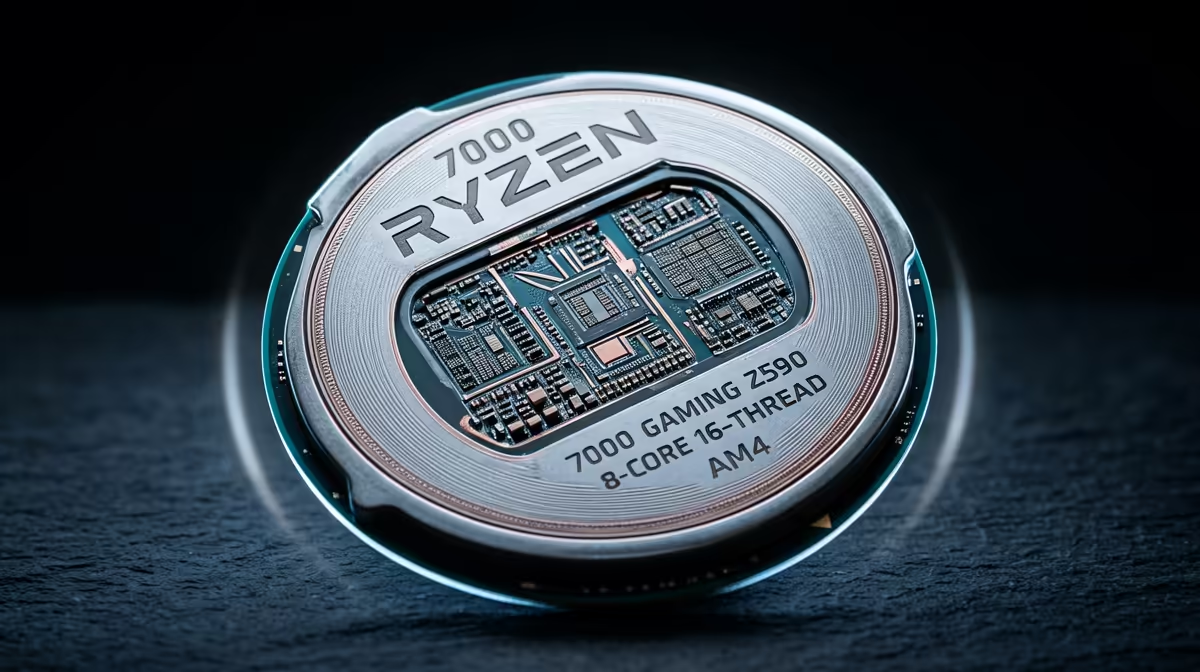
For gaming, the X3D Ryzen chips are the fastest you can buy thanks to stacked 3D V-Cache, with the Ryzen 7 9800X3D leading and the 7800X3D close behind at lower cost. In SA the 7800X3D is usually the smarter value buy, since it matches the newer chip within a few fps at 1440p while costing less.
Why X3D Wins At Gaming
The extra 3D V-Cache lets the CPU keep more game data on-die, which slashes memory latency in CPU-bound scenes. The payoff shows in 1% lows and in simulation-heavy titles like strategy games and racing sims, where X3D chips can lead non-X3D parts by double-digit percentages. At 1440p and 4K the gap narrows as the GPU takes over, but the smoother frame pacing remains.
The trade-off is productivity. X3D chips clock slightly lower, so for rendering or compiling a standard 7700X or 9700X can edge ahead. If gaming is your priority, that is a non-issue.
Choosing Between The X3D Tiers
The 9800X3D is the outright leader and the pick if you want the fastest gaming CPU. The 7800X3D delivers most of that performance for less and runs on the same AM5 socket, making it the value champion. The 7950X3D adds cores for creators who also game. All need DDR5-6000 and a B650 or better board.
FAQ
Is the 9800X3D worth it over the 7800X3D for gaming?
Only if you want the absolute fastest chip. The 7800X3D sits within a few fps at 1440p for less money, so most SA gamers get better value from it.
Does X3D help at 4K?
Less than at 1080p, because the GPU becomes the limit at 4K. You still get smoother 1% lows in CPU-heavy games, but raw average fps gains shrink.
What cooler does an X3D chip need?
A good 240mm AIO or strong air cooler. X3D parts are temperature-sensitive, so keeping them under 80C protects their boost behaviour.
are largest in simulation and strategy games and at 1080p. If you play mostly at 4K, weigh whether a cheaper non-X3D chip frees budget for a better GPU.