Quick Answer
For SA gamers chasing the highest frame rates, the Ryzen 7 9800X3D near R12,500 is the current 3D V-Cache champion, while the older Ryzen 7 7800X3D around R8,500 remains outstanding value. The 5800X3D on AM4 still serves budget upgraders well.
Every X3D Ryzen Chip, Compared
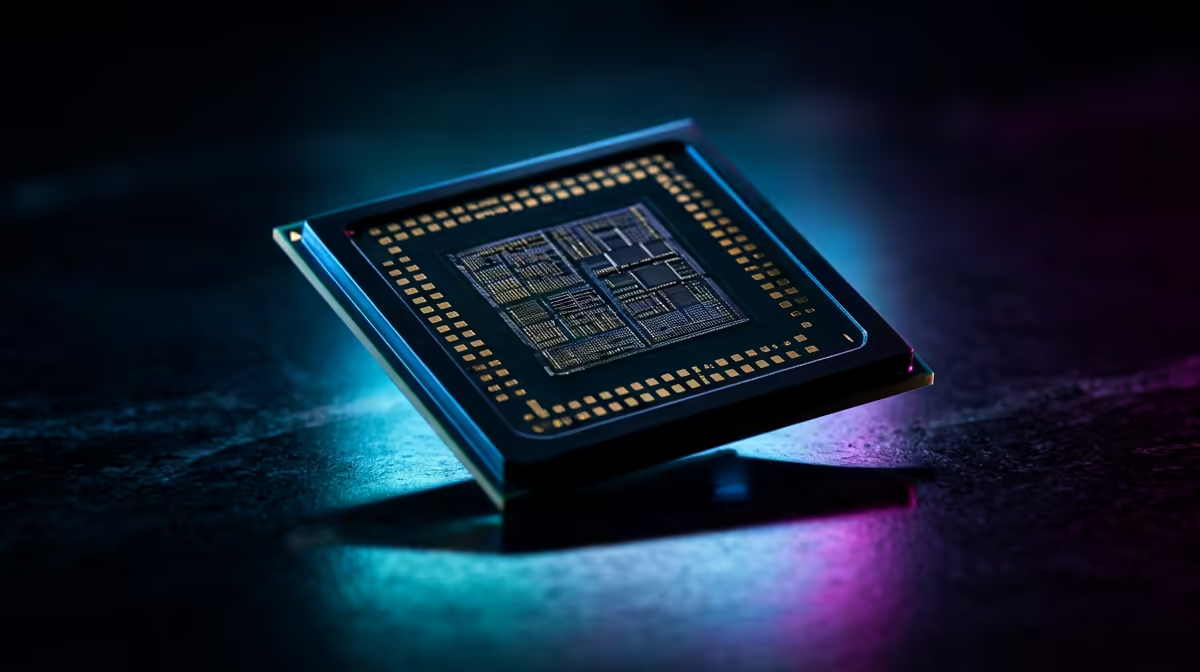
3D V-Cache stacks extra L3 cache on the die, which feeds frame-heavy game engines better than raw clock speed. On AM4 the 5800X3D (8c/16t) revived older builds. On AM5 the 7800X3D (8c/16t), 9800X3D (8c/16t), 7950X3D and 9950X3D (both 16c/32t) carry the torch. For pure gaming the 8-core X3D parts are the smart buy; the 16-core X3D chips suit people who game and render. Rough bands: 5800X3D near R5,000, 7800X3D near R8,500, 9800X3D near R12,500.
Why the Cache Wins in Games
At 1080p with a strong GPU, an X3D chip can lead its non-cache sibling by 15-30% average fps in CPU-bound titles like strategy games and esports shooters. The 9800X3D adds modern Zen 5 IPC on top, so it leads the 7800X3D by roughly 10-12% in the same scenes. At 1440p and 4K the lead shrinks as the GPU takes over the workload. For an AM4 owner, the 5800X3D upgrade often costs under R5,000 all-in since the board and DDR4 carry over, where a fresh AM5 X3D build adds a B650 board and a DDR5-6000 kit.
FAQ
Is the 9800X3D worth more than the 7800X3D?
For competitive 1080p players, yes; it leads by roughly 10-12%. For 1440p and 4K gamers the 7800X3D delivers almost identical real-world frames for less.
Does the 5800X3D still make sense?
Yes, as a final AM4 upgrade. It lets owners of older AM4 boards get a big gaming lift without buying a new platform.
Do X3D chips need special cooling?
The 8-core X3D parts run cool enough for a good air cooler. The 16-core X3D chips draw more power and benefit from a 240mm or larger AIO.
If frame rate is your priority, line up the X3D chips by budget and platform, then check live rand pricing at Evetech.