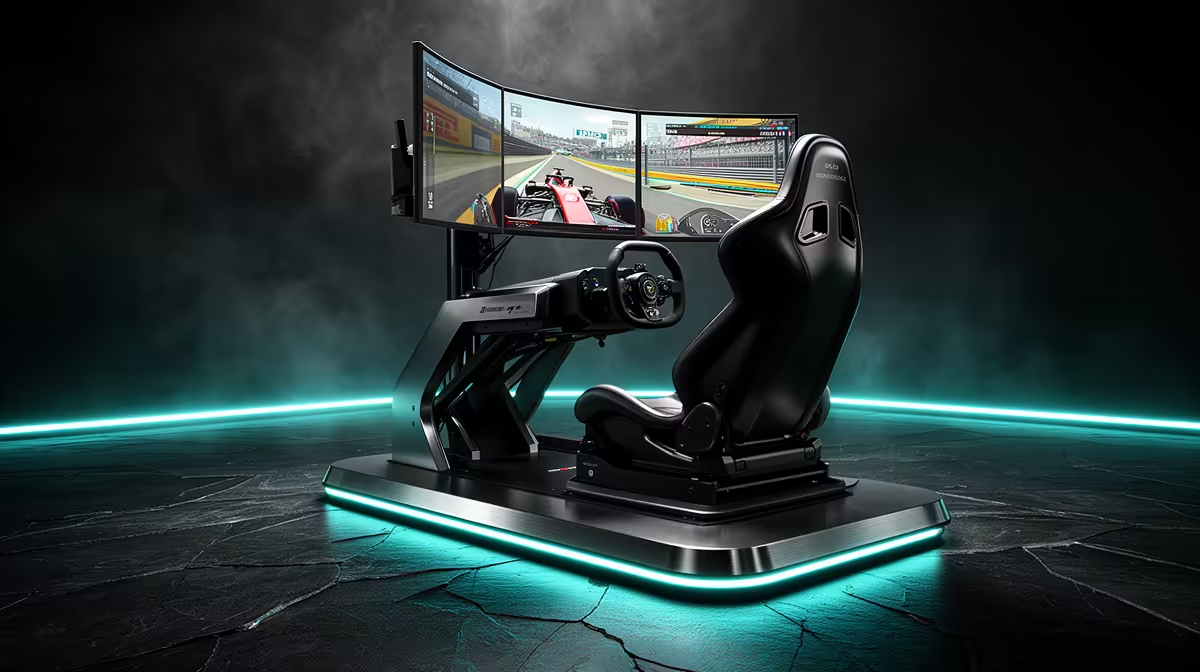
An F1 26 sim-racing setup can grow through three useful spending envelopes: R8,000 for a desk-mounted wheel set, R15,000 for stronger braking and stable mounting, and R30,000 for a dedicated frame and a more responsive wheelbase. These are budget plans, not live prices. Confirm F1 26's current supported hardware and build each basket from named products.
Quick Answer
At R8,000, prioritise a licensed force-feedback wheel and pedals for your platform. At R15,000, protect money for a load-cell brake or a stronger pedal set and a wheel stand. At R30,000, build a balanced cockpit around the wheelbase, pedals and seating position. Formula-style looks come after compatibility, braking consistency and a frame that does not move.
R8,000: start with control
The entry rung should deliver force feedback, steering rotation and separate brake and throttle inputs. A complete bundle is easier to budget than a standalone wheelbase. Check that the rim, pedals, desk clamp, power supply and cables are included.
Console players need explicit support for their PlayStation or Xbox generation. PC players need a current driver and game profile. Confirm the exact wheel on the current F1 26 hardware-support list because a device that worked in an older title may need a new driver or mapping.
Use the sim-racing range to compare bundles. If you mention a named product price, take it from the product page and mark it as of July 2026. The R8,000 figure is the basket ceiling, not a claim that a category starts there.
Keep the desk when its edge and structure accept the clamp. Secure the pedals and chair. Paddle shifters on the rim cover F1 cars, so a separate shifter has no role in this rung.
R15,000: make the brake repeatable
Formula racing rewards consistent deceleration and smooth release into the corner. This is where a load-cell brake or a higher-quality pedal set can change the setup. It measures force and lets the leg build a pressure reference.
The stronger pedal needs a stable platform. Reserve a meaningful part of the R15,000 envelope for a wheel stand or compact frame. A light pedal tray and rolling chair will absorb the braking force and erase the benefit.
Keep the existing wheel when it provides useful force feedback and the pedal upgrade consumes the budget. If buying from zero, compare bundles that leave room for mounting. The split does not need to look equal; it needs to keep every input still.
Choose a stand with wheel angle, pedal distance and a chair connection where possible. Folding can help a shared room, but measure storage size with the hardware attached.
R30,000: balance wheelbase and cockpit
At this rung, lower-torque direct drive or a strong belt-driven system may fit beside good pedals and a dedicated frame. Do not spend the full step on the wheelbase. Direct-drive force needs a wheel deck that resists twisting and a seat position that remains fixed.
Formula-style rims place common controls under the thumbs and can add rotary inputs for brake bias, differential and energy settings. Check whether F1 26 recognises those controls on your platform. A round rim remains usable and may suit other racing disciplines better.
Cockpit geometry matters. A full formula recline looks authentic but takes space and can be hard to enter. A GT-style upright seat with a formula rim may be more comfortable and easier to share. The game does not award points for seat shape.
Reserve money for brackets, seat rails and pedal mounts. A chassis price may exclude the seat. A wheelbase may require a separate front mount or clamp.
What F1 26 asks from the wheel
Current formula cars use quick steering and many on-wheel controls. Set rotation according to the game's current guide and supported auto-range behaviour. Too much rotation makes a hairpin awkward; too little makes the car nervous.
Force feedback should communicate front-tyre load and kerb contact without clipping. Begin with the wheel maker or game's current baseline. Reduce force when heavy corners flatten into the same resistance.
Keep vibration effects controlled. Strong rumble may feel dramatic while hiding steering detail and shaking a desk. A calm profile can be faster over a race distance.
Pedal setup across all three tiers
Calibrate resting and full travel. Add a small dead zone only where sensor noise or foot rest causes input. Set brake pressure so 100 percent is reachable without lifting your body from the seat.
For a travel-based brake, use a curve that gives fine control near the threshold. For a load cell, begin with moderate force and increase it after consistent sessions. Keep ankle and knee comfortable.
Pedal spacing can help left-foot braking. The clutch can be omitted for F1 use, though a three-pedal set may serve other cars.
The PC and display are separate ladders
Check F1 26's current official PC requirements and performance tests. The three rig budgets describe controls, not the gaming PC, console or monitor. If the total must cover them too, step down the control rung.
A 120Hz or faster display can show smoother motion when the system holds the frame rate. One correctly placed monitor is enough to begin. Ultrawide and triple screens add field of view but also GPU demand and mounting cost.
Console players should confirm supported resolution, refresh and variable-refresh behaviour through the display's exact HDMI ports.
Shared flight or racing frame
The flight-simulator gear range helps if the same frame needs joystick and throttle mounts. Formula seating can make a side-mounted throttle awkward. Plan removable plates and cable labels before fixing the seat angle.
Choose the rung by the room
R8,000 suits a desk you can leave or clamp in minutes. R15,000 suits a fold-away stand and a chair that connects to it. R30,000 suits a dedicated footprint with space to enter and maintain the rig.
Measure doors, floor and monitor distance. A cockpit that cannot reach the room is an expensive packaging problem. Keep a clear path around the frame and secure every cable.
Frequently Asked Questions
Is R8,000 enough for an F1 26 wheel setup?
It is a planning ceiling for an entry bundle when a current compatible named product fits the complete basket.
Should R15,000 go to the wheel or pedals?
Protect braking quality and mounting. A sound existing wheel can stay while pedals and stability improve.
Does R30,000 require a formula cockpit?
No. A rigid GT-style frame with a suitable rim can deliver the controls without a full reclined seating position.
Build the F1 26 control basket at one rung, verifying current platform support and protecting braking stability before wheelbase torque.