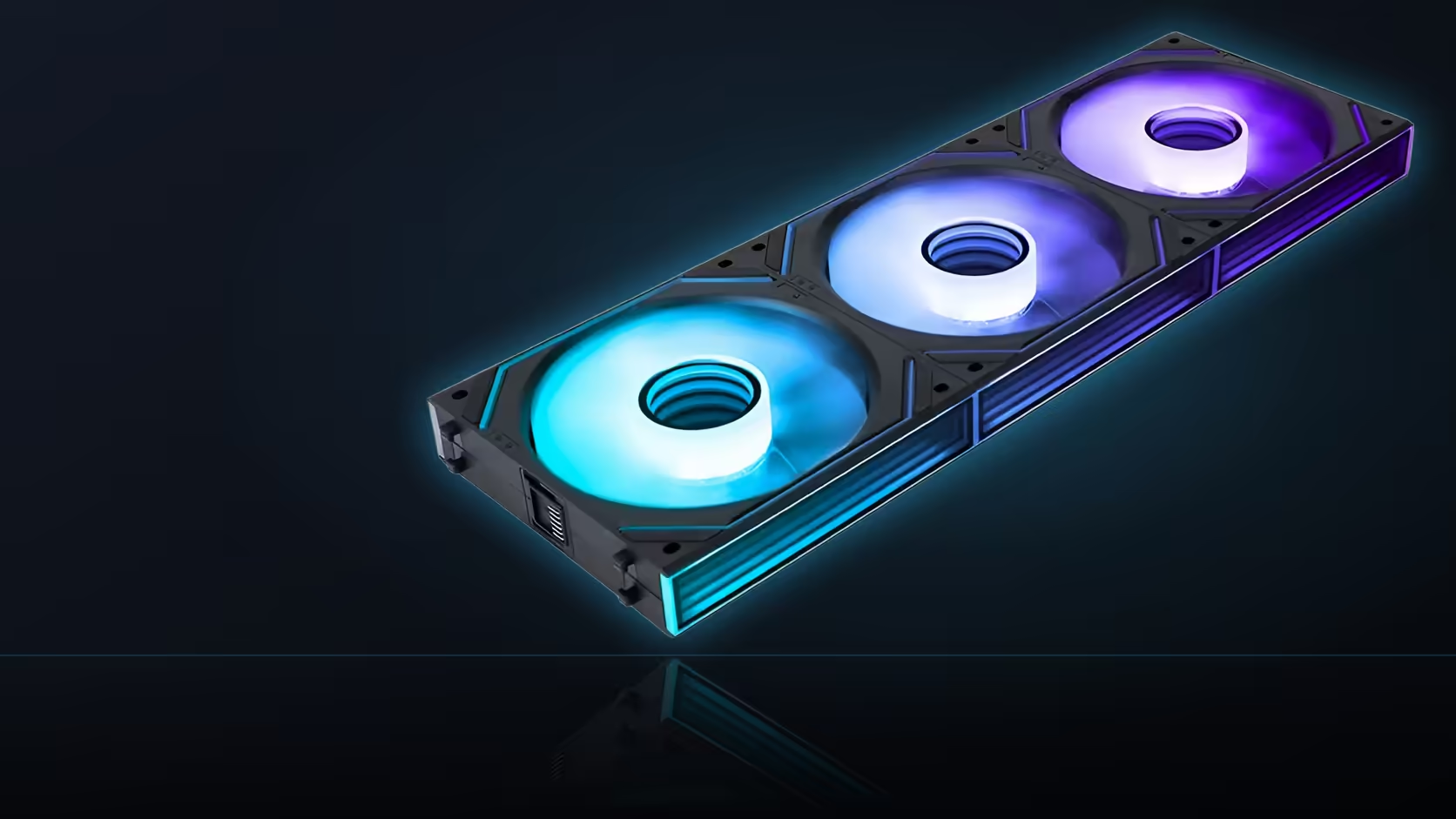
There is a specific moment in planning a build where more starts to work against you. Filling every fan position available in a case sounds like the disciplined choice, the one that leaves nothing to chance on the cooling side, but a case with every mount occupied and every fan lit can end up looking crowded in a way that fewer fans, arranged with more intent, never does.
Quick Answer
Cooling performance should decide fan count first, always. But where several fan arrangements produce broadly similar temperatures under load, which happens more often than people expect, fewer fans arranged deliberately usually reads better than the same case with every position filled. A single AsiaHorse Amici 5GT fan runs around R199, which makes it cheap enough to add without much thought, and that is exactly the trap.
🌡️ Cooling comes first, always
Nothing in this argument suggests skipping fans a build actually needs for thermal reasons. A case running hot because someone prioritised a sparse, tidy interior over adequate airflow has solved the wrong problem entirely, and no amount of restraint in the name of looking considered is worth a CPU or graphics card throttling under load. Start every fan decision from temperatures, not from how the finished interior will photograph.
🎲 Where the actual choice appears
The reason restraint becomes relevant at all is that airflow requirements rarely pin down an exact fan count. Plenty of mid-tower cases run comparably well with five fans as they do with seven, particularly once a case already has a sensible intake and exhaust balance established by its larger positions. Once cooling performance stops meaningfully differentiating between two or three layouts, the remaining decision is genuinely about appearance, not thermals, and it is worth recognising that shift rather than defaulting to filling every mount simply because the case has the holes for it.
🌀 Why a fully occupied case can look crowded
The issue is repetition without contrast. Every AsiaHorse fan in this range carries some form of ARGB ring or blade lighting, and when every single mounting position in a case holds one of these lit fans, the eye has nowhere to rest. A run of six identically glowing rings along the front, top and rear of a case reads as noise rather than as a composed scheme, even though each individual fan looks perfectly fine on its own. Contrast, meaning some genuinely unlit or plain space between lit elements, is what gives a busy interior somewhere for the eye to settle.
🙈 Positions that matter least visually
Not every mount sits behind the window. Rear-exhaust positions, top-mounted fans in a case with a solid top panel, and any position tucked behind a shroud or drive cage rarely register with a viewer even when fully lit. These are the positions where a plainer, cheaper fan does exactly the same cooling job without adding anything to the visual load a viewer actually takes in, freeing budget and visual restraint for the positions that genuinely show.
🔇 The noise trade-off
Reducing fan count is not free of consequences beyond appearance. Fewer fans generally have to work harder to move the same volume of air, which can mean higher RPM and more audible noise for an equivalent thermal result. This is exactly why cooling has to lead the decision rather than follow it: a quieter, cooler seven-fan layout beaten out by a noisier, hotter four-fan one purely for the sake of a sparser interior is a bad trade dressed up as restraint.
⚖️ Where the sensible middle usually lands
In practice, a common and genuinely effective balance is a lit row exactly where the window frames it, paired with plainer, unlit or lower-cost fans everywhere else in the case that the airflow plan still calls for. This keeps the visible composition calm and intentional while the hidden positions do their job without competing for attention, and it is usually cheaper overall than lighting every single position in the case.
💡 Dimming as a lighter-touch option
Where removing a fan is not an option because the cooling plan genuinely needs every position filled, dimming the secondary or hidden fans' lighting brightness rather than pulling them out achieves much of the same visual effect. A hub like the AsiaHorse ASH-S1 makes this straightforward across a whole bank of fans at once, letting a build keep its full cooling capacity while still creating the contrast between a bright, deliberate focal row and quieter supporting positions elsewhere in the case.
🧾 Putting a number on the layout before buying
Before placing an order, count the positions your case actually has, mark which ones the window shows, and only then decide how many of them need the full lit treatment versus a plainer, cheaper fan doing the same cooling job out of sight. This small exercise, done on paper before any money changes hands, usually saves more than it costs, since it is far cheaper to change a plan on a spreadsheet than to pull a fitted fan back out of a finished case.
Work through Evetech's case fans lineup and whatever else your case needs from the wider case accessories shelf before deciding how many positions genuinely need filling, and whether every one of them needs to be lit the same way.
Frequently Asked Questions
Should cooling always come before appearance in this decision?
Yes. A build that runs hot to keep the interior looking sparse and considered has solved the wrong problem, and thermals should always be settled first.
When does a genuine choice between arrangements actually appear?
When several fan layouts produce broadly similar temperatures under load, which happens more often than expected once a case already has a sensible airflow balance.
Why does a fully filled case tend to look crowded?
Because lit rings repeat around the interior with nothing unlit between them, leaving the eye no resting point across the whole composition.
Which mounting positions matter least for appearance?
Positions the window does not show, such as rear exhausts or fans behind a shroud, where a plainer fan does the same cooling job invisibly.
Does running fewer fans mean more noise?
It often does, since fewer fans work harder to move equivalent airflow, which is exactly why cooling performance has to lead this decision, not appearance.
What is a commonly effective balance to aim for?
A lit fan row exactly where the window frames it, paired with plainer or unlit fans everywhere else the airflow plan still requires.
Can dimming achieve a similar effect to removing fans?
Yes, and it keeps the full cooling capacity intact. Lowering the brightness on secondary or hidden fans creates much of the same visual contrast without losing airflow.
Planning a fan layout that balances cooling with a calmer interior?
Explore Evetech's case fans range and settle your thermal requirements before deciding how many positions to light.