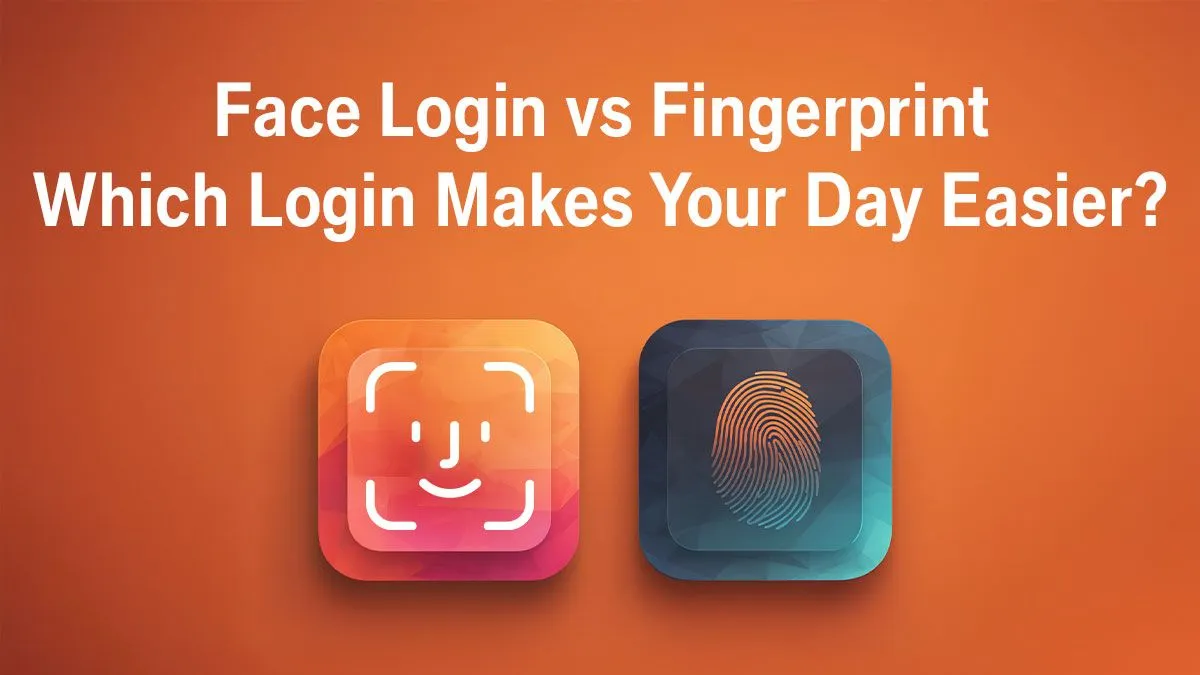
You've just grabbed a coffee, ready to jump back into your game... but your laptop demands a password. Do you jab a finger on the sensor or let it scan your face? It’s the daily tech duel: fingerprint vs face login. This isn't just about speed; it's a real security showdown. We’re breaking down which biometric lock is the true champ for South African tech lovers, ensuring your gear is both accessible and secure. ⚡
How Fingerprint Scanners Work: The Touch of Security
At its core, a fingerprint scanner captures a high-resolution image of your unique ridges and valleys. Most modern laptops use capacitive sensors, which use tiny electrical currents to map out your print. It's incredibly fast and has become a standard feature on many devices.
The biggest win for fingerprint login is reliability. It works in complete darkness, at weird angles, and isn't fooled by a photo. It’s a mature technology that just... works. You’ll find this trusty tech built into the power button or trackpad on a massive range of current laptop specials for sale in South Africa, making secure access a simple touch away. The main drawback? It can get fussy if your fingers are wet, oily, or dirty.
The Rise of Face Login: A Glance is All it Takes
Face login, popularised as Face ID, feels like something straight out of science fiction. Instead of just a camera, advanced systems use an infrared (IR) projector to cast thousands of invisible dots onto your face, creating a precise 3D depth map. This is why it works in the dark and can't be tricked by holding up a picture of your face. 🛡️
It’s undeniably convenient—just open your laptop, and you're in. This hands-free approach is a massive plus. However, it can sometimes be slower than a fingerprint scan and might struggle if you're wearing a mask or large sunglasses. This premium, seamless experience is often a highlight on many of the best gaming laptop deals where convenience is key.
Pro Tip: Double Up for Max Flexibility
Most modern laptops let you set up both fingerprint and face login. Enable both! Use face unlock for hands-free convenience and the fingerprint reader as a lightning-fast backup for those times you're wearing a mask or in tricky lighting. It’s the best of both worlds.
The Security Showdown: Fingerprint vs Face Login
So, which is actually safer? In the great fingerprint vs face login debate, the answer is nuanced. High-end 3D facial recognition is technically more secure, with a much lower chance of a "false positive" than most fingerprint sensors because a 3D facial map is vastly more complex to spoof than a fingerprint.
However, for 99% of us, both are significantly more secure than a simple password. The choice often comes down to your personal workflow. Do you value the raw speed of a touch, or the seamless, hands-free magic of a glance? The battle of fingerprint vs face login is less about which is objectively better and more about which fits your life. 🤔
Which Biometric is Right for Your Rig?
Choosing your preferred login method often depends on the powerhouse running your machine. Whether you're looking for the multitasking prowess found in our AMD laptops on special or the raw gaming horsepower in our Intel laptops on special, you'll find options equipped with either top-tier fingerprint readers, advanced facial recognition, or both.
Ultimately, the best biometric is the one you'll actually use consistently. Both fingerprint and face login offer a fantastic, secure upgrade from typing passwords. It’s about picking the tech that makes your digital life in South Africa a little bit easier and a whole lot safer.
Secure Your Next Upgrade
Whether you prefer the speed of a fingerprint or the convenience of a glance, the right security makes all the difference. Shop our laptop specials at Evetech and find the perfect, secure machine for your needs.