


PCIe 5.0 vs PCIe 4.0 for Video editing in 4k in SA
PCIe 5.0 vs PCIe 4.0 for video editing in 4k is mainly about fit, features, compatibility, cost, and upgrade path, not one automatic winner. SA buyers should match the choice to the setup.
Read moreAn IT student in SA should buy a flight stick only for regular simulator or flight-game use. For a gaming peripheral budget, compare that narrow purpose with broader tools like GAMDIAS Hermes P2A at R130, Logitech G305 at R525, and Promate Baton at R280.
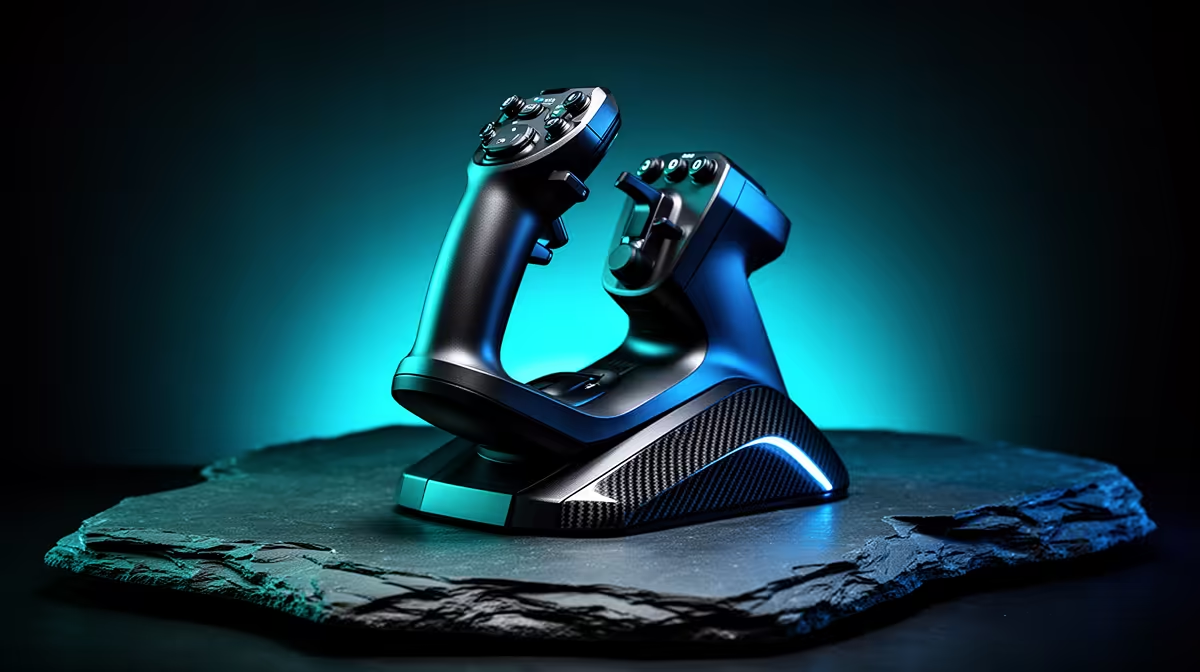
A flight stick is the right choice for an IT student only when supported flight or space simulators are a regular hobby. It does not help with coding, networking labs or coursework, and it can occupy the same desk area needed for a keyboard, laptop and practical equipment.
List each intended simulator and confirm native support, required axes and configuration software. Measure the desk edge, chair position and cable route. Rehearse removing or moving the stick so the workstation can return quickly to typing, virtual labs and online assessments.
No flight stick with verified current pricing appears in the evidence. The ViewSonic VX2779A 240Hz monitor at R2,350 is a confirmed display reference, not a simulation controller or compatibility guarantee. The Minisforum UM750L at R4,600 is a separate compact-PC reference. Check current game support, drivers, axes, button count, handedness, mounting, cable length and warranty for the intended stick.
Export control profiles where possible and keep normal keyboard controls available. Secure the base so movement cannot pull cables or strike the display. Protect coursework, code and virtual-machine files in versioned backups before installing specialist drivers.
Buy after the named games and available space justify frequent use. Course computing, dependable storage and a suitable monitor should remain the priority when the student budget is shared.
Balancing IT study and simulations? > Compare Evetech gaming PCs and displays against both routines.
For an IT student, the best accessory is the one used across coding, labs, gaming, and general desktop work.
A flight stick can be fun, but it is hard to justify if the same desk must handle projects and peripherals daily.
Check the connection type and placement against the existing setup so it does not disrupt keyboard and mouse work.
For a student budget, pick the specialised controller only when flight play is common enough to beat general-purpose gear.
The IT angle is versatility: accessories that help both coursework and gaming usually deserve spend ahead of single-genre controls.
A flight stick will not fix a slow PC, limited storage, weak wireless, or missing connections; it only changes control input.
PCIe 5.0 vs PCIe 4.0 for video editing in 4k is mainly about fit, features, compatibility, cost, and upgrade path, not one automatic winner. SA buyers should match the choice to the setup.
Read more
Wi-Fi 7 vs Wi-Fi 6e for competitive esports comes down to router support, latency goals, device compatibility, and coverage. SA buyers should match the choice to the real network setup.
Read more
ATX 3.1 vs ATX 3.0 for mMO and live-service games buyers - what changes is mostly about compatibility, budget, upgrade path, and setup fit. SA buyers should check device support and real needs before expecting a clear win from either option.
Read more
LGA 1851 vs LGA 1700 can affect Twitch and YouTube streaming when gaming and encoding share CPU resources. For SA creators, the real-world difference depends on encoder choice, memory support, motherboard cost, thermals, and upgrade plans.
Read more
X870E vs X670E for aaa single-player gaming is mainly about fit, features, compatibility, cost, and upgrade path, not one automatic winner. SA buyers should match the choice to the setup.
Read more
Hall Effect switches vs Mechanical switches for mMO and live-service games is mostly about compatibility, budget, upgrade path, and setup fit. SA buyers should check device support and real needs before expecting a clear win from either option.
Read more
A fake 113GB GTA VI ISO reportedly used empty padding around a small malware payload. SA gamers should delete unofficial builds, keep Windows security active and wait for official channels.

Wi-Fi 6E vs Wi-Fi 6 matters for 4K video editing when files move across a network. The real-world difference between Wi-Fi 6E and Wi-Fi 6 for video editing in 4K depends on NAS access, cloud uploads, router range, and SA creator workflows.

The difference between PCIe 5.0 and PCIe 4.0 for SA gamers is mostly bandwidth headroom. Compare GPU slot needs, NVMe speed, motherboard support, and upgrade timing before paying extra for a newer platform.

Gaming PC stuck pixel checks in South Africa should confirm the monitor fault first. Use colour tests, screenshot comparison, cable swaps, display menu checks, and clear photos before deciding on support.

Shokz OpenFit Air 2 earbuds weigh 7.2g each and use a redesigned dual-driver open-ear layout. SA buyers should choose them for comfort and awareness, not maximum isolation.

AMD's current driver now lists a Radeon RX 9050 4GB, while product coverage details a narrowed memory system. SA buyers should weigh the low VRAM ceiling against current local Radeon options.

Samsung Display has demonstrated a 16-inch 2.5K OLED laptop panel running at 300Hz. SA buyers should wait for a named notebook, full panel specifications and a local price before planning an upgrade.

Microsoft says some Windows 11 game crashes after recent updates are linked to RGB-related drivers. Affected SA gamers should confirm the update and driver before using the published registry workaround.

Minisforum's M2 Pro pairs Core Ultra X7, Arc B390 graphics and 32GB onboard memory in 1.8 litres. SA buyers should weigh its fixed memory and $1,439 launch offer against local mini PCs.

Smart monitors can add apps and convenience, but they also add privacy settings and unwanted-software risk. SA buyers should audit the operating system before paying for extras.

Lenovo says Legion Go failures linked to BIOS N3CN42WW are not user error. Affected SA owners should stop retrying the update, preserve proof and open a support case.
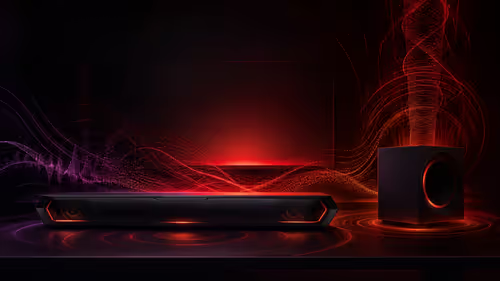
The ROG Gjallar gaming soundbar is now listed in the US at $599.99. SA buyers should compare its 2.1.2 audio, wireless bass and built-in chat controls with simpler local options.