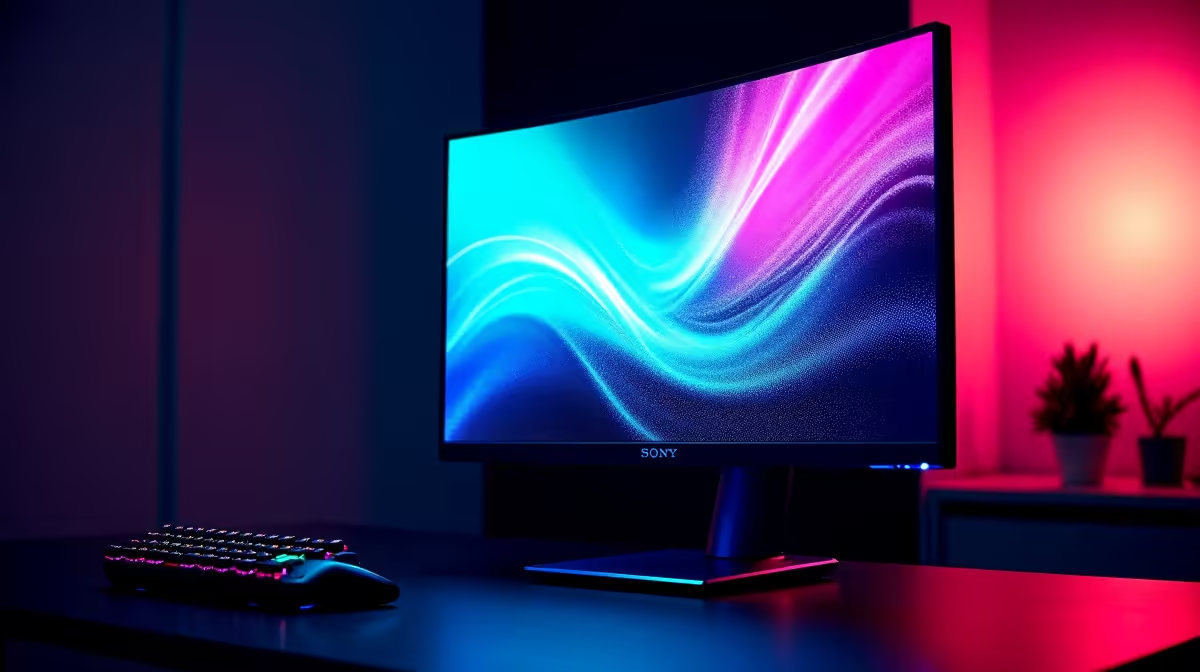
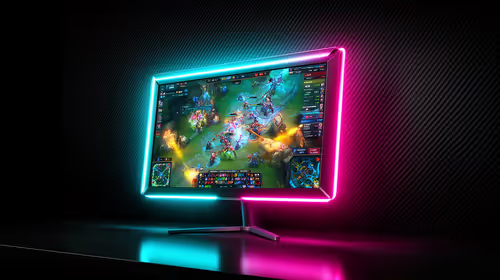
You’ve just dropped a fortune on a beastly new graphics card. You boot up the latest AAA title, ready for buttery-smooth gameplay... but then you see it. That ugly, jagged line tearing across your screen, ruining the immersion. Screen tearing is a massive buzzkill for any South African gamer. Luckily, there’s a fix. The big question is: in the battle of FreeSync vs G-Sync in South Africa, which tech should you back? 🇿🇦
Let's break it down and find the perfect match for your rig and your wallet.
Understanding the Enemy: Screen Tearing Explained
Before we dive into the FreeSync vs G-Sync debate, we need to know what we're fighting. Screen tearing happens when your graphics card (GPU) sends out frames at a different rate than your monitor can display them. Your monitor might be refreshing at 144Hz, but your GPU is pushing 110 frames per second in a heavy firefight. This mismatch causes the monitor to display parts of multiple frames at once, creating that horrible tear.
For years, the solution was V-Sync (Vertical Sync). It forced your GPU to wait for the monitor, eliminating tearing but introducing noticeable input lag. For competitive gamers, that lag is a dealbreaker.
This is where adaptive sync technology comes in. It allows your monitor to dynamically change its refresh rate to perfectly match the frame rate of your GPU in real-time. The result? No tearing, no stutter, and minimal input lag. It's pure, fluid gaming. The two main players in this arena are AMD's FreeSync and NVIDIA's G-Sync.
AMD FreeSync: The Open-Standard Champion
AMD FreeSync is built on an open standard, meaning monitor manufacturers can implement it without paying licensing fees to AMD. This is a huge win for consumers, especially here in South Africa where every Rand counts. It's why you'll find FreeSync on a massive range of affordable PC monitors.
FreeSync has evolved into three tiers:
- FreeSync: The basic level, offering tear-free gaming.
- FreeSync Premium: Adds a requirement for at least a 120Hz refresh rate at 1080p resolution and includes Low Framerate Compensation (LFC), which keeps gameplay smooth even when your FPS drops below the monitor's minimum refresh rate.
- FreeSync Premium Pro: Includes everything from Premium but adds strict requirements for HDR (High Dynamic Range) performance, ensuring vibrant colours and deep contrast.
Because it's an open standard, performance can vary slightly between models. However, the technology has matured beautifully, and a good FreeSync monitor offers a phenomenal experience.
NVIDIA G-Sync: The Premium, Hardware-Driven Approach
NVIDIA took a different path with G-Sync. The original, top-tier version requires a proprietary hardware module to be installed inside the monitor. This module handles the communication with the NVIDIA GPU, giving NVIDIA total control over the experience. ⚡
This strict control means every G-Sync monitor must pass over 300 image quality tests, guaranteeing a consistently excellent, premium experience with features like variable overdrive to reduce ghosting. This hardware and certification process is why G-Sync monitors typically carry a higher price tag.
Like FreeSync, G-Sync also has tiers:
- G-Sync Compatible: These are actually high-quality FreeSync monitors that NVIDIA has tested and certified to work well with their GPUs. This is the most budget-friendly way into the G-Sync ecosystem.
- G-Sync: This is the classic experience, featuring the dedicated hardware module for flawless performance.
- G-Sync Ultimate: The pinnacle. It includes the G-Sync hardware and also guarantees top-tier HDR performance, similar to FreeSync Premium Pro.
If you're looking for the absolute best, you'll find it across all our gaming monitors, many of which feature this incredible tech.
Check Your GPU! 🔧
Before you buy, always confirm your graphics card's compatibility. While modern NVIDIA cards (10-series and newer) can run on 'G-Sync Compatible' FreeSync monitors, older cards can't. Likewise, you'll need an AMD Radeon GPU to get the most out of FreeSync. Check your GPU's specs to avoid disappointment!
The Main Event: G-Sync vs FreeSync for SA Gamers
So, which is better, FreeSync or G-Sync? The answer depends on your priorities: budget, GPU, and desired performance level.
Performance & Quality
Years ago, G-Sync had a clear performance lead due to its hardware module. Today, the gap has closed significantly. A top-tier FreeSync Premium Pro monitor can go toe-to-toe with a G-Sync Ultimate display. For most gamers, the visual experience will be virtually identical. G-Sync still offers a slight edge in consistency due to its strict certification, but you pay a premium for that peace of mind.
Cost & Availability
This is where the FreeSync vs G-Sync South Africa debate gets real. FreeSync's royalty-free nature means there are far more models available at much lower prices. You can often find a fantastic FreeSync monitor for hundreds, sometimes thousands, of Rands less than a comparable G-Sync model. For gamers trying to maximise their budget, FreeSync is the undisputed value king. Keep an eye on the best PC monitor deals to see just how much you can save.
Compatibility
This is simple.
- Have an AMD GPU? Go with FreeSync. It's a perfect match.
- Have an NVIDIA GPU? You have options. You can go for a premium G-Sync or G-Sync Ultimate monitor for a guaranteed experience, or you can get excellent value from a certified G-Sync Compatible monitor.
Making Your Choice: A Practical Buyer's Guide ✨
Forget the technical jargon for a second. Here’s how to choose based on who you are.
- The Budget-Conscious Builder: FreeSync is your best friend. The value for money is unbeatable, and you'll get a massive upgrade in smoothness without emptying your wallet.
- The High-Fidelity Explorer: If you love stunning single-player games with incredible graphics, pairing a powerful GPU with one of our high-resolution 4K monitors featuring either FreeSync Premium Pro or G-Sync Ultimate is the way to go for breathtaking, tear-free visuals.
- The Esports Competitor: You need every advantage. A high-refresh-rate (240Hz+) G-Sync or top-tier FreeSync monitor will give you the lowest possible input lag and motion clarity. Many pros also love the immersive feel of curved monitors to keep the entire battlefield in view.
- The On-the-Go Gamer: Don't forget that adaptive sync isn't just for your main rig. If you travel or attend LANs, many modern portable monitors now include FreeSync for a great experience anywhere.
Once you've chosen your screen, don't forget to dial in your setup with the right monitor accessories like a quality VESA mount or the right cables to unlock your monitor's full potential.
The verdict on the FreeSync vs G-Sync showdown in South Africa is clear: there's no single winner. The best choice is the one that fits your GPU and your budget. Thanks to fierce competition, gamers have more amazing, tear-free options than ever before.
Ready to Banish Screen Tearing for Good?
The FreeSync vs G-Sync debate is nuanced, but the right monitor makes all the difference. Whether you're chasing value or peak performance, Evetech has the perfect screen for your setup. Explore our massive range of gaming monitors and find the perfect display to conquer your world.