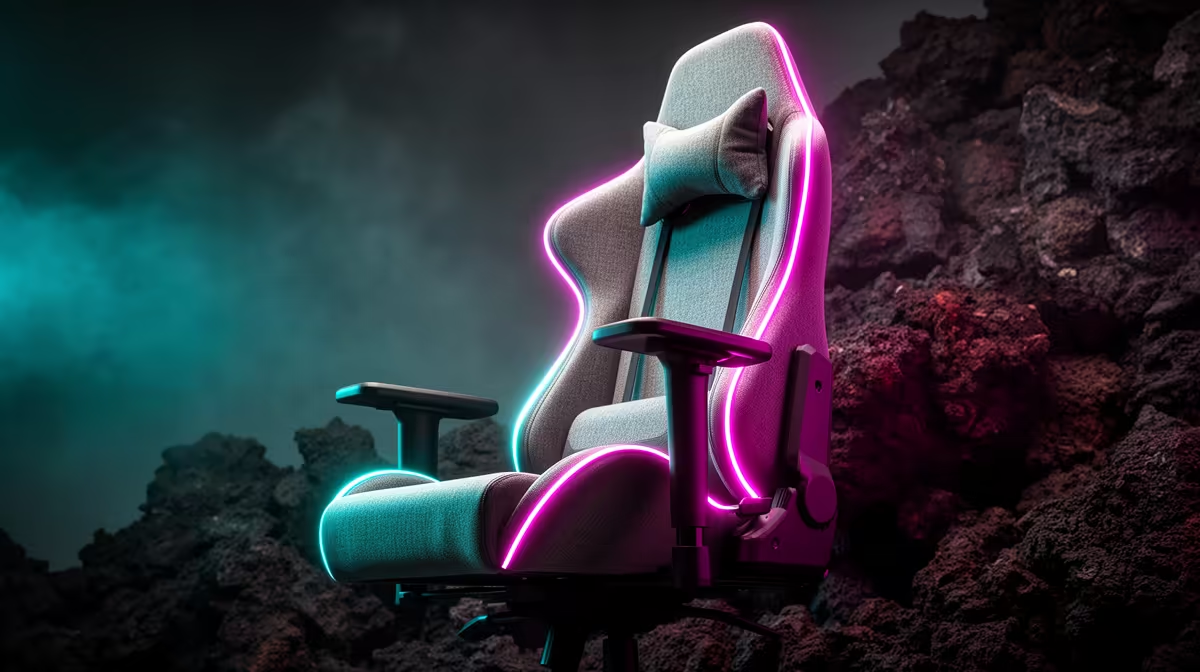
A gaming chair is the one piece of a setup you sit in for every session, so a poor choice shows up in your back long before it shows up in a benchmark. The smart money goes on fit, frame and rating, not on a racing shell or extra lights.
Quick Answer
Measure your hips and thigh length before buying: a seat 50cm to 53cm wide and 49cm to 52cm deep fits most adults, and taller users should check a backrest of 80cm or more. A well-sized chair at R3,000 beats an oversized bargain that never feels planted.
The Specs That Actually Matter
Read four numbers on any chair listing. Weight rating tells you the safe limit (100kg, 120kg, 136kg or 150kg). Gas-lift class signals durability, with Class 4 cylinders rated for more cycles than Class 3. Seat width and depth decide whether you sit in the chair or perch on it. Recline range (usually 90 to 155 degrees) matters for breaks between sessions. A metal five-star base survives daily rolling far better than nylon on tile floors common in SA homes.
Comfort For Long Sessions
Comfort over a four-hour stretch comes from fit, not padding depth. A seat that is too deep forces you forward off the lumbar curve; one too narrow pinches at the hips. Adjustable 3D or 4D armrests line your forearms up with the desk and spare your shoulders. Test the recline lock and the lumbar pillow position, because a chair that cannot hold a slight tilt pushes you into a slouch by the second hour.
Named Chairs And ZAR Bands
Across SA-stocked ranges, the Cooler Master Caliber R1 (around R3,500, 150kg rating) is a dependable shared-use pick. The Cougar Armor One (roughly R3,200, 120kg) suits one main user, while a premium ergonomic seat such as a Secretlab-class chair sits above R7,000 with longer warranties and a Class 4 lift. Confirm the current price and stock at Evetech before deciding.
Buy Now Or Upgrade Later For Do not ignore seat size
If your current chair sags, leans or sits the wrong size, replace it now rather than nursing it; back strain costs more than the chair. If it is merely plain but still supportive, a R400 lumbar cushion buys time. For do not ignore seat size, weigh how many hours the seat is used daily and by how many people, then size the weight rating and warranty to that. Spending R3,500 once beats buying a R1,500 chair that fails inside a year.
Tailored To Do not ignore seat size
Match the choice to how, where and how often this kit is used in your space, since the right fit for your routine beats a spec sheet that flatters a different use case. For this use, size the weight rating and base material to the daily load, with durable chairs from about R3,000 and premium ergonomic seats above R7,000.
FAQ
What weight rating should I choose?
Pick a rating above the heaviest regular user, not just your own. 100kg to 120kg covers most single users, while shared or larger-frame use wants 136kg to 150kg on a Class 4 gas lift for longer life.
Is PU leather or fabric better for SA homes?
Fabric or mesh stays cooler in warm rooms and resists cracking over years, which suits daily use. PU leather wipes clean fast but tends to flake at stress points after heavy wear, so reserve it for lighter use.
How long should the warranty be?
Two years or more is a good signal for a chair under daily or shared load. Shorter warranties often pair with nylon bases and Class 3 lifts that wear faster, so check the frame and base material alongside the warranty length.
the weight rating one tier above your heaviest regular user, check the seat width against your hips, and pick a metal base for rolling on tile or laminate floors.