Quick Answer
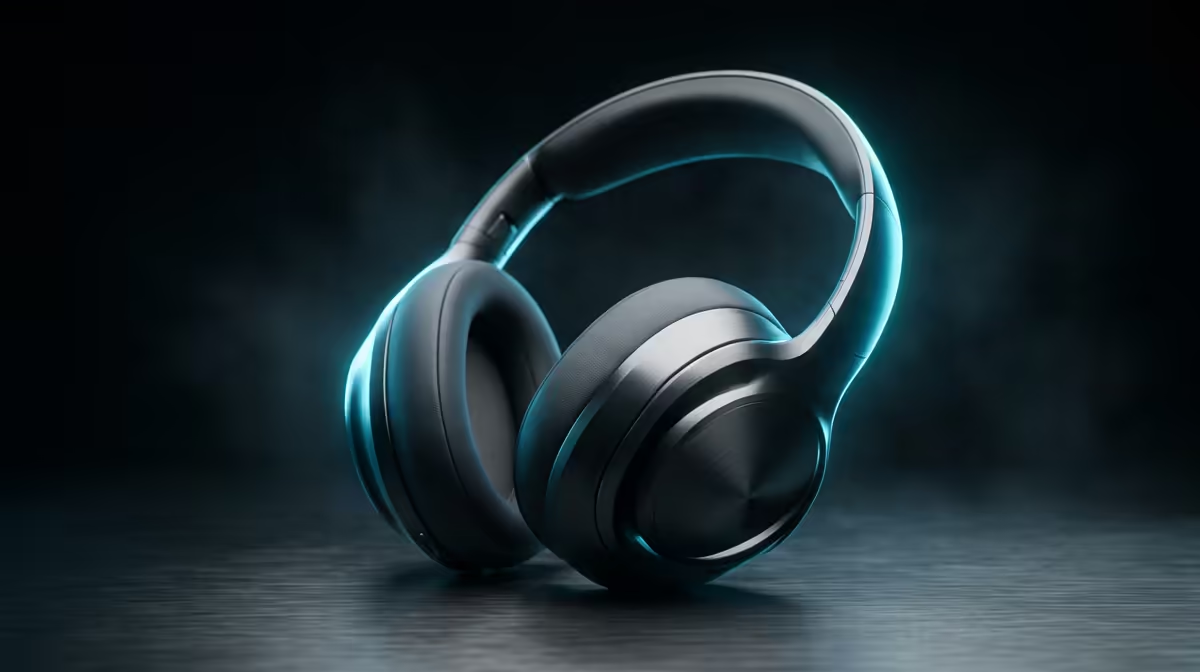
For low-latency online gaming, the headset checklist is led by low-latency audio and a clear mic, not surround: choose a wired USB or 2.4GHz wireless headset (avoid Bluetooth for gaming) around R900 to R2,500. Wired and 2.4GHz keep audio in sync with the action so positional cues arrive instantly during competitive play.
What The Checklist Demands For Competitive Play
Online competition rewards hearing footsteps and shots the instant they happen. The checklist starts with the connection: wired USB or low-latency 2.4GHz wireless, never Bluetooth, which adds delay that puts audio behind the action. Next is mic clarity for team calls, since clear comms win rounds. Comfortable pads let you focus through long sessions. Accurate stereo imaging matters more than virtual 7.1 for pinpointing direction in titles like CS2 or Valorant.
Tuning For Consistency
Once the connection and mic are sorted, comfort and a reliable fit complete the checklist. A lightweight headset with breathable pads keeps you focused over a long ranked session. Stable 2.4GHz wireless with around 20 to 30 hours of battery avoids mid-match drops. Avoid headsets that lean heavily on bass, since that masks the subtle directional cues competitive play depends on.
FAQ
Is Bluetooth bad for competitive gaming?
Yes. Bluetooth adds noticeable audio latency that puts sound behind the action. Use wired USB or 2.4GHz wireless for gaming so positional cues arrive instantly.
Is virtual 7.1 worth it for esports?
Accurate stereo imaging usually serves competitive play better than virtual 7.1, which can blur cues. Many pros run stereo for the clearest sense of direction.
How long should a wireless gaming headset last per charge?
Aim for 20 to 30 hours so a long ranked session never ends with a dead headset. Quick-charge support is a useful bonus for back-to-back sessions.
play, use a wired or 2.4GHz wireless headset, never Bluetooth, and favour clear stereo imaging so footstep cues arrive without delay.