Two entirely different questions get asked about a riser cable in the same breath, as if they were one. Is the connection good, and is the card held securely. They are not the same thing, and treating them as interchangeable is how a vertical GPU build ends up with excellent contacts and a card that still is not properly secured.
Quick Answer
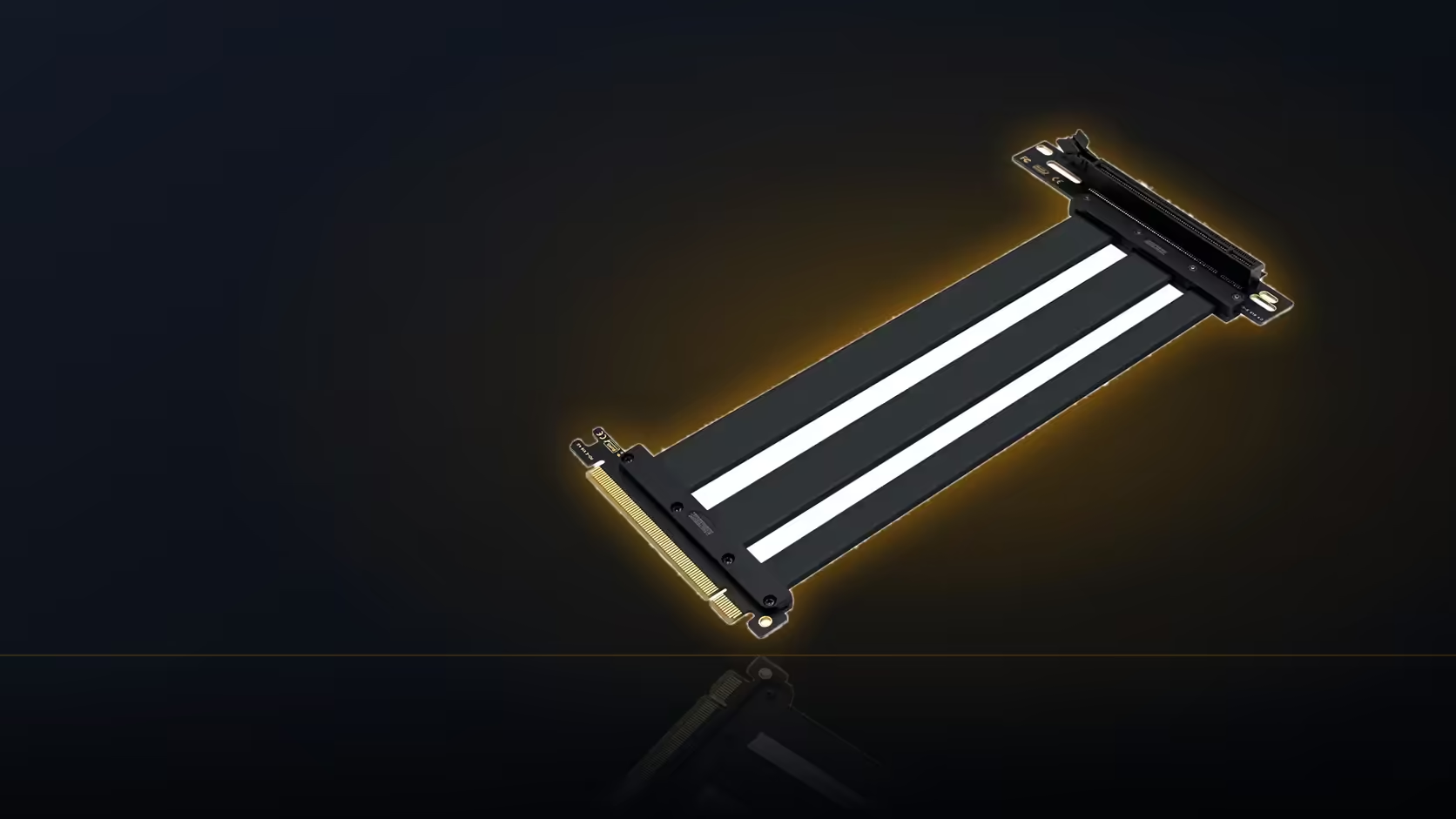
Gold-plated contacts address the electrical interface where the riser meets the slot and the card. Whether the card is held securely is a mechanical question the bracket answers, not the cable. At R1,299 including VAT, the AsiaHorse riser handles the first question well; the second is a separate purchase entirely.
⚡ What gold-plated contacts actually solve
Contacts are the physical points where the riser's connector meets the motherboard's slot on one end and the card's slot on the other. Gold plating on those contact points reduces electrical resistance and resists corrosion better than bare copper or lesser plating alternatives over the life of the cable. This is a genuine, measurable quality feature, and it is reasonable to value it when comparing riser cables against each other.
What gold plating does not do is anything about whether the card stays where it is put. That is a question about mounting, not conductivity, and the two get conflated surprisingly often in how people talk about riser quality generally.
🔩 What actually holds the card in place
The mounting bracket carries that responsibility, fixing the card's position in its vertical arrangement and providing whatever fixing points, screws or rails hold it there against gravity and any vibration from the system's own fans. This is entirely separate hardware from the riser cable, sourced separately, and doing a separate job.
A build can have the best-plated, best-shielded riser cable available and still end up with a poorly secured card if the bracket side of the equation is weak, ill-fitting, or skipped altogether. Excellent contacts do not compensate for a card that is free to move.
🧱 Why the conflation happens
It is an easy mistake to make, because both the cable and the bracket are part of the same overall vertical-mount project, purchased around the same time and installed in the same session. Marketing language around riser cables also leans heavily on electrical quality claims, gold plating, shielding, signal integrity, which can leave the mechanical side feeling like an afterthought even though it carries at least as much practical weight in the finished build.
🛠️ What the AsiaHorse cable specifies beyond the contacts
Alongside the gold-plated contacts, this riser is built with EMI-shielded 30AWG wiring along its ribbon length, a protective ABS shell around the connector area, and a right-angle slot connector designed to shorten the effective route from a typical board slot. All of these address the cable's own job well: maintaining a clean, low-interference electrical path over its 200mm length. None of them touch the mechanical question of card security, because that was never the cable's job to begin with.
Is the riser itself secured anywhere?
The riser plugs into the board slot at one end and the card's slot at the other, with the ABS shell protecting the connector area from knocks during handling. It is not additionally clamped or fixed beyond that seated connection, which is standard for this kind of cable and not a defect. It relies on the card being properly mounted so that neither end of the connection is put under strain from movement.
⚠️ What happens if the card moves
A loose or poorly secured card transmits any movement directly to whatever it is connected to, including the riser at each end. Over time, that kind of repeated strain is exactly the sort of thing that shortens a connector's working life or causes an intermittent connection to develop, even on a well-made cable. Proper mounting protects both the card and the cable, which is another reason the bracket side of the setup deserves as much attention as the cable's own specifications.
A card that shifts even slightly under vibration from its own fans, or from the case fans nearby, repeats that strain every time the system runs, not just once during installation. It is a slow kind of wear rather than a sudden failure, which is part of why it gets overlooked: nothing goes wrong on day one, and the connection can seem perfectly fine for months before an intermittent fault finally shows up. Checking that the bracket still holds the card firmly, with no play or flex when gently pushed, is worth doing again after the first few weeks of use, not only at the moment of installation.
The cable side and the mounting side genuinely are two separate purchases. Treat them as one and you can end up with an excellently plated connection and nothing actually holding the card steady. Graphics card accessories covers the first; case accessories covers the second, and neither substitutes for the other.
Worth checking after fitting
Once both the bracket and the riser are installed, confirming that both ends of the connection are fully seated before powering the system on is a simple check worth doing on any riser installation, not just this one. A connector that looks seated but is not quite fully home is a common source of instability that a moment's check catches early.
Frequently Asked Questions
What do gold-plated contacts actually address?
The electrical interface at each connection point, reducing resistance and resisting corrosion better than lesser plating over time.
What holds the card securely then?
The mounting bracket, entirely separate from the cable, which fixes the card's position and carries its weight.
Can excellent contacts make up for poor mounting?
No. A card that moves puts strain on the connection regardless of how well the contacts themselves are made.
What else does this riser specify beyond the contacts?
EMI-shielded 30AWG wiring, a protective ABS shell around the connector area, and a right-angle slot connector.
Is the riser secured anywhere beyond its two connectors?
No, it relies on a properly seated connection at each end, which is standard and depends on the card being securely mounted.
Should the connection be checked after installation?
Yes, confirming both ends are fully seated before powering on is a simple check worth doing on any riser setup.
Sorting both the cable and the mounting side of your build?
Explore Evetech's graphics card accessories to cover the hardware a vertical mount actually needs.