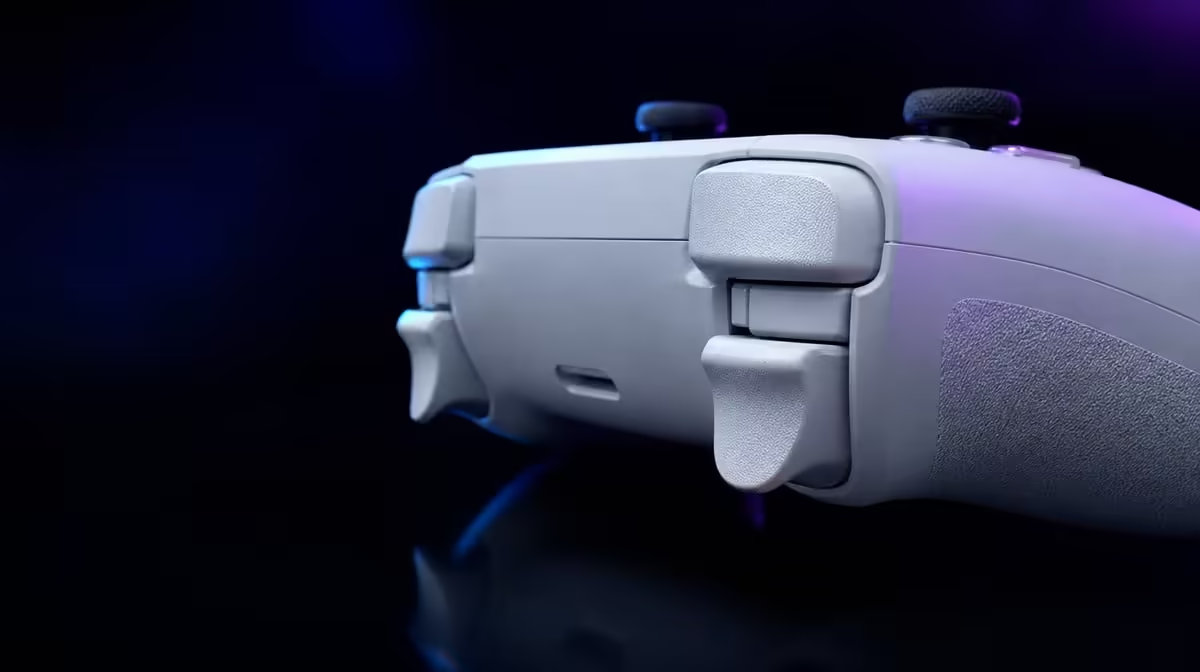
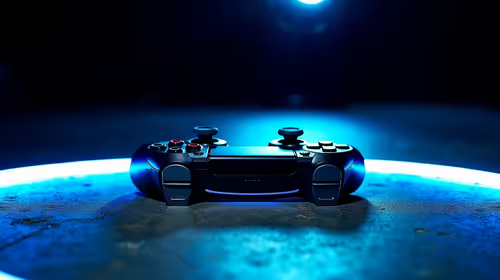
A button has two meaningful states; an analog trigger can describe the space between them. Hall analog triggers for variable input use magnetic sensing to report graduated travel, allowing supported games to interpret more than released and fully pressed. The R999 GameSir Cyclone 2 includes these triggers beside Mag-Res TMR sticks and its smart charging dock.
Quick Answer
The Cyclone 2 Hall triggers can report values throughout their press, enabling variable throttle, braking or another supported action. The Phantom White package is R999. Test each trigger's start, progression, full travel and return in the intended game because software decides how much of the analog range is used.
🧲 Magnetic travel differs from a button
A normal digital button tells the game whether it is pressed. An analog trigger can report position along its movement, creating many possible values between release and full travel.
Hall sensing measures that position magnetically. This avoids a conventional rubbing measurement contact and can support consistent reporting.
The measurement method is only one layer of the result. The trigger still moves through physical travel, the controller translates that reading, and the game applies its own response. A strong buying decision checks all three rather than assuming the word magnetic settles the question.
Start with the trigger released. Press it slowly while watching a suitable in-game meter or the action itself, pause near the middle, continue to full travel and then release. Repeat several times. The value lies in predictable progression and return, not simply in reaching the endpoint once.
Test the left and right triggers independently. They may serve different actions, and a title may apply different settings to each. After the separate checks, press them while moving a stick so the normal grip and hand position are also represented.
The trigger still has physical mechanics and software calibration. Magnetic sensing does not guarantee that every game or controller profile uses the full range.
The Evetech gaming controller category provides the right place to compare variable-input controllers.
🏁 Racing turns travel into control
A racing title may map partial press to throttle or braking. Begin in a repeatable section and apply light, medium and full inputs without changing sensitivity.
Observe whether the action progresses, whether both triggers behave predictably and whether they return completely. Repeat at normal speed after the slow test.
Brake and throttle should be evaluated as separate controls. A light brake test can reveal whether the game recognises early travel, while a steady acceleration test can show whether the action builds rather than jumping straight to maximum. Use a safe practice area so steering, traffic or race pressure does not obscure the input.
If the title offers trigger dead zones, begin at the default. Record the first result, change one setting and repeat the same manoeuvre. Moving several response values together makes it difficult to know which adjustment improved or damaged control.
Driving style matters too. A player using frequent short presses may value early-range consistency, while someone holding a trigger for long straights may care more about a comfortable full press. Neither preference changes the sensor; it changes which part of its range deserves the closest attention.
Do not assume another racing game uses the same curve. Save separate profiles only after default behaviour is understood.
TMR stick steering should remain fixed while trigger travel is evaluated. This keeps two magnetic controls from becoming two changing variables.
🎯 Other genres depend on mapping
A shooting title may use analog travel for a variable action, a staged command or nothing beyond a digital press. The Hall hardware offers range; the game defines its meaning.
Test in a safe scene and compare slow squeezes with ordinary commands. If the action remains on or off, inspect game support before recalibrating.
Do not force a racing interpretation onto every genre. Some games may use a trigger for a simple fire command even though the controller reports graduated values. That is a software choice, not proof that the hardware has lost its analog range.
When a game does use stages, identify them through repeated play. Compare a light press, a deliberate midpoint and a full pull while the character is stationary or the environment is controlled. Then repeat during normal movement to see whether the chosen grip remains comfortable.
Trigger value can also depend on mapping. A remapped action may not inherit the same analog behaviour as the original command. Return to the default layout if an expected variable response disappears, then introduce the custom mapping after the baseline is clear.
Keep a short note for each title: platform, connection, profile, action and result. This prevents one game's digital treatment from becoming a general claim about the controller and makes later troubleshooting much faster.
Keep RGB, connection and dock charging outside the input judgement. Those features may add package value but cannot create graduated software support.
Browse Evetech gaming accessories after the target variable actions are identified.
🧭 Verify the complete range
Test each trigger independently, then combine it with stick movement. A grip change during the press can affect aim or steering even when the sensor reads correctly.
Record device, game, connection and profile. Tri-mode multiplatform use can produce different software results on PC and Android, so repeat the test on every important host.
Connection testing should use the same scene and display mode. Online server conditions can change the feel of an action, so establish the local trigger baseline offline before judging ordinary online play.
Watch the release as closely as the press. A variable control must return predictably when the finger lifts. Repeat short taps, medium holds and full pulls, then combine trigger release with a direction change to reflect real play.
If behaviour differs between devices, keep platform-specific profiles instead of chasing one compromise that suits neither. Name those profiles by device and game. RGB may act as a reminder, but the on-screen controller state and written profile name should confirm the selection.
The Cyclone 2 sticks are TMR, not Hall. Both use magnetic sensing, but the stick reports two-axis direction while the trigger reports one-direction travel.
At R999, the controller includes both input types and its Smart Start-Stop dock. The Evetech accessory favourites page can help frame the wider package once trigger value is proven.
The dock and tri-mode support belong in the total package score after the trigger has passed. The base gives the controller a dedicated storage and charging point, while multiple routes can help it serve supported hosts. Neither feature changes analog travel, but both may increase the value of the R999 purchase.
Before buying, list the titles in which graduated control matters and the action each one uses. If the list is empty, Hall trigger travel may be less important than another feature. If racing, staged commands or other variable actions appear every week, it deserves a heavier weighting.
Frequently Asked Questions
How is a Hall trigger different from a button?
It can report graduated position through its travel, while a digital button generally reports released or pressed.
How can racing games use the range?
They may map partial values to throttle or braking, subject to the title's controller implementation.
Why is magnetic sensing relevant?
It reads trigger position without a conventional rubbing measurement contact, supporting a different wear path.
Are the Cyclone 2 sticks Hall Effect?
No. Mag-Res TMR technology senses the sticks, while Hall sensors read the analog triggers.
What local price includes the triggers?
Evetech's Cyclone 2 Phantom White package is R999, including its charging dock.
Ready to use trigger travel as a real control scale?
Explore Evetech gaming controllers and test Hall analog input in the exact titles and platforms that can interpret it.