

Humidity Damage to PC Components: Recovery Guide
Humidity Damage to PC Components: Recovery Guide. Everything you need to know with SA pricing, step-by-step instructions & expert recommendations.
Read more- Explain high static pressure fans vs standard fans - Compare radiator cooling performance and noise - Show push vs pull and mounting tips - Recommend best scenarios and picks High static pressure fans deliver stronger airflow through dense radiator fins, letting you optimize liquid cooling performance with the right tradeoffs 🧊🔧
Whether you’re tuning an AIO for PvP nights or building a quiet workstation, picking the right fan changes temperatures and noise. This short guide cuts through the marketing jargon and shows when high static pressure wins, when standard fans do the job, and how South African builders can shop smart. Ready? Let’s optimise that radiator cooling setup. 🔧✨
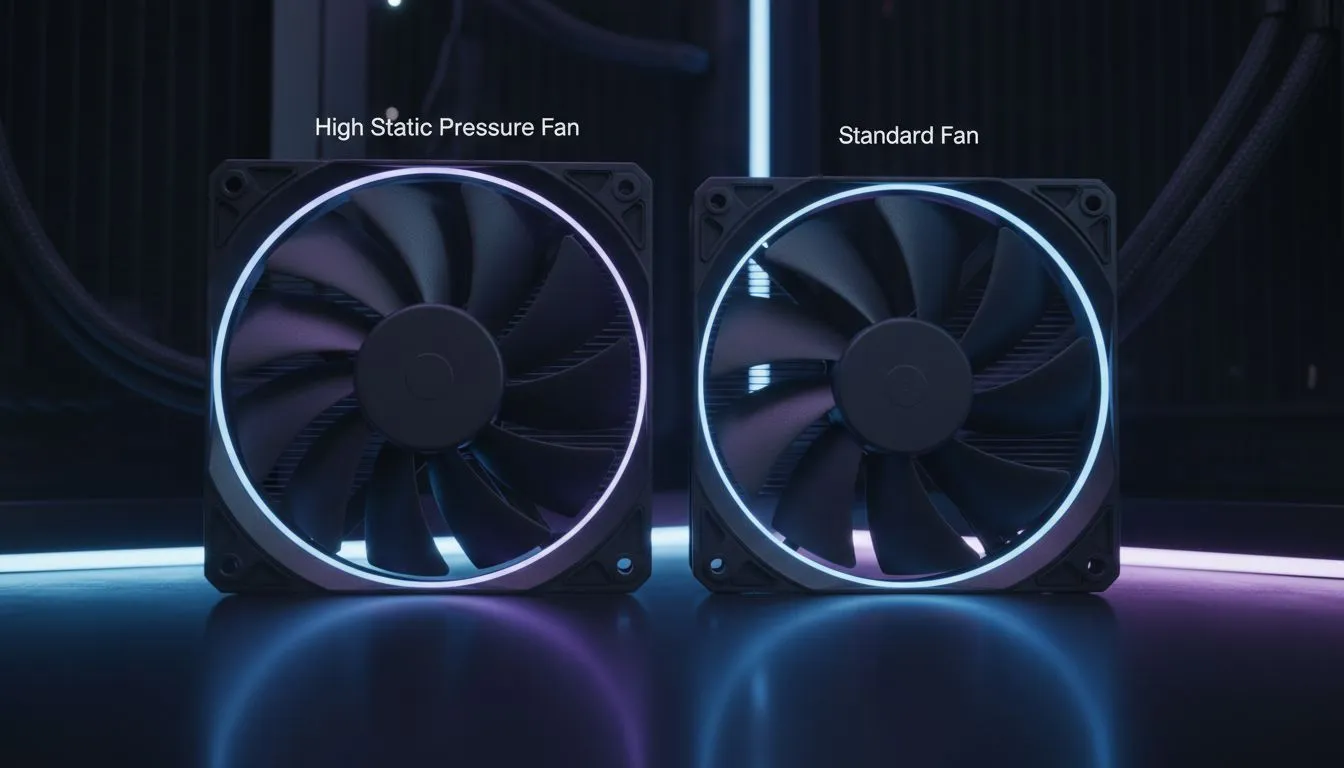
The core difference is simple: high static pressure fans push air through resistance, like radiator fins, while standard case fans focus on moving a lot of air in open spaces. In practice that means a high static pressure fan keeps radiator temperatures lower at similar RPMs. If you want a quick look at compatible models and sizes, browse Evetech’s case fans collection: Evetech's case fans collection.
High static pressure fans have narrower, steeper blades and often tighter frames to keep airflow focused. Standard fans usually have wider blades and higher airflow (CFM) in free air. That’s why builders choose high static pressure fans for AIOs and radiators, and standard fans for case intake/exhaust.
If your radiator has dense fins, is thick, or you’re stacking rads, high static pressure fans are the sensible pick. They maintain airflow through resistance rather than stalling. Looking for brand options? Check out Corsair’s fan range here: Corsair fans at Evetech and Deepcool alternatives here: Deepcool fan options.
When using a single radiator, try a push configuration first. For thicker or high-FPI (fins per inch) rads, try push–pull with matched fans. If your front panel restricts airflow, match frame size and use higher static pressure fans to avoid throttling.
Fan size affects static pressure and acoustic profile. Common radiator fits are 120mm and 140mm; pick the size your radiator supports and prefer the higher static pressure option for better fin penetration. Shop 120mm options here: 120mm fans and 140mm options here: 140mm fans.
I once swapped standard intake fans for a set of high static pressure fans on a compact AIO build. Idle temps dropped a few degrees and peak loads stayed a little cooler, with noise unchanged after tuning the fan curve in the BIOS. Small change, noticeable difference.
Standard fans often reach good airflow at lower RPM, which can make them quieter for case-to-case ventilation. But when a radiator sits behind a restrictive front panel, a standard fan can spin louder trying to move air. If you want lighting, decide between RGB bling and minimalist builds: see RGB fan variants here: RGB fan variants or pick understated non-RGB models here: non-RGB models. ⚡
For radiators, high static pressure fans are typically the smarter choice. For open‑air circulation, standard fans excel. Pick your fan based on radiator thickness, front panel restrictions, and the size supported by your case. Save time by browsing Evetech’s full case fan range for comparisons and local stock: Evetech's case fans collection.
Ready to Find Your Perfect Match? The Mac vs Windows debate is complex, but for maximum power, choice, and value in South Africa, Windows is hard to beat. Explore our massive range of laptop specials and find the perfect machine to conquer your world.
High static pressure fans generate focused airflow and maintain pressure across obstacles, ideal for pushing air through dense radiator fins.
Yes for radiators: high static pressure fans push air through tight fins more effectively than standard case fans, improving radiator cooling.
Use standard fans for unrestricted case airflow and lower noise. They work well where static pressure demands are low.
They can be louder at the same cooling level. Check static pressure fan noise comparison and RPM curves to pick quieter models.
Prioritize static pressure, CFM, and RPM. Review radiator cooling fan airflow vs pressure to balance performance and noise.
Both 120mm and 140mm work. Larger 140mm fans often move similar air at lower RPM and noise—see best fans for radiators 140mm.
Both work. Push often yields slightly better static pressure performance; test push vs pull radiator fan setup for your layout.
Humidity Damage to PC Components: Recovery Guide. Everything you need to know with SA pricing, step-by-step instructions & expert recommendations.
Read more
Gamer Spending Trends April : Complete Setups. Clear setup instructions with SA-specific considerations, troubleshooting tips & recommended components.
Read more
Setting Up DDR5 32GB Kit. Tested & verified settings for best FPS and visual quality on SA hardware budgets.
Read more
Tech Setup Guide for SPU Res Students. Clear setup instructions with SA-specific considerations, troubleshooting tips & recommended components.
Read more
Monster Hunter Wilds Ultrawide Support: 21:9 and. Clear setup instructions with SA-specific considerations, troubleshooting tips & recommended components.
Read more
Apple iPad Durability Guide: Cases, Screen. Practical breakdown of costs, regulations & whether it makes financial sense for SA buyers.
Read more
AMD RX 9050 XT: Rumoured Specs, Price & Release. SA-focused analysis with local pricing data, real-world insights & actionable buying advice.
Can RTX 4080 Super Run AI Workloads for SA Developers Detailed answer with SA data, expert analysis & practical recommendations for local buyers.
Can RTX 4090 Run AI Workloads for SA Developers Detailed answer with SA data, expert analysis & practical recommendations for local buyers.
Top Settings for Intel Arc B580 at Ultrawide 1440p picks evaluated on performance, value & SA availability with current Rand pricing from Evetech.

RTX 4060 CS2 Low Settings at 1080p: FPS Results. Real-world benchmark data, FPS numbers & performance analysis. What SA gamers can actually expect.

Visual Artifacts: Possible GPU Issue Issue #1. Diagnosis steps, proven fixes & when to seek professional help. SA-specific support info included.

Can the RTX 4090 Handle 1440p 144Hz Gaming. Performance testing verdict with real data & practical recommendations for SA buyers.

Top ASUS GPU Under R15000 picks evaluated on performance, value & SA availability with current Rand pricing from Evetech.
GTA 6 Max Settings on RTX 5070. Tested & verified settings for best FPS and visual quality on SA hardware budgets.
Cyberpunk 2077 Max Settings on RTX 5080. Tested & verified settings for best FPS and visual quality on SA hardware budgets.
Starfield Max Settings on RTX 5070 Ti. Tested & verified settings for best FPS and visual quality on SA hardware budgets.
Top RTX 5090 Under R5000 picks evaluated on performance, value & SA availability with current Rand pricing from Evetech.