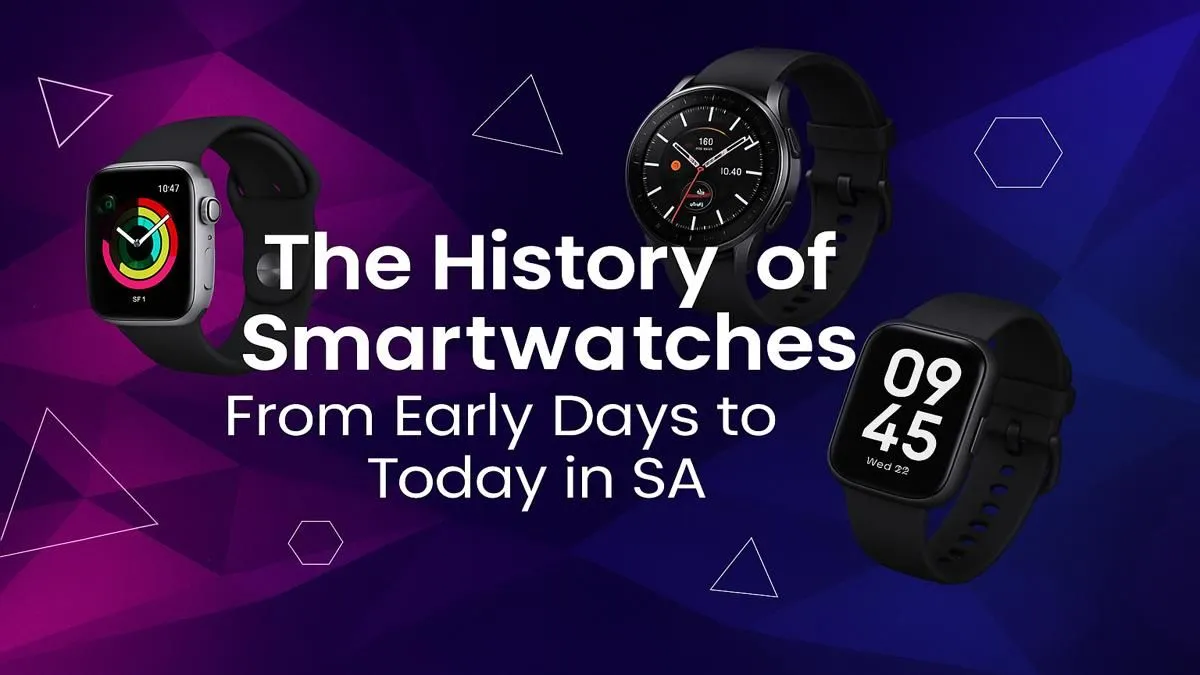
Remember when your watch's best feature was the tiny light button you'd press in the dark? It feels like a lifetime ago. Today, the device on your wrist can track your workout, pay for your groceries, and even navigate you through Jo'burg traffic. The history of smartwatches in South Africa isn't just a tech story; it's a rapid evolution from geeky gadget to essential daily companion. Let's take a look back. ⌚
The Early Days: More Novelty than Necessity
Before the sleek touchscreens we know today, the journey began with digital watches that had... extra features. Think calculator watches in the 80s or data bank watches in the 90s. They were cool, but niche. The true precursor to the modern smartwatch arrived with devices like the Pebble. For the few tech-savvy South Africans who imported one, it was a glimpse into the future—a customisable screen that delivered notifications right to your wrist. This early chapter in the smartwatch timeline was defined by curiosity, not mass appeal.
The Apple & Android Revolution Hits South Africa
The game truly changed when the big players entered the scene. The arrival of the first Apple Watch and early Android Wear (now Wear OS) devices marked a pivotal moment in the history of smartwatches in South Africa. Suddenly, these weren't just gadgets for nerds; they were premium accessories. The initial launch prices were steep, making them a status symbol in cities like Cape Town and Johannesburg. This era established the core features we now expect: seamless phone integration, app ecosystems, and polished user interfaces. It also kickstarted a market that now includes a massive range of smart watches for every taste.
How Fitness Trackers Paved the Way for Mass Adoption
While premium smartwatches were grabbing headlines, another device was quietly winning over South African hearts (and wrists): the fitness tracker. Brands like Fitbit and Garmin focused on one clear, powerful benefit—health and wellness monitoring. They were simpler, had incredible battery life, and were more affordable. This shift was crucial for the local market. It normalised wearing tech on your wrist 24/7, tracking everything from your morning run in Durban to your sleep quality. Many people's first "smart" wearable was a fitness band, creating a perfect entry point into the wider ecosystem. Today, even lifestyle-focused brands like Promate offer fantastic smart watches that pack in comprehensive health tracking features. ✨
Maximise Your Battery Life 🔋
A common frustration with powerful smartwatches is daily charging. To extend your battery life, go into your watch's settings and disable 'Always-On Display'. Also, be selective about which apps can send notifications to your wrist. Fewer buzzes and screen activations can easily add hours, sometimes even a full day, to your watch's uptime.
The Modern Era: A Smartwatch for Every Budget 🚀
The evolution of smartwatches in South Africa has now reached its most exciting phase: accessibility. The technology has matured, and the market is filled with incredible options that don't require you to break the bank. You no longer have to choose between features and price. Thanks to fierce competition and advancements in manufacturing, you can find excellent smart watches under R1000 that deliver incredible value. These affordable models often include GPS, heart rate monitoring, multiple sport modes, and impressive battery life, proving that cutting-edge wearable tech is now for everyone.
Ready to Join the Smartwatch Revolution?
From telling the time to optimising your life, the journey of the smartwatch has been incredible. Now it's your turn to find the perfect wrist companion. Explore Evetech's massive range of smart watches and upgrade your tech game today.