Quick Answer
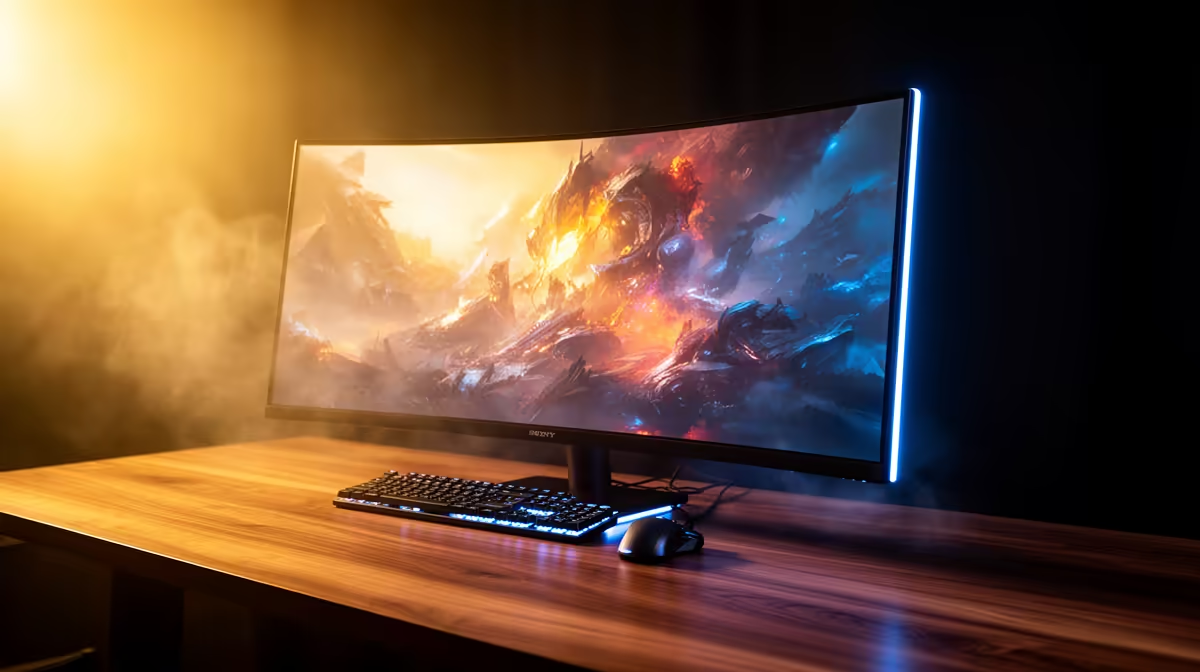
Plan for a desk at least 140 cm wide and 80 cm deep. The monitor panel spans 120 cm and the stand base adds 30 to 40 cm of depth. At 80 cm desk depth you sit at the near limit of the 1800R optimal viewing distance; 90 cm to 100 cm is more comfortable. In South Africa, most gaming desks available locally start at 140 cm wide for practical ultrawide use.
Calculating the Footprint Before You Buy 📐
A 49-inch curved monitor has an overall panel width of approximately 119 cm to 123 cm depending on the bezel size. The stand base footprint is typically 35 cm to 40 cm wide and 28 cm to 35 cm deep. On a 140 cm desk, the panel fits with around 10 cm clearance per side, which is adequate. On a 120 cm desk, the stand base overhangs the edge or the panel is flush to both sides, limiting peripheral clutter-free placement. The desk height should place the monitor's centre at or slightly below eye level when seated, which for most SA adults means a desk surface between 72 cm and 76 cm high and a monitor stand that offers at least 100 mm of height adjustment.
Desk Depth and PC Tower Placement 🖥️
In a typical SA PC builder setup, the desktop tower sits beside the desk or on a desk shelf rather than on the desk surface itself. If the tower does sit on the desk, allow an additional 20 cm to 25 cm of desk depth for the case, reducing the effective usable depth for the monitor and peripherals. Placing the tower on the floor beside the desk (common in South African gaming rooms and home offices) recovers that depth entirely. Cable management from the tower to the ultrawide requires at minimum a 1.5 m DisplayPort cable and a 1.5 m USB-B cable for the hub, both of which route comfortably along the desk edge with cable clips or a cable tray.
Monitor Arms as the Space-Efficient Alternative 🔧
A single heavy-duty monitor arm for 49-inch displays, rated for 10 kg to 14 kg and costing R1,200 to R2,500 locally, removes the stand base footprint entirely and frees the full 30 cm of desk depth the stand occupies. The arm clamps to the desk rear edge and positions the monitor at exact height, tilt, and depth. This is particularly valuable for South African flat or townhouse setups where the gaming room doubles as a study or bedroom and desk space is shared between PC and other tasks. The arm also makes it easy to tilt the monitor away when using the desk for non-PC activities.
Desk Weight Load Reminder ⚡
Most consumer desks support 50 kg to 80 kg of load, but the load rating assumes weight distributed across the surface. A 49-inch monitor concentrated at the back edge through a monitor arm clamp exerts a torque load on the desk edge. For desks thinner than 25 mm, add a backing board under the clamp or use a floor stand instead of a desk clamp to avoid cracking the desktop surface.
FAQ
What is the minimum desk width for a 49-inch ultrawide without the stand overhanging?
130 cm is the technical minimum; 140 cm gives practical clearance. Below 130 cm the stand base typically overhangs the desk ends and the panel bezel reaches within a few centimetres of each side, making placement awkward.
Can I use a wall desk shelf (floating desk) for a 49-inch curved monitor?
Yes, if the floating shelf is wall-anchored into studs or solid masonry and rated for at least 25 kg. The monitor weighs 10 kg to 14 kg and the stand, peripheral and other equipment adds more. Verify the shelf's structural rating before mounting.
Are there 49-inch ultrawides with smaller, less intrusive stands?
Yes, some models use a slim T-bar or central Y-stand that occupies only 15 cm to 20 cm of desk depth. Check the stand footprint dimensions in the monitor's specification sheet before purchasing if desk depth is a constraint.
Planning your ultrawide desk setup for a South African gaming room?
Evetech stocks 49-inch curved monitors alongside monitor arms and gaming desks designed to fit the full range of SA home setups.