


PCIe 5.0 vs PCIe 4.0 for Video editing in 4k in SA
PCIe 5.0 vs PCIe 4.0 for video editing in 4k is mainly about fit, features, compatibility, cost, and upgrade path, not one automatic winner. SA buyers should match the choice to the setup.
Read moreUse a single 5V ARGB controller, route addressable cables behind the motherboard tray, and set lighting to a slow breathe pattern so under-case glow accents the build without distracting from components.
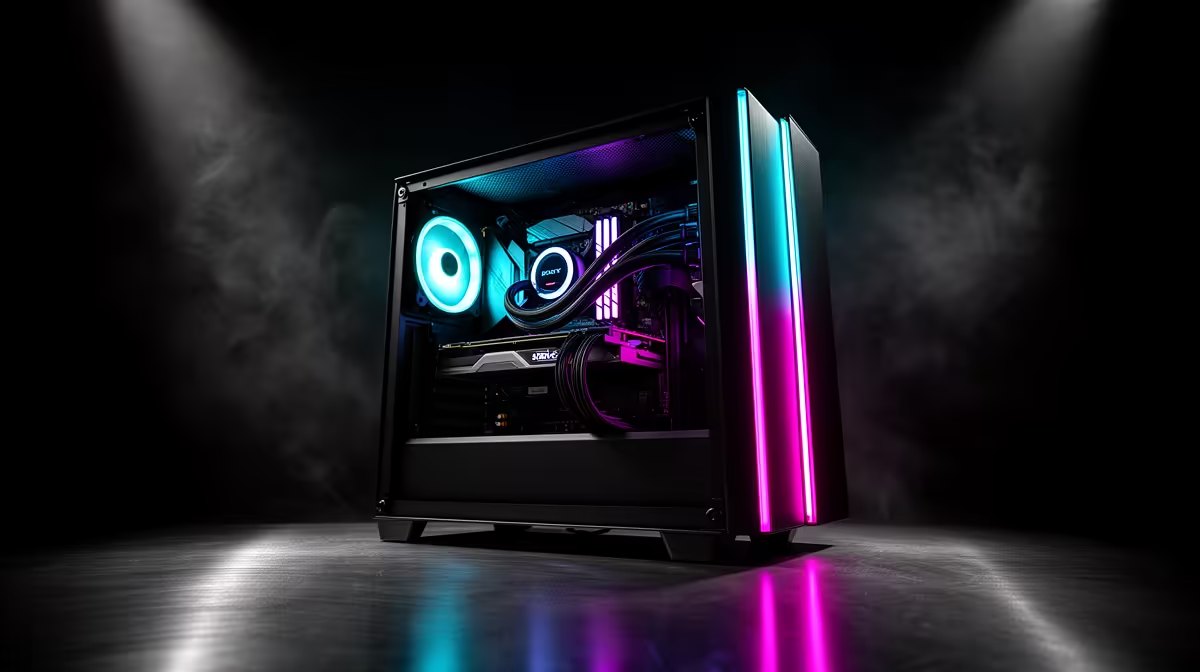
Balance under-case ARGB lighting by matching it to one dominant colour in your build (GPU shroud, RAM, or AIO head) and running the strip at 40 to 60 percent brightness. This creates ambient ground glow that draws the eye without competing with internal RGB.
Look for a strip rated for indoor static installation with self-adhesive 3M backing and a controller that accepts a 5V 3-pin ARGB header signal. Strips synced via Asus Aura, MSI Mystic Light, or Gigabyte Fusion let you set colour once in software and stay in sync with your other RGB components. Strips longer than 60cm can be cut at marked points to fit your case footprint. Under-case mounting typically needs 40 to 80cm depending on whether you cover two or four sides.
A premium build often has ARGB fans, AIO pump head, RAM, and GPU shroud lighting running simultaneously. The under-case strip adds a fifth source. Avoid running each in a different animation mode: five independently animating zones look amateurish. Use your RGB software (iCUE, Armoury Crate, or Dragon Centre) to lock all components to one static colour or one shared slow-wave animation. Static on internal components with a gentle pulse on the under-case strip creates a layered effect without strobe appearance.
The strip signal cable must reach from beneath the case to a 5V ARGB header on the motherboard. Route the cable along the inside of the case foot or through the rubber grommet on the PSU pass-through and up the rear panel channel. Use a right-angle 3-pin ARGB adapter to reduce cable stress at the header. Budget R150 to R400 for a quality ARGB strip and controller from locally stocked options. On a dark desk in a dimly lit SA gaming room, the halo effect is striking without visible LED hotspots.
peeling the adhesive backing, hold the strip under the case temporarily and power on the system to preview the colour against your desk surface. Some materials reflect RGB differently: white surfaces amplify intensity, while dark wood mutes tones. Adjust brightness in software before committing the strip permanently.
Not if your motherboard has a spare 5V 3-pin ARGB header. Most mid-to-high-end boards include two or three ARGB headers, and connecting the strip directly lets you manage it from existing RGB software.
High-quality LED strips run cool enough not to cause heat damage on solid wood, glass, or melamine surfaces. Avoid mounting on carpet, which traps heat and presents a fire risk with any LED strip.
Use a diffusion channel, an aluminium extrusion with a frosted cover that slides over the strip. The frosted cover blends individual LED points into a smooth bar. These channels make even budget strips look premium from floor level.
Want to add a finishing touch to your build's aesthetics? Shop Evetech's RGB and lighting accessories range for strips and controllers compatible with your motherboard's ARGB header.
PCIe 5.0 vs PCIe 4.0 for video editing in 4k is mainly about fit, features, compatibility, cost, and upgrade path, not one automatic winner. SA buyers should match the choice to the setup.
Read more
Wi-Fi 7 vs Wi-Fi 6e for competitive esports comes down to router support, latency goals, device compatibility, and coverage. SA buyers should match the choice to the real network setup.
Read more
ATX 3.1 vs ATX 3.0 for mMO and live-service games buyers - what changes is mostly about compatibility, budget, upgrade path, and setup fit. SA buyers should check device support and real needs before expecting a clear win from either option.
Read more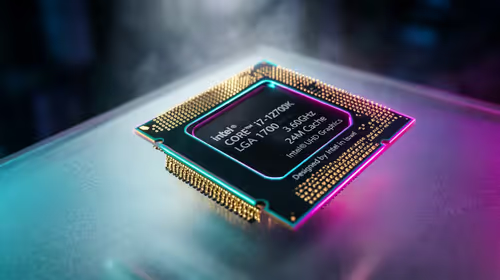
LGA 1851 vs LGA 1700 can affect Twitch and YouTube streaming when gaming and encoding share CPU resources. For SA creators, the real-world difference depends on encoder choice, memory support, motherboard cost, thermals, and upgrade plans.
Read more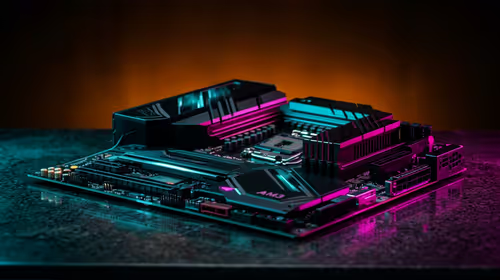
X870E vs X670E for aaa single-player gaming is mainly about fit, features, compatibility, cost, and upgrade path, not one automatic winner. SA buyers should match the choice to the setup.
Read more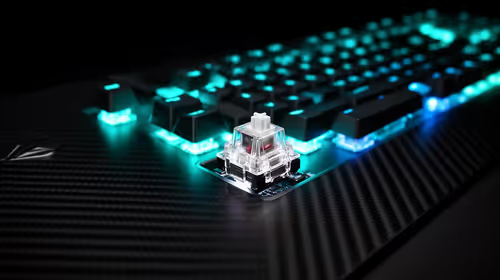
Hall Effect switches vs Mechanical switches for mMO and live-service games is mostly about compatibility, budget, upgrade path, and setup fit. SA buyers should check device support and real needs before expecting a clear win from either option.
Read more
A fake 113GB GTA VI ISO reportedly used empty padding around a small malware payload. SA gamers should delete unofficial builds, keep Windows security active and wait for official channels.

Wi-Fi 6E vs Wi-Fi 6 matters for 4K video editing when files move across a network. The real-world difference between Wi-Fi 6E and Wi-Fi 6 for video editing in 4K depends on NAS access, cloud uploads, router range, and SA creator workflows.

The difference between PCIe 5.0 and PCIe 4.0 for SA gamers is mostly bandwidth headroom. Compare GPU slot needs, NVMe speed, motherboard support, and upgrade timing before paying extra for a newer platform.

Gaming PC stuck pixel checks in South Africa should confirm the monitor fault first. Use colour tests, screenshot comparison, cable swaps, display menu checks, and clear photos before deciding on support.

Shokz OpenFit Air 2 earbuds weigh 7.2g each and use a redesigned dual-driver open-ear layout. SA buyers should choose them for comfort and awareness, not maximum isolation.

AMD's current driver now lists a Radeon RX 9050 4GB, while product coverage details a narrowed memory system. SA buyers should weigh the low VRAM ceiling against current local Radeon options.

Samsung Display has demonstrated a 16-inch 2.5K OLED laptop panel running at 300Hz. SA buyers should wait for a named notebook, full panel specifications and a local price before planning an upgrade.

Microsoft says some Windows 11 game crashes after recent updates are linked to RGB-related drivers. Affected SA gamers should confirm the update and driver before using the published registry workaround.

Minisforum's M2 Pro pairs Core Ultra X7, Arc B390 graphics and 32GB onboard memory in 1.8 litres. SA buyers should weigh its fixed memory and $1,439 launch offer against local mini PCs.

Smart monitors can add apps and convenience, but they also add privacy settings and unwanted-software risk. SA buyers should audit the operating system before paying for extras.

Lenovo says Legion Go failures linked to BIOS N3CN42WW are not user error. Affected SA owners should stop retrying the update, preserve proof and open a support case.
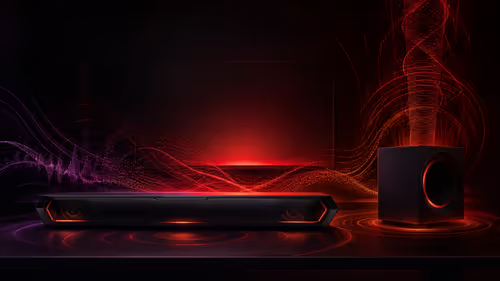
The ROG Gjallar gaming soundbar is now listed in the US at $599.99. SA buyers should compare its 2.1.2 audio, wireless bass and built-in chat controls with simpler local options.