Quick Answer
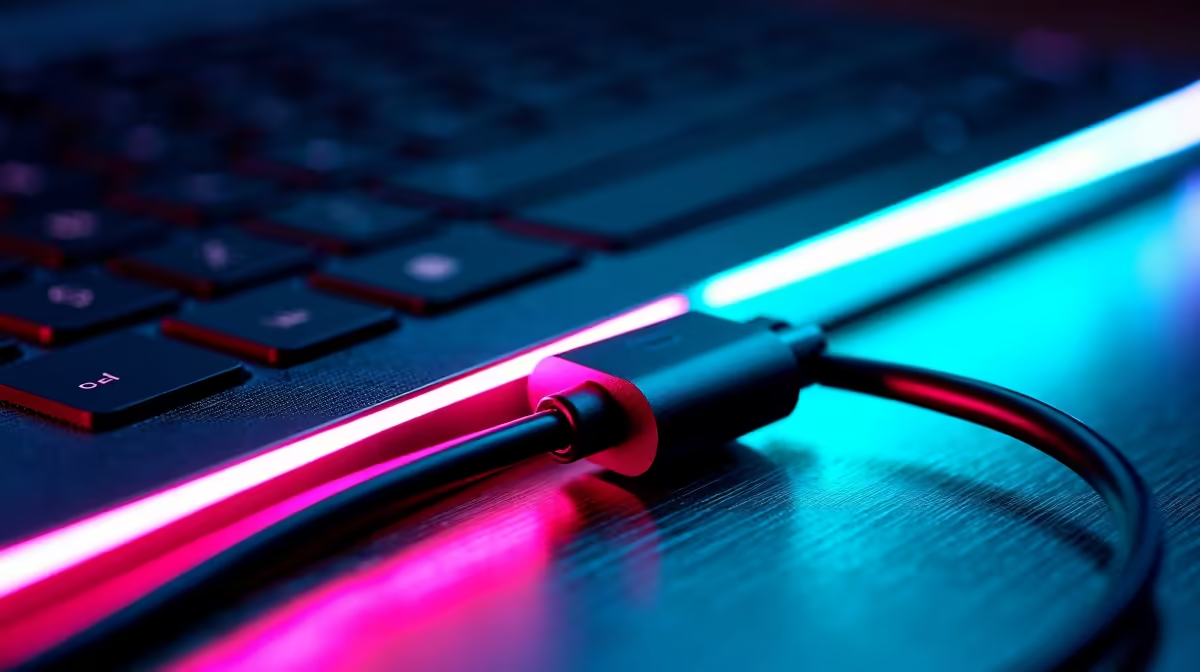
To route a 2m DisplayPort cable without strain or signal issues, plan the run to avoid sharp bends (keep bend radius above 25mm), use adhesive cable clips to hold the path, relieve connector stress with a 5cm straight exit from each port, and keep the cable at least 5cm from mains power leads. These steps preserve both the cable's shielding integrity and connector long-term reliability.
Planning the Cable Route Before You Install It 📐
The most common routing mistakes happen when a cable is installed without a plan. Start by identifying the shortest clean path from the GPU output port to the monitor's DisplayPort input. For a tower on the floor beside a standard South African desk, the path typically runs up the back of the tower, along the desk underside using adhesive clips, and up the monitor arm column. For a corner desk, the cable routes along one desk edge to the arm. Measure the actual path with a piece of string before confirming 2m is the correct length. A 2m cable should complete the run with 15cm to 20cm of slack at each end, enough to plug in comfortably without pulling the cable taut.
Managing Bends and Connector Stress 🔧
DisplayPort cables have tightly controlled impedance. Sharp bends change the spacing between internal conductor pairs and degrade the impedance match that keeps 21.6Gbps signals clean. The recommended minimum bend radius is 25mm to 30mm, about the radius of a 50c coin. Where the cable must turn a corner, use a clip just before the bend to hold it in a smooth arc. At both the GPU and monitor ports, the cable should exit straight for at least 5cm before bending, protecting the internal solder joints from lateral stress that causes intermittent signal failures over months.
Routing Near EMI Sources and Cable Separation ✨
Most South African desk setups have a mains power strip running along the back of the desk near the DisplayPort cable path. Power cables radiate 50Hz EMI continuously; keeping the DisplayPort cable at least 5cm away reduces interference pickup. USB charging bricks and wireless chargers also radiate at MHz frequencies. A cable tray under the desk, costing R80 to R200 at local hardware stores, keeps the display cable in its own dedicated channel separate from mains power cables, which is the cleanest solution for both cable management and signal integrity.
Use Velcro Ties, Not Zip Ties ⚡
Secure your DisplayPort cable with velcro cable ties rather than plastic zip ties. Velcro allows you to re-route or replace the cable without cutting, and it does not over-compress the cable jacket the way over-tightened zip ties do, preserving the shielding effectiveness at high-bandwidth signals over years of use.
FAQ
Can routing a 2m DisplayPort cable near other cables cause signal issues?
Running a DisplayPort cable in direct contact with mains power leads can induce EMI into the signal path, particularly with single-shielded cables. Triple-shielded cables mitigate this significantly. Where possible, keep at least 5cm separation from any mains-voltage cable.
How do I stop my DisplayPort cable from pulling out of the port?
DisplayPort connectors include a latch clip that locks into the port housing. Ensure this latch clicks securely when connecting the cable. Use a cable clip mounted close to the port to relieve any pull tension before it reaches the connector body if the port housing lacks a latch.
Does coiling excess cable reduce signal quality?
Loose coiling with a diameter above 10cm does not significantly affect signal quality. Tight coiling at 4cm diameter or less can cause impedance variations at the inner radius. Leave excess cable in a loose figure-eight rather than a tight spiral when you have more cable than needed.
Routing a new display cable and want to get it right from the start?
Evetech stocks certified 2m DisplayPort cables in flexible jacket finishes, built for the routing demands of South African desk setups.