Why Elevation Tracking is Vital for Local Trails
Whether you are scaling the technical ridges of the Drakensberg or enjoying a Sunday stroll up Lion’s Head, knowing your elevation is vital. It isn't just about bragging rights on social media... it's about safety and pacing. Learning how to use an altimeter to track progress on South African hikes ensures you don't burn out before reaching the summit. Let's look at how this tech transforms your outdoor experience.
Understanding Barometric vs GPS Altitude
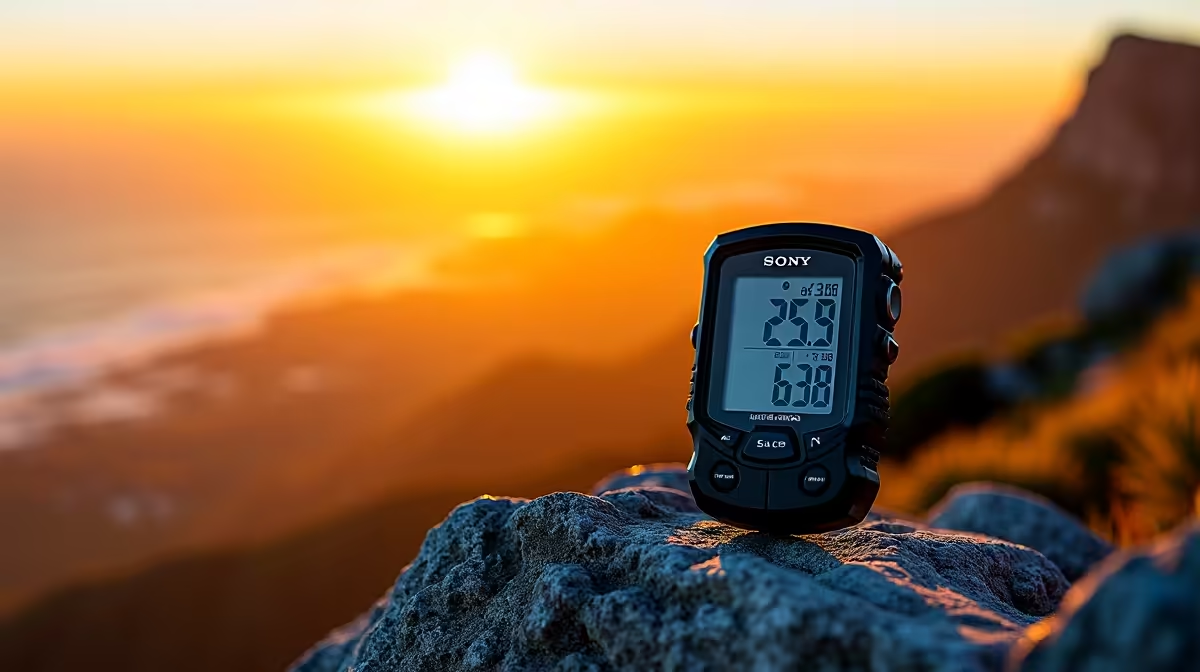
South Africa’s terrain is diverse and often unpredictable. A paper map tells you where you are... but an altimeter tells you how much "up" is left. Modern smart watches typically use barometric sensors to detect tiny changes in air pressure. This provides a much more accurate reading than GPS alone. When the mist rolls in over the Magaliesberg, knowing your exact altitude can help you locate the correct descent path. GPS can sometimes struggle in deep kloofs... but air pressure remains a reliable metric for vertical movement.
Altimeter Accuracy Tip ⚡
Always calibrate your barometric altimeter at a known elevation point... like the trailhead sign or a sea-level marker. Air pressure changes with the weather. If a cold front moves into the Western Cape, your altitude reading might drift even if you haven't moved an inch.
Choosing the Right Gear for the Berg
Not every wearable is built for the rugged outdoors. You need something that balances battery life with sensor accuracy. Many local hikers look for Promate smart watches because they offer robust builds without the massive price tag. Tracking your vertical gain helps you manage your energy levels. If you know the peak is at 2000m and you are currently at 1500m... you can pace your water intake accordingly. It helps you decide if you have time for a lunch break or if you need to push on.
Staying Within Budget While Leveling Up
You don't need to spend a fortune to get reliable data on the trail. There are excellent affordable smart watch options under R1000 that include altitude tracking features. These devices allow you to monitor your ascent rate in real time. This is particularly useful during steep climbs in the Cederberg where the heat might slow you down. Keeping an eye on the numbers helps you set realistic goals for the day. It turns a grueling climb into a manageable series of vertical milestones.
Ready to Find Your Perfect Match?
Tracking your progress shouldn't cost a fortune. For maximum features, durability, and value in South Africa, our wearable range is hard to beat. Explore our massive range of smart watch specials and find the perfect companion for your next hike.