Make it your next upgrade only if it solves a problem you hit regularly. AR display glasses shine as a portable, cable-light second screen, not as a desktop monitor stand-in. For a clean cable-managed desk, fewer cables and a single dock or hub do more than any amount of velcro tidying.
Quick Answer
AR glasses are best as a portable virtual monitor for travel and tidy desks, not a gaming-monitor replacement. A pair of display glasses (around 1080p per eye, 120Hz, ~80g) runs roughly R6,000-R12,000 at Evetech and pairs to a handheld, phone or laptop over USB-C DisplayPort.
What AR glasses are good for
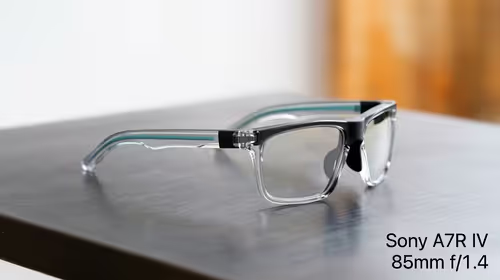
Display glasses give a large floating screen, typically a 1080p-per-eye Micro-OLED panel at up to 120Hz, weighing 75-85g. That suits a clean desk (no monitor stand) and travel, turning a handheld or phone into a big private screen. They are not a true AR overlay or an esports display.
Connectivity and what drives them
Most glasses use one USB-C cable carrying DisplayPort video; confirm your device supports USB-C video out, or use a small dongle. For gaming, pair them with a Steam Deck OLED or ROG Ally X. Entry glasses near R6,000 give a sharp 1080p image; premium models at R10,000-R12,000 add brightness (nits) and field of view.
Should this be your next upgrade?
It should be your next upgrade only if it solves a problem you hit regularly. If AR glasses fixes a daily friction, it earns priority; if it is a want, slot it behind the essentials. Be honest about how often you will actually use it before committing the budget.
Keeping cables clean
A clean cable-managed desk starts with fewer cables, not more velcro. A single dock or hub collapses several leads into one run, and routing power and data behind the desk does the rest. Pick gear that supports a single-cable connection so the desk stays tidy by design.
FAQ
How does this help a clean cable-managed desk?
It cuts the number of cables on the desk. A single connection for AR glasses and routing leads behind the desk keeps the surface tidy by design rather than by velcro.
Can AR glasses replace a gaming monitor?
For travel and tidy desks, yes as a 1080p 120Hz virtual screen; for competitive gaming, no. A 165Hz desktop monitor still wins on refresh rate and latency.
What do I need to connect AR glasses?
A device with USB-C DisplayPort video out: most modern laptops, many phones, and handhelds like the Steam Deck OLED. Some need a small adapter, so confirm USB-C video support first.
phone, laptop or handheld supports USB-C DisplayPort video before buying, and treat AR glasses as a portable second screen.